

















Can my Pension buy shares in my company?

A pension scheme can buy quoted or unquoted shares in a company based either in the UK or overseas.
An occupational pension scheme can buy shares in one or more of the employers participating in the scheme as long as both the following conditions are met:
- the total value of the scheme funds invested is less then 20% of the net value of the pension scheme funds
- the amount invested by the scheme in the shares of any one employer participating in the scheme is less than 5% of net value of the pension scheme funds
Any investment larger than this will be an unauthorised payment and both the scheme employer and scheme administrator will have to pay a tax charge on the amount above the limit.
https://www.gov.uk/pension-trustees-investments-and-tax
So in theory, yes, it is possible, but in reality its likely to fail because:
- An independent ‘Arms Length’ valuation will be required, for an unquoted small business or start up this is extremely difficult as establishing a market value for the shares will be difficult and often a start up will have losses in the first few years
- The HMRC’s rules which govern all registered pension schemes (in particular the sections covering both taxable property and tangible moveable property) dictate that the combined shareholding in the unquoted company held between the pension fund, the member personally and any other connected persons must never exceed 19%, otherwise there would be enormous tax consequences for all concerned
- The company concerned must not (and never should be in the future) controlled by the trustees of the pension fund in conjunction with connected parties
If the business needs the money to buy commercial premises for its trade it would be easier for the pension scheme (SSAS) to lend the money, a SSAS can lend up to 50% of net scheme assets as explained in in this fact sheet from Curtis Banks
If you are over 55, you could also consider drawing down funds from your pension, the first 25% will be tax free.
steve@bicknells.net
Do you have a great business proposal and strategy that will work?

Sometimes even the best ideas don’t get funding at first….
But if you have the right strategy you can still succeed, that’s why a business plan is really important
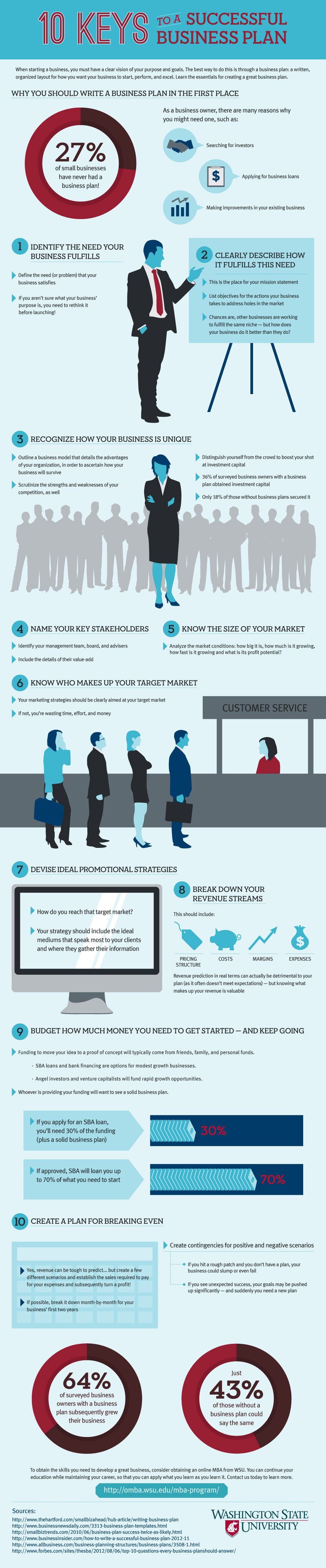
Approximately a third of all SME’s in the UK don’t have a Business Plan, that’s about 1.5m businesses, so if you don’t have one, here are some reasons why you should prepare one….
- Research by Exact Software shows that SME’s with Business Plans make 20% more profit
- Having a business plan doubles your chances of increasing profits, increasing revenue, attracting new clients
- A well-researched business plan which includes the right figures and realistic forecasts will reassure potential investors you are a sensible investment opportunity
- A Business Plan will help you set out and achieve your goals
- It will help you set goals for your managers and staff
- The Business Plan will help you plan your cash flow and forecast Capital Expenditure
- A Business Plan will help you secure Business Finance and Loans
- You can plan your succession strategy or prepare the business for sale
- A Business Plan tests the feasibility of your business idea
- It will help you plan for the recruitment of Staff
steve@bicknells.net
What exactly is the NEST web services or API tool??
NEST is a government backed pension scheme which has an obligation to accept all employees into the scheme. NEST is completely government backed, designed specifically to deal with auto enrolment and is free for all employers, no matter how big or small. To date, over 20,000 employers have chosen NEST as an AE pension scheme for their employees.
NEST web services / API tool
NEST are working with a number of key payroll providers to launch a web service or API tool to customers this winter. The tool will take away some of the stress and time consuming steps involved in submitting data to NEST. The web services will mean that customers can send data files through the payroll directly into NEST. With a simple click of a button, customers will find the process a lot faster. A similar concept would be the RTI function where a user can submit their data directly to HMRC within the payroll.
Currently, employers or bureaus have to export data from their payroll, log into the NEST web portal service and submit the data. Under auto enrolment, this needs to be completed every pay period as part of the mandatory employer duties. The benefit of the new NEST web services will be to speed up the data flow between payroll software and the pension provider, saving employers and payroll bureaus time.
BrightPay is delighted to announce that we are working directly with the NEST development team to offer this web services tool to our customers. The direct integration between BrightPay and NEST will be important for the thousands of employers that have and will have chosen NEST as their workplace pension scheme.
According to NEST:
“The ability to submit key data in one click will also result in faster processing times. This innovation will simplify the exchange of information between employers and NEST by enabling payroll software to ‘talk’ to NEST.”
It will undoubtedly make automatic enrolment data submissions to NEST much easier and faster. The news of the NEST web services will be greatly received across the payroll industry. It has been further speculated that other pension providers may follow suit and develop their own API tool.
Related articles – The Benefits of NEST’s API / Integration Tool for Accountants & Bureaus.
Can you Zero Rate Charity adverts?

The supply of advertising to a charity is zero-rated. The zero-rating covers advertisements on any subject, including staff recruitment. A charity can also purchase pre-printed collecting boxes, envelopes and appeal letters at the zero rate. Low cost lapel stickers, emblems and badges that a charity gives in acknowledgement of a donation can also be zero-rated. More information can be found in Notice 701/58 Charity advertising and goods connected with collecting donations.
In what media can charities advertise VAT free?
Any medium which communicates with the public. This includes all the conventional advertising media such as television, cinema, billboards, the sides of vehicles, newspapers and printed publications. The important factor is whether the advertisement is placed on someone else’s time or space. If it is not there will be no scope for zero-rating.
If space is sold to a charity for advertising on other items, such as beer mats, calendars, or the reverse of till rolls, this will also be covered by the zero rate. The sale of the items themselves will not be VAT free, unless they qualify for other reliefs for example as books or children’s clothing.
Recently I was asked if a website would be able to zero rated, but its specifically excluded under UK Law VCHAR11000
10B None of items 8 to 8C includes a supply used to create, or contribute to, a website that is the charity’s own.For this purpose a website is a charity’s own even though hosted by another person. 10C Neither of items 8 to 8C includes a supply to a charity that is used directly by the charity to design or produce an advertisement.
steve@bicknells.net
It’s a Pool Car isn’t it?

Yet again, we have another case on Pool Cars which could have been prevented had the right procedures been put in place.
The Case was decided in May 2015 and involved Mark and Trudie Holmes and their company KMS Logistics (UK) Ltd. The company owned 7 prestige cars which were used assist in maintaining and attracting clients.
There was no prohibition (not even a verbal one) on the private use of the vehicles, mileage logs showed that the cars were mainly used by Mr & Mrs Holmes. Until 2003/4 they had been declared as a benefit in kind but then the stopped being declared! There even seemed to be confusion over who owned the cars.
So not surprising Mr & Mrs Holmes lost the case.
Read the full details by clicking here
So what should you do to prove there is no private use:
- Keep the car on the company’s business premises
- Keep the keys at the company’s business premises
- Prepare a Board Minute
- Make sure your contract of employment bans private use
- Keep a mileage log
- Insure the car principally for business use
HMRC have specific rules on keeping vehicles at home in EIM23465
Even if you do meet the 60% rule you still have to prove ‘no private use’
steve@bicknells.net
Are you too busy to do your accounts?

When you start a business its because you have a skill or product that clients want and most small businesses put off the accounting because they find it boring, time consuming and unproductive. This often causes huge problems with tax, cash and business management.
What if it wasn’t boring, what if it was easy and quick to do?
- Apps for invoicing
- Available every where all the time on all your devices
- Automatic bank feeds to reduce data entry
- Dashboards of key data
- Easy access for you and your accountant
That’s why cloud accounting systems are the future. Take a look at this infographic produced by Sage.

Obi Wan Kanobi might not be you’re only hope, cloud accounting could save your business.
steve@bicknells.net
Is a Company the best way forward for Buy to Lets?

The Summer Budget made this decision even more complicated!
First landlords have a lot to consider..
- Transferring their portfolio will probably incur Stamp Duty and Capital Gains
- Mortgages can be harder to find and more expensive for companies
- Share ownership options and objectives
- Company Admin, Accounts and Tax
- Capital Gains Allowances, ATED and IHT
But one key advantage is explained by Adrian Benosiglio, real estate tax partner at Baker Tilly (www.yourmoney.com)
For example, Mr Jones (a 45% taxpayer) has a house with net rental income of £100,000 and mortgage interest of £90,000. Currently he would pay £4,500 income tax on profits of £10,000.
From April 2020, he’ll pay £27,000* income tax. This is calculated by applying his marginal rate of tax to his rental income (£100,000 x 45%) which gives a tax liability of £45,000 and offsetting this with tax relief claimed on the mortgage interest at the lower amount of 20% (90,000 x 20%) which would give tax relief of £18,000. This would leave Mr Jones with a tax bill of £27,000 (£45,000 less £18,000). The end result would be an overall annual loss after tax of £17,000, with insufficient cash flow to make repayments on his loan.
A company is not affected by these measures and therefore would receive full mortgage interest relief. Additionally, corporation tax is charged at 20% and is due to fall to 18% in 2020. Using the above example, a company would pay £2,000 currently and £1,800 from 2020; leaving sufficient funds to make repayments.
Complicated isn’t it!
steve@bicknells.net
Alterledger moved to Legal House
New office for Alterledger
Alterledger has been growing consistently over the last few years and the time has come to move into new office premises. Alterledger is now based at Legal House, 101 Gorbals Street, Glasgow G9 5DW

Growing the business and the team
We are pleased to announce that Graham has joined the team as Trainee Accountant and will be working through his ACCA qualifiation. For more information, please visit the Alterledger website.
Related articles

Small Business Saturday 2015 – Register Now!

The UK’s most successful small business campaign, Small Business Saturday, has been launched and this year it will be on Saturday 5th December.
In 2014, approximately 16.5 million adults supported at least one small business on Small Business Saturday, with almost two-thirds (64 per cent) of the British people aware of the campaign.
The organisers say…
We want all kinds of small businesses to get involved, so know that whether you are a family business, local shop, online business, wholesaler, business service or small manufacturer, Small Business Saturday is supporting you!
Small Business Saturday UK is a grassroots, non-commercial campaign, which highlights small business success and encourages consumers to ‘shop local’ and support small businesses in their communities. The day itself takes place on the first shopping Saturday in December each year, but the campaign aims to have a lasting impact on small businesses. In 2015 Small Business Saturday will take place on Saturday, December 5th.
Sign up and get involved https://smallbusinesssaturdayuk.com/
steve@bicknells.net
Do you need help with HMRC?

HMRC aren’t easy to speak to and unless you know the tax rules its easy to make mistakes, that’s why HMRC allow you to appoint agents to help you with your tax affairs.
To appoint an agent you use form 64-8
Form 64-8 covers authorisation for individual tax affairs (partnerships, trusts, tax credits and individuals under PAYE) and business taxes (VAT, PAYE for employers and Corporation Tax). If you’re a personal representative you can use form 64-8 in certain circumstances to ask HMRC to deal directly with an agent.
There are times when you might want extra help for example with an HMRC Compliance Visit and you can appoint a temporary agent using form COMP1.
The Comp1 relates only to the appointment of an adviser to deal with a compliance check. It does not authorise us to deal with that adviser for anything outside that check. Form Comp1 does not replace or amend any existing authorisation made using form 64-8 or the online authorisation facility, or in CITEX cases a letter giving authority for the agent to act.
The temporary authorisation can be used to:
- extend an existing authorisation, for example where there is an adviser acting for one tax under a form 64-8, and the customer wants that adviser to act for more taxes just for the purpose of the compliance check
- appoint an adviser to deal solely with the compliance check where there is no existing adviser authorisation
- appoint a ‘specialist’ tax adviser, for example in Specialist Investigation cases, just to deal with a compliance check. In such cases this will allow the existing adviser to continue to act for the customer in their day to day tax matters.
[HMRC CH201550]
Do you need help?
steve@bicknells.net


 Business Accountant