

















HMRC reveals ‘Top 10 oddest excuses’ for late tax returns

I found this on the Gov.uk website and thought is was well worth re-blogging
The following bizarre, exotic and flimsy excuses have all been used by tardy taxpayers:
- My pet goldfish died (self-employed builder)
- I had a run-in with a cow (Midlands farmer)
- After seeing a volcanic eruption on the news, I couldn’t concentrate on anything else (London woman)
- My wife won’t give me my mail (self-employed trader)
- My husband told me the deadline was 31 March, and I believed him (Leicester hairdresser)
- I’ve been far too busy touring the country with my one-man play (Coventry writer)
- My bad back means I can’t go upstairs. That’s where my tax return is (a working taxi driver)
- I’ve been cruising round the world in my yacht, and only picking up post when I’m on dry land (South East man)
- Our business doesn’t really do anything (Kent financial services firm)
- I’ve been too busy submitting my clients’ tax returns (London accountant)
All of these people and businesses received a £100 penalty from HM Revenue and Customs (HMRC) for filing late. They appealed against the decision using these excuses, but were unsuccessful.
HMRC’s Director General of Personal Tax, Ruth Owen, said:
There will always be unforeseen events that mean a taxpayer could not file their tax return on time. However, your pet goldfish passing away isn’t one of them.
If you haven’t yet sent your 2012 to 2013 tax return to HMRC, you need to do it online and pay the tax you owe by the end of January. With all the help and advice available, there’s no excuse not to.
To send an online tax return, you must be registered for HMRC Online Services. This involves HMRC sending you an Activation Code in the post, so allow a few days for this to arrive. To register for HMRC Online Services go to the HMRC website and follow the on-screen instructions.
New RTI Relief

Have you been struggling to send full payment summary (FPS) reports under RTI to HMRC on or before the days on which your employees are paid? This is particularly difficult when your workers receive irregular amounts of pay on varying dates. In such cases you may not know the amounts of wages and deductions to report until the workers have finished their shifts.
The concession for small employers with fewer than 50 employees has helped. This allows you to submit all the figures on one FPS report when you make your last payroll run in the month, but this must be no later than the end of the tax month. However, this concession is due to end on 5 April 2014.
The good news is that until 5 April 2016, employers with fewer than 10 workers will be able to send in the FPS covering all payments by the last pay day of the tax month. This new relaxation will only apply to existing employers. Any new PAYE scheme commencing on or after 6 April 2014, or any scheme with 10 or more employees will have to report all the wages and deductions on or before each day the employees are paid, even if that is multiple times in the month.
If you have 10 to 50 employees on your payroll, and have been using the small employer concession to cope with multiple pay dates in a month, you need to talk to your CIMA Accountant about how to adjust your systems from April 2014.
Is your photocopier secure?
So you have a list of procedures in place to ensure that your electronic data is fully secure? But have you ever considered hardware other than your computers? How about your trusty photocopier which sits innocently in the corner of the office? Did you know that since 2002 many contain hard drives which store items that were printed, copied or faxed?
A recent study was conducted in the US on second hand photocopiers. In the study 3 were purchased from a warehouse which deals in second hand office equipment. The hard drives were then checked using software found free on the web.
The machines contained tens of thousands of images from a sex offenders database, detailed design plans of a new development, & 300 pages of medical records. All of this information was highly confidential & potentially very damaging.
So what do you do? Check that your printer includes software which automatically clears the images. If not take this up with your supplier. They should be able to advice on how your hard drive can be cleared. Whatever you do, ensure your hard drive is clear before you sell or dispose of your printer. You never know – your business may depend on it!
What’s your plan?

Well, the new year is just around the corner, but do you have a robust plan for the year ahead?
Unfortunately for many small business owners the answer is a resounding “No” – or, “yes, it’s in my head”, which is actually the same as no!
If you don’t have a proper plan for your business the chances of it moving in the direction you want are drastically reduced. Your business is more likely to grow by luck, rather than design, and luck is often in short supply in times of economic difficulty.
For many the very thought of putting a plan down on paper leaves them in a cold sweat – but it doesn’t have to be this way!
Firstly, remember that the person for whom you are preparing the plan – and the most important person in your business – is YOU. So, think about planning in terms that you can relate to rather than trying to plan with someone else in mind.
If you like mind maps plan using them. If you are a picture person try to build lots of pictures into the plan so you can engage with it.
Secondly, if you really don’t know how to plan – ask for help. You may have a friend or family member who can help you. Alternatively, there are lots of professionals who can help you with specific areas of your plan.
If you struggle to put together a marketing or sales plan engage a marketing or sales expert to help with that particular section. If you struggle with the figures your accountant should be able to help.
The key thing is that once the plan is finished it properly represents your business and your ideas for the coming year.
Your plan then becomes the foundations against you can measure the performance of your business going forward. You will be able to see whether or not your business will help you to meet your personal goals, or not, and you can use it to get finance if you need to.
Fiona 🙂
Are your prices correct? 5 Simple steps to evidence based pricing

It’s all good news and cheers into the New Year with the UK downturn finally expected to be left behind and as the size of the UK economy surpasses its pre-recession peak. With expected GDP growth rate of 2.7% the clear message of these indicators are that against the backdrop of a difficult economic climate, there are still pockets of strong demand for top quality services and products at an affordable price across different sectors which would continue to fuel the stimulus for growth in the economy. The challenge is for businesses to plug into these golden nuggets of opportunities with a winning price offering.
Access to top notch real time information about comparable products and services by consumers is so much easier with price comparison websites such as Money Supermarket, Go Compare, Martin Lewis’ Money Saving Expert, Google search engine, to mention just a few providing an invaluable service. The dilemma to success in this competitive market is getting the right balance between quality and price. The consumer’s buying decision for most products and services with elastic demand always come down to price. Understanding your product/service demand curve and elasticity is the key to maximising your corporate profits and bottom line, because it’s only when you know how much your consumers are willing to pay for your service or how indifferent they would be to a price change that you can confidently put out a winning price.
In a nutshell the markets are not perfect and a good price creates sales transactions that benefit the consumers, the business, and the economy. It is very clear that there are disparities and mismatches between prices offered for goods and services by businesses in the UK and the amount hard up consumers are willing to pay.
Gone are the days of setting prices based on “gut” or “experience”. I often hear clients say my plan for 2014/15 is to sell 20,000 widgets @ £30/each because I managed the same feat last year. Evidence should always be the key in setting prices, understanding the variables that affect pricing is a key insight into the competitive environment. This article takes you through the steps of achieving a profit maximizing price for your products or services and then puts into context of how growth in the economy could be stimulated.
Step 1
Build a two table column that shows all your prices (including discounts) and the associated demand over a period of one year. You can get this information from your general ledger.
| Step 1 | |
| Jab Ltd | |
| Price | Quantity Demanded (Units) |
| £21.00 | 200 |
| £26.00 | 196 |
| £24.00 | 190 |
| £12.55 | 280 |
| £13.00 | 240 |
Step 2
| Step 2 | ||
| Price | Demand | |
| Low Price | =MIN(B6:B10) | =VLOOKUP(F6,$B$6:$C$10,2,FALSE) |
| Medium Price | =MEDIAN(B6:B10) | =VLOOKUP(F7,$B$6:$C$10,2,FALSE) |
| High Price | =MAX(B6:B10) | =VLOOKUP(F8,$B$6:$C$10,2,FALSE) |
| Step 2 | ||
| Price | Demand | |
| Low Price | £12.55 | 280 |
| Medium Price | £21.00 | 200 |
| High Price | £26.00 | 196 |
Use excel function min, median, and max to find out the minimum, maximum, and average price
Step 3
Plot the points in a scatter graph from the tabled data, select the polynomial function for the trend line to display the formulae coefficient, where x represents price and y equals quantity demanded

Step 4
Put any trial price and Input your polynomial coefficients into the demand equation;
| Step 4 | |
| y = 0.6444x2 – 31.088x + 568.65 | |
| y = quatity demaded | |
| x = price | |
| Price | 20 |
| Cost | 11 |
| Demand | =(0.6444*G17^2)-(31.088*G17)+568.65 |
| Profit | =(Price-Cost)*Demand |
| Step 4 | |
| y = 0.6444x2 – 31.088x + 568.65 | |
| y = quatity demaded | |
| x = price | |
| Price | £20.00 |
| Cost | £11.00 |
| Demand | 204.65 |
| Profit | £1,841.85 |
Step 5
Use the solver function in Microsoft Excel to calculate the profit maximising price. Check to see the solver function is enabled in your excel version – For excel 1993 click on Tools => AddIn => Tick Solver and For excel 2010 click on File => Addin => Tick solver

Solution after solver
| Step 5 | |
| y = 0.6444x2 – 31.088x + 568.65 | |
| y = quatity demaded | |
| x = price | |
| Price | £26.00 |
| Cost | £11.00 |
| Demand | 195.9764 |
| Profit | £2,939.65 |
Based on the above evidence from solver we can deduce that the £26 price would maximize the organization’s profit, although this shouldn’t be taken in isolation as other factors affect demand and price
The importance of having a winning price for your products and services cannot be over emphasized as it could spell the difference between real competitive advantages and being priced out of the market.
We would love to hear your thoughts and comments
Have you filed your Self Assessment Return?
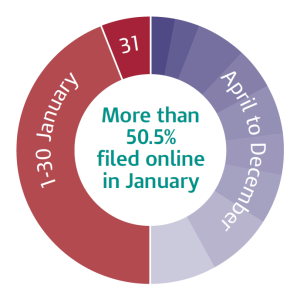
Last year, while millions of people were exchanging presents, feasting on turkey, and nodding off in front of the television, 1,548 people decided to take time out from the yuletide festivities and do their tax return online – a 40 per cent increase on Christmas Day 2011, when 1,100 people filed online.
The penalties for late Self Assessment returns are:
- an initial £100 fixed penalty, which applies even if there is no tax to pay, or if the tax due is paid on time;
- after three months, additional daily penalties of £10 per day, up to a maximum of £900;
- after six months, a further penalty of 5 per cent of the tax due or £300, whichever is greater; and
- after 12 months, another 5 per cent or £300 charge, whichever is greater.
There are also additional penalties for paying late of 5 per cent of the tax unpaid at: 30 days; six months; and 12 months.
Make sure you get yours done before the end of January!
steve@bicknells.net
10 creative ways to cut your overheads
Making a profit and generating cash is vital to all businesses and a key way to improve profit is to reduce overheads, here are a few ideas:
- Re-think your office/premises requirements – Premises are big cost for most businesses, could you operate in a smaller space and sub-let part of your offices? could you work from home?
- Telecommute – Technology effectively reduces distance, so there is no need to require administrative people or specialists to be physically located together. Use VOIP, Skype and Video Conferencing.
- Cars – Company Cars can be expensive, time consuming to manage and emotive, why not consider car allowances
- Staff – Generally the biggest overhead is people, consider outsourcing rather than having the fixed overhead of in house staff
- Shop around – Are you getting the best deals on Stationery, Printing, Insurance, Light & Heat…..
- Students – Students, apprentices and interns are eager to learn and will be less expensive then experienced employees
- Refinance Debt – Could you reduce the cost of borrowing? could you borrow from your Self Invested Pension Plan?
- Paper – Sorting, filing, and finding files requires time and space. Purchase a scanner and scan all important papers and keep them in well organised electronic files to save space and administrative costs.
- Go Green – Reducing waste and saving energy will save money too
- Buy Second Hand – Second hand office furniture is plentiful and its cheaper than buying new
steve@bicknells.net
A time to pay – part 2
This post is a follow on from ‘A time to pay’ so if you haven’t read that you might like to do so before reading this one!
Once you have decided on your payment terms, ensured that both you and your client understand what is to be delivered, and paid for your services, there is still the possibility that a client will let you down and not pay.
The most likely scenario is that the client is strapped for cash and you are not seen as the first payment priority for them. This is a difficult position to be placed in for any service provider. My advice is that you must stand firm and by doing so you may well move yourself up the payment list – especially if the client is looking for further work from you.
Just as an aside, I generally provide an ongoing service to clients and so agree with them a fixed price service, so they can set up monthly standing orders. This has proved to be a win/win strategy. Clients like it because payments are broken down into monthly bite sized payments and I like it because I don’t have to do monthly invoices and then chase for payment.
However, what I did not appreciate until a client pointed it out to me was that, for them, my payments had moved up into the ‘unavoidable’ category – along with rent, rates, electricity etc. Unlike other professional service bills which are paid as and when money is available, my payment is made as one of the first.
Now, many service providers get lulled into doing more work for a client who is not paying, because they believe that they will not be given further work if they insist on being paid. As in my previous blog I would most strongly urge you not to get into this way of thinking. Firstly, the surest way of getting paid for work done is to stop working until payment is made. Secondly, if the client is bad at paying why would you want further work from them – rather than using your limited time to work for a client who will pay!
If a client is unlikely to use your services again, you are in a psychologically stronger position. You may well not be so reticent in sending tough letters demanding payment. Or, in fact, starting legal proceedings. If you want to go down this route it is very important that you understand what your rights are and how best to proceed. My advice would be to use a payment collection service such as that provided by companies like Credebt. They take the hassle away and enable you to concentrate on more positive areas in your business.
Finally, as I said in my earlier blog, don’t be coy about collecting money owed to you. As long as you have done the job required, and to the standard agreed, you are entitled to be paid!
Fiona 🙂
www.nonexecutivedirectors.com our new sponsor
20 businesses you can run from home

It’s nearly Christmas and that puts a strain on most peoples cash, so you might well be looking for ways to earn extra cash, here are my top 20 home based business ideas:
- Get a lodger – Under rent-a-room a taxpayer can be exempt from Income Tax on profits from furnished accommodation in their only or main home if the gross receipts they get (that is, before expenses) are £4,250 or less
- Ironing and Laundry Services – Always popular and you can start with friends and family
- E Bay Trading – as E Bay say… The first task is to sort through those bulging drawers and messy cupboards, finding stuff to flog. Get a big eBay box to stash your wares in, and systematically clear out wardrobes, DVD and CD piles, the loft and garage. Use the easy 12-month rule of thumb to help you decide what to offload: Haven’t used it for a year? Flog it.
- Blogging – Blogging has taken off and many businesses are looking for people to write blogs for them
- Candle Making – You can sell the candles on line and its easy to buy the wax and things you need to make the candles
- Car Boot Sale – As with E Bay but without going on line
- Cake Making – Make sure everything is labelled correctly and you comply with Health & Safety issues
- Data Entry – The internet makes it easy to enter data from where ever you are
- Social Media – Similar to blogging, businesses need help to manage Twitter, Facebook and Linked In
- Website Design – If you have the expertise, go for it
- Sales Parties – Cosmetics to Ann Summers, there is a long list of opportunities
- Sewing and Clothes Alterations – Perfect before and after Christmas
- Jewellery – Making and selling jewellery is always popular and great for Christmas presents
- Car Repairs – Assuming you have the skills needed and comply with legal requirements
- Pet Care – Walking dogs or grooming is popular
- Virtual Assistant – Also personal organiser or personal shopper
- Wedding Planner – You could start by creating a blog about your expertise
- Direct Sales – For example Utility Warehouse
- Computer Repair – Great provided you have the skills
- Marketing – Telesales to leaflet design and freelance writing
steve@bicknells.net


 Business Accountant