















Why you should maximise borrowings on your Buy to Let

If you own a Buy to Let property as an individual rather than in a limited company it is worth maximising your borrowings against the Buy to Let because the interest will be a tax deductible expense.
It doesn’t matter how you borrow:
- Mortgage on the Buy to Let
- Personal Loan
- Overdraft
- Re-mortgage of your main residence to invest in your Buy to Let
The rules allowing this are covered in http://www.hmrc.gov.uk/manuals/bimmanual/bim45700.htm
So, for example, if you had a Buy to Let property with low borrowings against it and a mortgage on your main private residence, you could increase your borrowings on the Buy to Let and pay off your private residence mortgage.
But you need to be aware that the maximum you can borrow on the Buy to Let is the market value when it was first let.
Here is an example from Tax Cafe – How to save property tax
Property investors are often unsure whether their interest is deductible. This depends on how the money is used. Use it to buy investment property and the interest is tax deductible. Use it for personal reasons and the interest is not deductible.
There is an exception to this rule: you can generally remortgage an investment property up to its original purchase price and the interest will be tax deductible, whatever you use the money for. For example, let’s say you bought a buy-to-let for £100,000 and the current mortgage is £60,000. You can borrow up to another £40,000 (if the bank will let you!) and all the interest will be tax deductible, no matter how you use it.
You will need to keep detailed records of the borrowing and interest for your tax returns.
Alternatively you might focus on paying off your main residence mortgage first to leave the borrowings high on the Buy to Let.
steve@bicknells.net
EU VAT B2C – e services to be vatable where they are consumed

At the moment all businesses supplying telecommunications, broadcasting and e-services such as downloaded ‘apps’, music, gaming, e-books and similar services to private consumers located in other EU Member States (referred to as ‘B2C’ supplies) are taxed where the business supplier is established, which is simple to understand and implement.
In the Finance Bill 2014 this will be changed and from 1st January 2015 VAT will be charged in the country where the customer has ‘use and enjoyment’ of the services.
So lets say you are an American (normally zero rated) on holiday in France, even though you pay with an American credit card and buy from a UK supplier because you are reading your ebook in France, French VAT will apply. Sounds like a nightmare, doesn’t it.
To help with this HMRC are introducing the VAT MOSS (Mini One Stop Shop) and businesses can register from October 2014.
Unless businesses opt to register for MOSS, businesses that make intra EU B2C supplies of telecommunications, broadcasting and e-services will be required to register and account for VAT in every Member State in which they have customers. MOSS will give these businesses the option of registering in just the UK and accounting for VAT on supplies to their customers in other Member States using a single online MOSS VAT return submitted to HMRC. This will significantly reduce their administrative burdens.
- Examples of telecommunications services include: fixed and mobile telephone services; videophone services; paging services; facsimile, telegraph and telex services; access to the internet and worldwide web.
- Examples of broadcasting services include: radio and television programmes transmitted over a radio or television network, and live broadcasts over the internet.
- Examples of e-services include: video on demand, downloaded applications (or “apps”), music downloads, gaming, e-books, anti-virus software and online auctions.
HMRC VAT Place of Supply Link
If you supply e services its worth considering the accounting and pricing changes that you will need to implement and how you will incorporate the ‘use and enjoyment’ rules.
steve@bicknells.net
IR35 – How are deemed payments taxed?

The Intermediaries legislation known as IR35 was introduced on 6th April 2000.
The aim of the legislation is to eliminate the avoidance of tax and National Insurance Contributions (NICs) through the use of intermediaries, such as Personal Service Companies or partnerships, in circumstances where an individual worker would otherwise –
- For tax purposes, be regarded as an employee of the client; and
- For NICs purposes, be regarded as employed in employed earner’s employment by the client.
Many Freelance Contractors have some assignments within IR35 and some outside, you can ask HMRC for their opinion.
If you would like HMRC’s opinion on a particular engagement you should send your contract(s) to:
IR35 Customer Service Unit
HMRC
Ground Floor North
Princess House
Cliftonville Road
Northampton
NN1 5AE
e-mail: IR35 Unit
Tel No: 0845 303 3535 (Opening hours 8.30am to 4.30pm, Monday to Friday. Closed weekends and bank holidays) Fax No: 0845 302 3535
If your contract is within IR35 its not the end of the world, the chances are that you will still pay less tax than a direct employee, to calculate the tax you have to work through 8 stages of calculation, here is a summary:
- How much were you paid? deduct 5% for business costs
- Add any other payments/non cash benefits
- Deduct business expenses – travel, meals, accommodation
- Deduct capital allowances relevant to the work done
- Deduct pension contributions made by your company
- Deduct any NIC paid by your company on your salary and benefits
- Deduct any salary or benefits already paid and taxed
- If the answer is zero or negative then there is no deemed payment, if the answer is positive you do have a deemed payment which will be taxable
HMRC have a spreadsheet you can download which has further details.
steve@bicknells.net
5 reasons why Freelancers are taking over the world

Recently Zero Hours Contracts were in news, the BBC reported on 5th August 2013:
The Business Secretary Vince Cable fears zero-hours contracts are being abused after research suggested a million people could be working under them.
I think that employers may be tempted to switch from Zero Hours to Freelance Contractors.
PCG published this story on 3rd July 2013:
Demand from UK businesses for contract workers is continuing to rise in 2013, which could be good news for freelancers looking to get their foot in the door on a lucrative new project.
Why is it attractive to use Freelancers?
- Skill is more important than location in many business sectors – we live in world where internet can allow you to work with anyone at anytime, you can now track down the best person to work with even if they live thousands of miles away
- Lower fixed costs – Using Freelancers will lower your fixed costs (in similar way to Zero Hours Contracts), you employ them for a specific project and only pay for what you need so there isn’t any surplus capacity
- Tax advantages – Freelancers run their own business and that means they pay less tax than employees. Employers save tax too, such as Employers NI.
- Competitive Advantage – You can put together a team for a contract rather than finding contracts that fit your workforce, this means you can hire the best.
- 110% Commitment – A Freelancers success and future work depends on them performing to the highest level on every contract, failure is not an option for a successful contractor.
So is it a mission impossible for salaried employees to make the transition to Freelancers
steve@bicknells.net
Disincorporation Relief – its not just for Window Cleaners

Discorporation Relief is new, it came in to effect from 1st April 2013 and is currently available until 31st March 2018.
HMRC estimate that 610,000 businesses are eligible to use the Disincorporation Relief.
Here is the HMRC example from the Consultation document:
Window Cleaners Ltd a one man company that incorporated on 1 April 2004 and the shareholder, Mr Smith, had previously carried on the business as a self employed individual before 1 April 2002. Turnover is below the VAT threshold. The business has an established repeat customer base. The only significant business assets are a van, equipment and goodwill. The van and equipment are worth around £3,000 and the goodwill is valued at £15,000, together worth £18,000. The goodwill was acquired from Mr Smith for £5,000 on 1 April 2004. The Capital Gains rules apply and Corporation Tax is payable @ 20 per cent.
Tax chargeable on goodwill:
If the assets are distributed back to the shareholder (Mr Smith) on 1 February 2012 the following charge would arise on the goodwill:
· Corporation Tax on goodwill gain £8,540 (£15,000 – £5,000 less indexation £1,460 (£5,000 x 0.292)) @ 20 per cent = £1,708
There is no Corporation Tax to pay on any gains made on the transfer of the van and equipment because these are chattels worth no more than £6,000.
Shareholder charges:
Mr Smith will also have to consider what tax he will have to pay on the value of the distributed assets of £18,000. The amount of charge will depend on whether the assets are treated as income or capital.
If distributed as capital, the actual amount of Capital Gains Tax that Mr Smith will have to pay will depend on a number of factors, including how much was paid for the shares, whether incorporation relief was claimed, whether Entrepreneurs’ Relief conditions are satisfied and availability of capital loss relief.
Assuming £100 was paid for the shares, that Mr Smith has no other gains in the tax year (and so the annual exempt amount of £10,600 can be used against the gain) and that he is entitled to Entrepreneurs’ Relief, then the amount of Capital Gains Tax to pay would be:
· (£18,000 – £100 – £10,600) x 10 per cent = £730
If the assets are distributed as income (i.e. a dividend) Mr Smith will only have to pay Income Tax if any part of the dividend is liable to Higher Rate Tax.
Criteria to qualify for disincorporation relief
Below is a basic summary of the main qualifying criteria:
- The company must have been operational for 12 months and the shareholders must have held their shares for 12 months
- The business must be transferred as a going concern to the existing company shareholders
- The transfer must become effective before 31st March 2018
- All assets, including goodwill, capital assets, trading stock and cash, must be included in the transfer. The value of those assets must be no greater than £100,000
- Recipients of the new “disincorporated” entity must either be individuals or partnership members (not members of an LLP)
Why would you want to disincorporate?
- Reduced compliance – Company Accounts, Corporation Tax Returns, PAYE, Annual Returns
- Reduced Costs – Accountancy Fees
- Cash Based Accounting
steve@bicknells.net
Are you up for a party?

Running your own business can be great fun, but its sometimes a little lonely.
As with many aspects of life, this fact becomes particularly obvious at Christmas. Everyone else has an office party to go to – but not you.
The Billy No Mates Christmas Bash is all about changing this. It is the office Christmas party for anyone who works on their own or just with one other person. Come along and party!
In Wells our Bash is held at Beah, Union Street. To maximise the ‘end of term feeling’ it is held on the Friday before Christmas, at lunch time.
To find out more, find out what the menu looks like or to book please go to billynomates.info
See you there!
Fiona 🙂
Are you a Business Owner with No Private Pension?
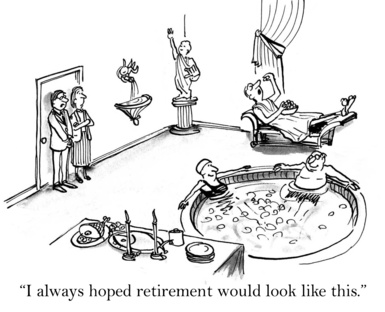
You’re not alone its estimated that 1.3 million business owner have no private pension that’s approx one in two UK Business Owners (according to Prudential).
https://www.moneyadviceservice.org.uk/en/articles/uk-business-owners-lack-pension-savings
Nearly one in three business owners (or 792,000 people) say they will be entirely reliant on the State Pension when they come to retire, compared with twice as many people across all employment types retiring this year in the UK.
Other self-employed workers will supplement their retirement incomes with money from a mix of alternative sources:
- half will draw on other savings and investments
- one in four will use equity from their properties or plan to use their partners’ pensions, and
- one in five plan to use funds from the eventual sale of their businesses.
Most of us know we should be saving more for retirement and the government knows that we need to save more too. That’s why they give pensions tax breaks and employers are being forced to auto enrole staff into pension schemes and make payments.
But how many of us stand a chance of saving £400k into our pensions? it’s a huge amount of money and yet it only buys a modest pension. Work out your strategy now before its too late.
http://stevejbicknell.com/2012/07/29/what-is-the-minimum-pension-fund-you-will-need-to-retire-400k/
steve@bicknells.net
EMPLOYER’S £2,000 NIC ALLOWANCE

Why the Ostrich? Well I think she’s pretty!
This valuable allowance is due to start for all businesses on 6 April 2014, and simply exempts the employer from the normal employer NICs of 13.8% of the earnings paid.
The mechanics are that the allowance will be obtained via standard payroll software and HMRC’s RTI system. A facility will be added to the RTI Employer Payment Summary referring to the allowance in the form of a “yes/no” indicator, with payroll software providers doing the same. The employer then offsets the allowance against each monthly Class 1 secondary NICs payment until fully claimed or the tax year ends. For the following tax year the allowance is available against NICs as the liability arises during the year.
For a small company rewarding working shareholders by way of dividends, the current thinking is that from 6 April 2014 it will usually be best to receive remuneration of £10,000 per annum instead of limiting it to the NIC secondary threshold of (currently) £7,696 as is normally done. This is because earnings of £10,000 will fully utilise the new level of personal allowance, whereas dividends effectively waste the allowance.
fiona@grant-jonesaccountancy.com
The Extreme Coupon frenzy, is it good for business?

Earlier in the year I saw Jordon Cox, 16, from Brentwood in Essex, on the BBC he scours newspapers and magazines for coupons and vouchers that offer special deals on food and household products.He bought £105 of groceries for £1.62, follow this link to see his interview http://www.bbc.co.uk/news/uk-22418225
So lets start by learning the lingo
- Bogo: Buy One Get One
- Peelie: A coupon stuck to a product
- Blinkie: A coupon station in a store
- Stacking: Using a store coupon with a manufacturers coupon – not all stores allow this
- Catalinas:Coupons printed at the cash register when you pay for your items
- Rebate: Mailing a receipt to a company to get a refund
- Overage: When the value of a coupon exceeds the purchase price of the item
Everyone loves a freebie or money off, but there seem to be so many sites offering vouchers its hard to keep track of what is on offer, for example I get e mailed deals from:
- Groupon
- KGB
- Wowcher
I have apps for:
- Voucher Cloud
- O2 Moments
- Vouchercodes
- Quidco
- Top Cash Back
Then there are websites like http://www.freebiesiteuk.co.uk/
That’s before you start cutting coupons out of magazines.
Pitney Bowes have produced a white paper on Coupons – April 2013:
The whitepaper, entitled ‘The Coupon Renaissance’, revealed that 76% of consumers would buy more from local businesses if they offered coupon incentives. With many small local businesses struggling in today’s economic climate, the figures offer a positive outlook that SMEs should capitalise on.
The surge in coupon redemptions is a relatively new phenomenon; with the current economic climate increasing popularity, the UK has witnessed a sharp 14.7% spike in usage since 2008**. The research also showed that an impressive 80% of consumers have redeemed a coupon in the last year, and half (49%) of customers redeem them as frequently as one per month.
The trend by consumers to use coupons to cut costs are likely to increase based on a report from Which:
More than half of Britons cannot cope on their current salaries with one in five forced to borrow money to buy groceries and other household essentials because of the soaring cost of living, a new survey revealed today.
One in four people revealed they’ve had to use their savings to buy food or other daily essentials while one in five have gone into debt to do this.
Another 10 per cent said they could envisage needing to borrow buy food in the future.
Read more: http://www.thisismoney.co.uk/money/news/article-2110009/Which-report-reveals-millions-Britons-forced-borrow-buy-groceries.html#ixzz2SS0GEVyd
steve@bicknells.net
Mind the GAAP

Thanks to http://www.freedigitalphotos.net
There are changes afoot and much is being made of ‘FRS 102’ and ‘new UK GAAP’, so in an effort to understand what all the fuss is about, and how it will impact on a small accounting practice with a client base firmly in the SME sector, I have dragged myself off to seminars and scoured t’Internet, and what follows is a brief summary of my understanding to date of these changes.
If you can put further flesh on these bones or correct misunderstanding then please feel free to comment.
First a little terminology:
- “IFRS Foundation”: an independent, not-for-profit private sector organisation.
- “IASB”: International Accounting Standards Board is the independent standard-setting body of the IFRS Foundation.
- “IFRS”: International Financial Reporting Standards which are designed to be global standard so that company accounts are understandable and comparable across international boundaries.
- “IFRIC”: International Financial Reporting Standards Interpretations are the official interpretations of IFRSs.
- “IAS”: International Accounting Standards are international financial reporting standards that were created by the predecessor body of the IASB and form part of the body of IFRS requirements.
- “SIC”: the official interpretations of the IASs.
- “IFRS for SMEs”: a self-contained standard of 230 pages, designed to meet the needs and capabilities of small and medium sized enterprises (SMEs) and includes simplified language and fewer disclosure requirements (expect to be aligned with FRS 102 in due course).
- “SMEIG”: SME Implementation Group is an advisory body to the IASB, is providing recommendations to the IASB in connection with IFRS for SMEs.
- “Small Company”: organisations with up to £6.5m turnover, £3.26m assets, and 50 employees (to be revised to £10m turnover etc. under new EU directive).
- “Micro Company”: companies with up to £632k turnover, £316k assets, and 10 employees.
- “UK GAAP”: Generally Accepted Accounting Practice in the UK is the overall body of regulation establishing how company accounts must be prepared in the United Kingdom.
- “ASB”: UK Accounting Standards Board which is the body responsible for publishing accounting standards and other guidance.
- “FRS”: Financial Reporting Standard.
- “SSAP”: Statements of Standard Accounting Practice.
- “UITF”: Urgent Issues Task Force of the UK Accounting Standards Board (now disbanded).
- “SORP”: Statement of Recommended Practice for charity accounts and reports.
- “New UK GAAP”: new reporting standards applicable from 1st January 2015 (latest) comprising
- “FRS 100”: Application of Financial Reporting Requirements which sets out the overall reporting framework.
- “FRS 101”: Reduced Disclosure Framework which permits disclosure exemptions from the requirements of EU-adopted IFRSs for certain qualifying entities.
- “FRS 102”: the Financial Reporting Standard applicable in the UK and ROI which replaces all existing FRSs, SSAPs and UITF Abstracts.
- “FRS 103”: the Financial Reporting Standard for insurance companies.
- “FRSSE”: the Financial Reporting Standard for small company accounts includes reduced reporting requirements (anticipate this may be phased out in due course).
Phew! so which standard do I use?
Listed company consolidated accounts: must use IFRS
Listed company parent/ subsidiary accounts: either IFRS or UK GAAP (FRS 102)
Other companies: either IFRS or UK GAAP (FRS 102)
Small (& micro) companies: either above or IFRS for SMEs or FRSSE
Charities: must use UK GAAP (FRS 102 or FRSSE) and the new Charities SORP
So in particular, what is FRS 102?
- for medium and large companies is similar to IFRS but reduced disclosure requirements
- allows ‘amortised cost’ or ‘fair value’ methods of valuation except equities held which which must be at fair value
- investment properties should be valued at far value via the P&L where possible but depreciated costs allowable if fair value involves undue cost or effort
- allows goodwill to be amortised rather than applying impairment method
- no ‘indefinite life’ option for goodwill
- other intangibles to be recognised separately from goodwill
- greater regulation of hedge accounting such as forward currency contracts
- option to use IAS 39 (which outlines the requirements for the recognition and measurement of financial assets, financial liabilities, and some contracts to buy or sell non-financial items)
- deferred tax to be provided on revaluations
- government grants can be recognised immediately or accrued and matched with costs
- holiday pay entitlement must be accrued where holiday not taken
- disclosure of total lease commitment (i.e. note on operating lease liability)
- cash flow statement required
- reduced reporting for small companies which will no longer be required to include a director’s report, analysis of income
New EU Directive
From 1st September 2013 micro companies can report a greatly simplified balance sheet (and P&L) and are not required to provide notes and analysis on most balance sheet items, but must still include details of directors’ loans.
HM Revenue & Customs
All the above deal with reporting for public record; there are no changes on reporting requirements to HMRC at this time, so from a parochial point of view, is this going to make any real difference?
Paul Driscoll is a Chartered Management Accountant, a director of Central Accounting Limited, Cura Business Consulting Limited, Hudman Limited, and AJ Tensile Fabrications Limited, and is a board level adviser to a variety of other businesses.


 Business Accountant