

















Is your business ignoring Mobile?

A OnePoll survey commissioned by AppsBuilder reveals that £52.6 billion of potential revenue to be gained via mobile is being ignored by over 3.2 million UK SMEs. It found that 65.8% of the nation’s 4.9 million SMEs don’t currently have a mobile presence, equating to potential lost revenues of £52.6 billion in the next 12 months alone. The number of consumers in the UK using mobile phones to access the internet has doubled over the past three years and about 5% of all UK retail sales come via mobile phones. (Law Donut)
Its not just about Apps, websites too need to be optimised…
With only 10% of the UK’s small and medium-sized enterprises (SMEs) having a mobile optimized website, businesses could be missing out on £77 billion in annual revenue a study has found. And only 13% of those without a mobile optimized site plan to have one by the end of 2014.
The survey, conducted by Impact Research for hibu, asked 900 UK SME owners and IT leaders about their companies’ websites, revenues and future plans for the mobile web. It showed that 45% of UK SMEs do not have a website, yet believe their annual revenue could rise by 5.4% if they had a website that was optimised for mobile transactions, equating to an average of £11,155 extra turnover annually.
I find it incredible that 45% of SME’s do not have a website? how will customers find them?
The days of looking yellow pages and printed directories are long gone, most people search google to find the goods and services they need.
steve@bicknells.net
VAT on digital services to consumers
Did you know that you will have to charge VAT on digital services to consumers from 1st January 2015?
On 1 January 2015, The European Union (EU) VAT place of supply of services rules will change for business to consumer (B2C) supplies of broadcasting, telecommunications and e-services (digital services). A consumer means a private individual.
These changes will affect all businesses that supply digital services to consumers, whether or not they are registered for UK VAT. This is because there are no registration limits for digital service supplies made to consumers outside the UK. Any business supplying digital services to a consumer in another Member State therefore has to charge VAT on the supply in that Member State and register for VAT in that Member State.
If your customer does not provide you with a VAT Registration Number (VRN), and you have no other information that suggests that your customer is in business and VAT registered, you can treat this as a B2C supply.
VAT Mini One Stop Shop (VAT MOSS)
To save you having to register for VAT in every EU Member State where you supply digital services, you may opt to use the VAT Mini One Stop Shop online service (VAT MOSS). This will be available from 1 January 2015, but you will be able to register to use it from October 2015
Remember this affects all businesses not just VAT registered ones. Contact us on 01243 788041 if you need help with this.
How do you know if you are doing well or not?
Many business owners, especially if they are a sole trader, struggle to know whether they are doing well or not.
The reasons for this are as follows:
Firstly, many business owners do not have a plan for their business. This means that, even if they have up to date profitability figures in front of them, they don’t know if the figures are good or bad. It is only by having a robust plan, covering several years and based on your own goals, that you can judge whether your business will meet your goals, or not. A business which does not meet the owners’ goals is not doing well – however much profit it might be making.
Secondly, many business owners do not have up-to-date financial information. This means that even if they know their goals, they have no idea if they are meeting them. Some business owners keep a pretty close eye on sales/turnover but leave the rest to sort itself out. However, sales are just part of the picture. If you don’t control your costs or your cashflow, your business will struggle.
Thirdly, it is vital to know who’s definition of ‘doing well’ is important. For me, the only measure which is meaningful is YOURS. I see business owners struggling to match someone else’s ideal, rather than their own.
Finally, if you don’t know whether or not you are doing well, the chances are you will via to one extreme or the other. You will either believe you are doing far better than you are, or you will believe you are doing far worse. The first delusion will probably mean you come across quite unexpected problems with cash flow. The second will leave you feeling disillusioned and demotivated.
So, do yourself a favour and make sure you have a robust business plan, which you are updating with current financial figures. That way you will know for sure if you are doing well.
Fiona 🙂
VAT crisis for Stalls, Car Boots, Serviced Offices and Markets

Until now the hire of stalls and other pitches used for temporary sales events have generally been considered to be the supply of land and exempt from VAT in accordance with Item 1, Group 1, Scedule 9 VAT Act 1994 and http://www.hmrc.gov.uk/vat/managing/reclaiming/partial-exemption.htm
But following discussions at EU level in connection with antiques fairs HMRC now feel that VAT should be chargeable at Standard Rate.
Not only that HMRC want VAT to be payable on add-on services such as promoting the fair, providing power and security which had been treated as incidental and VAT exempt.
The change in policy (according to http://www.tipsandadvice-vat.co.uk) came about following a VAT inspection and the decision is now being appealed.
Whilst the case applies to antiques if HMRC win it will be applied to:
- Car Boot Sales
- Services Office Accomodation
- Market Stalls
This could have a massive effect on small traders who are not VAT registered.
steve@bicknells.net
What is your status – Self Employed or Employed?

A worker’s employment status, that is whether they are employed or self-employed, is not a matter of choice. Whether someone is employed or self-employed depends upon the terms and conditions of the relevant engagement.
Many workers want to be self-employed because they will pay less tax, this calculator gives you a quick comparison between being employed, self employed or taking dividends in a limited company.
HMRC have a an employment status tool to help you determine whether a worker can be self-employed or should be an employee http://www.hmrc.gov.uk/calcs/esi.htm
If a worker should be an employee HMRC will seek to recover the employment taxes from the employer not the worker, so there are considerable risks for the employer if the status of its workers is wrongly assessed.
Some employers might decide to insist that sub-contractors must be limited companies, as companies can’t not be reclassified as employees.
The sub-contractor would then need to assess whether IR35 applies to their contract. If IR35 does apply then please read this blog on Deemed Payments
steve@bicknells.net
How a Snowball created a £2.8m VAT rebate

It is a question to challenge some of the finest legal minds in the land: when is a cake not a cake, and a biscuit not a biscuit?
Two judges solved it last week by letting their taste buds decide – after testing a plateful of Snowballs, a chocolate and coconut covered marshmallow treat that has been popular with the sweet-toothed masses for generations.
Verdict: Snowballs are cakes. And that means the snack’s manufacturers are in line for a £2.8million rebate from the taxman after a lengthy legal wrangle over whether Snowballs should attract VAT (which biscuits do) or be zero-rated (as a cake).

Which is your team?

Well it’s all behind us now!
The World Cup with all its highs and lows is over and, as always, we find ourselves dissappointed at the results.
It occurs to me that this sporting event exemplifies many of the trials and tribulations businesses come across in trying to be successful. If you have a team full of players who are only interested in themselves as individuals, it is likely you will get poor results, even if the players seem to be very talented. However, if you have a team of players who are willing to sacrifice their personal status to further the team’s ambitions, the sum becomes greater than the parts and real magic can result.
Further, it is important that the team has a clear and common vision, which is driven through by the directors. If individuals in the team go in their own direction without reference to the vision, or ignore clear management guidance, the team as a whole will suffer.
So my advice is to look at your business and decide which team you would like to be.
Will your company resemble Brazil, Spain, or indeed England? Or will you be like Germany and hold the World Cup aloft?
Fiona 🙂
Don’t forget your 31 July Payment on Account!

The 31 July 2014 is the date that you should make your second payment on account to HMRC.
For example on 31 July 2014, you’d make your second payment on account for the 2013-14 tax year.
From the 31 July you will have to pay interest on anything you owe and haven’t paid, including any unpaid penalties, until HMRC receives your payment.
As well as the 4.54 million self-employed people in the UK, higher rate taxpayers, company directors and anyone with more than one income are required to make a payment on account – part of their annual tax payment.
Don’t forget to pay!
steve@bicknells.net
Prompt Payment Discounts – new VAT rules
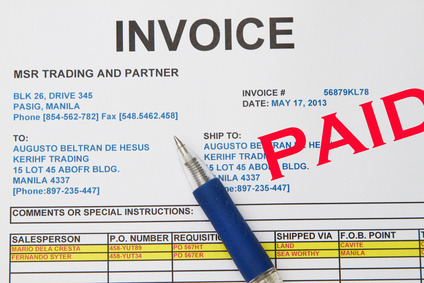
Changes to UK legislation relating to prompt payment discounts will take effect in relation to supplies made on or after 1 April 2015. From that date, the way many businesses account for VAT when offering prompt payment discounts will change.
Currently businesses can issue invoices that give details of the amount of the prompt payment discount and its terms and show the VAT due calculated on the discounted price. If the discount is not taken up HMRC has not required businesses to alter the amount of VAT invoiced and accounted for.
After the change businesses must account for VAT on the consideration they actually recieve.
HMRC are currently consulting on the implementation of this legislation and the consultation ends on 9th September.
In many ways its surprising that it hasn’t always been the case that you pay VAT on the consideration!
steve@bicknells.net


 Business Accountant