

















More Tax on Companies owning High Value Residential Property

Most residential properties (dwellings) are owned directly by individuals. But in some cases a dwelling may be owned by a company, a partnership with a corporate member or other collective investment vehicle. In these circumstances the dwelling is said to be ‘enveloped’ because the ownership sits within a corporate ‘wrapper’ or ‘envelope’.
ATED is a tax payable by companies on high value residential property (a dwelling). It came into effect from 1 April 2013 and is payable each year.
Budget 2014 announced a reduction in the threshold from £2 million to £500,000 to be introduced over 2 years. From 1 April 2015 a new band will come into effect for properties with a value greater than £1 million but not more than £2 million with an annual charge of £7,000. From 1 April 2016 a further new band will come into effect for properties with a value greater than £500,000 but not more than £1 million with an annual charge of £3,500.
Chargeable amounts for chargeable period 1 April 2014 to 31 March 2015
| Property value | Annual chargeable amount 2014 to 15 |
|---|---|
| More than £2 million but not more than £5 million | £15,400 |
| More than £5 million but not more than £10 million | £35,900 |
| More than £10 million but not more than £20 million | £71,850 |
| More than £20 million | £143,750 |
There are reliefs that might lead to you not having to pay any ATED. You can only claim these by completing and sending an ATED return.
A dwelling might get relief from ATED if it is:
- let to a third party on a commercial basis and isn’t, at any time, occupied (or available for occupation) by anyone connected with the owner
- open to the public for at least 28 days per annum, if part of a property is occupied as a dwelling in connection with running the property as a commercial business open to the public, the whole property is treated as one dwelling and any relief will apply to the whole property
- part of a property trading business and isn’t, at any time, occupied (or available for occupation) by anyone connected with the owner
- part of a property developers trade where the dwelling is acquired as part of a property development business the property was purchased with the intention to re-develop and sell it on and isn’t, at any time, occupied (or available for occupation) by anyone connected with the owner
- for the use of employees of the company, for the company’s commercial business and where the employee does not have an interest (directly or indirectly) in the company of more than 10%, the employee’s duties must not include services for any present or future occupation of the property by someone connected with the company, the relief is also available where a partner in a partnership does not have an interest of more than 10% in the partnership
- a farmhouse, if it is occupied by a qualifying farm worker who farms the associated farmland, a former long-serving farm worker or their surviving spouse or civil partner
- a dwelling acquired by a financial institution in the course of lending
- owned by a provider of social housing
Alternatively in some cases it might be better to own the property as an individual or jointly with other individuals.
Joint tenants
As joint tenants (sometimes called ‘beneficial joint tenants’):
- you have equal rights to the whole property
- the property automatically goes to the other owners if you die
- you can’t pass on your ownership of the property in your will
- you can only sell or remortgage the property with the other owners’ agreement
Tenants in common
As tenants in common:
- you can own different shares of the property
- you can pass on your share of the property in your will
- you can stop one owner from selling or remortgaging the property without the other owners’ agreement
The main source for this blog was HMRC
steve@bicknells.net
Is my hobby a business?

The criteria used to assess if an activity is a hobby or a business are:
- The size and commerciality of the activity.
- The frequency of the activity and transactions
- The application of business principles.
- Whether there is a genuine profit motive.
- The amount of time devoted to the activities.
- The existence of arm’s-length customers (as opposed to just selling your wares to family and friends).
HMRC have some great examples to help you decided, for example
Gail is a full-time employee working for a stationery company. She pays her PAYE tax on this employment every month.
In her free time Gail makes cushions and uses most of them in her home. Occasionally she sells them to friends and work colleagues for an amount that just covers the cost of materials of £15. Sometimes she makes a loss. Any money she does make goes towards her holiday fund.
She decides to make extra cash by selling cushions on an Internet auction site and starts auctioning three or four to see how they go. They all sell for more than £50, a profit of at least £35 each.
She uses this money to buy more materials and within a month she is selling around ten cushions a week, always at a profit, and is considering setting up her own website.
Gail’s initial sales of cushions to friends are not classed as trading. It lacks commerciality and she does not set out to make a profit. The occasional sales are a by-product of her hobby. Once she begins to auction her cushions, she has moved into the realms of commerciality.
She is systematically selling her goods to make a profit. She will need to inform HMRC about her trade, and keep records of all her transactions. On the level of sales shown in the example the potential turnover of around £26,000 is well below the VAT annual threshold so Gail does not need to register for VAT.
You can find more examples at HMRC
Many traders start off in a small way and don’t realise that they need to register with HMRC, they assume their activity will be treated as a hobby, but things can grow quickly.
You should register as Self Employed as soon as your hobby becomes a commercial venture, even if you are losing money!
If you don’t register, HMRC will be looking for you and if you have an online business it won’t be hard for them to find you.
Ebay say they work ‘hard to ensure that businesses that trade on the platform are aware of their tax obligations’.
It added: ‘We do not hesitate to share information with government agencies should there be evidence of wrongdoing. We require all sellers trading as a business on eBay to register for a business account.’
October is going to be a busy month for PAYE
It seems now more than ever is the time to make sure you are on top of your payroll each month with some noteworthy changes in October:
Increase in National minimum wage from 1st October
Over 21 – £6.50 p/h
18-20 – £5.13 p/h
16-17 – £3.79 p/h
Apprentice – £2.73 p/h
Then an even bigger change: PAYE late filing penalties
From 6th October, All employers with 10 or more employees and all new businesses set-up for PAYE in the 2014-15 tax year must be up to date with their RTI submissions, as from this date and after the first late submission in a tax year, each subsequent late submission will be charged as follows:
1-9 employees – £100 – This is not being enforced until 5 March 2015 but is worth bearing in mind.
10-49 employees – £200
50-249 employees – £300
250+ employees – £400
The following daily interest rate charges will also be applied to all outstanding employer payments not paid in full and on time:
- 1-3 late submissions will be charged as 1% of the last estimated monetary value
- 4-6 late submissions will be charged as 2% of the last estimated monetary value
- 7-9 late submissions will be charged as 3% of the late estimated monetary value
- 10 or more late submissions will be charged as 4% of the late estimated monetary value
If you have still not paid a monthly or quarterly amount in full, after six months you will have to pay a penalty of 5% of the amounts unpaid. With a further 5% penalty after 12 months. These are in addition to the penalties above and apply even if only one payment in the tax year is late.
lauren@fullstopacccounts.co.uk
Overseas property investors – are you ready for CGT in 2015

In the Autumn Statement 2013 it was announced that a CGT charge will be introduced from April 2015 on ‘future’ capital gains made by non-UK residents disposing of UK residential property. George Osborne said…
“Britain is an open country that welcomes investment from all over the world, including investment in our residential property”
“But it’s not right that those who live in this country pay capital gains tax when they sell a home that is not their primary residence – while those who don’t live here do not. That is unfair.”
UK Residents typically pay capital gains tax at 28% on any profit from selling property that is not considered their primary residence.
Reuters reported in Dec 2013…
Property lawyers and estate agents said foreign owners would be relieved the tax will not apply to historic gains before 2015. But they cautioned that the overall impact could be marginal as many foreign investors see London property as a safe and profitable place to park capital.
“Tax is not the primary driver for the majority of international buyers of residential property in London,” Knight Frank’s head of global research, Liam Bailey, said.
“It is important to note that the change to CGT rules brings the UK in line with other key investor markets, such as New York and Paris, where equivalent taxes can approach 35-50 percent depending on the owner’s residency status.”
It was not immediately clear how the tax would be collected and how it would apply if foreign owners used a domestic company to purchase property.
When a company disposes of an asset and makes a capital gain, as the main rate of corporation tax in 2014 is 21% (20% small profits rate) there could be a future tax saving opportunity for overseas investors to transfer property to limited companies.
There are other tax implications for example ATED (Annual Tax on Enveloped Dwellings) and SDLT (Stamp Duty Land Tax) but now could be a good time to consider your options.
steve@bicknells.net
What’s the value?

Although the recession is officially over, it is still difficult to get financing and customers in most sectors continue with their belt tightening exercise. With further government cuts on their way, anyone who deals with the public sector in particular, have found life increasingly hard.
So what can you do to ensure your business survives, and even flourishes, in this environment.
I think that for anyone who sells their expertise – business coaches, accountants, lawyers, web companies etc. – the key is VALUE. What value do you give your clients? How do they perceive the service you offer?
If you can identify what your clients really value, and ensure you really deliver in these areas, they will love you and tell all their friends. The problem for many of us is to determine what that is. It may often not be what we think is the most important part of our service.
Take an accountant, for example. If you talk to some accountants they believe that their USP is that they do a cracking good job of preparing a set of accounts. If you talk to accountants’ customers they take it as read that they will get a cracking good set of accounts. What adds value to them is having their accountant available to discuss their business issues with (without getting over charged!) and for this key advisor to be interested in them and their business.
It you just offer the service your competitors do why would your customers stay with you? They would be better off going for a cheaper option if the service they will get is the same!
If you really connect with your customers so they see you as an integral part of their team, and recognise the value you bring to their business, why would they go elsewhere? And how do you find out what is really important to your customers? TALK TO THEM!!
I am probably preaching to the converted, but I know that many business owners are not asking their clients exactly what they value. The reasons are complex. We Brits are not very good at talking money, let alone putting ourselves on the line by asking our customers what they think of us. However, the act of doing so shows our customers that we care what they think. That we want to provide the right service for them.
Getting to grips with the value proposition can ensure you don’t have to drop your prices to win work, or retain customers.
One last thing, we all know it is much cheaper to retain a good customer than to win a new one. So I see spending time with my customers to cement the relationship as part of my marketing activity. It’s a win win situation! They get an advisor who is interested in their business, available to discuss their concerns when they need to, and some one they are confident knows them and their business well. I get to better understand my customers businesses so I can give them the best service I can.
Fiona 🙂
How do you tell HMRC a company is dormant or active?

Dormant is a term that HMRC and Companies House use for a company or organisation that is not active, trading or carrying on business activity. But HMRC and Companies House use the term dormant in slightly different ways.
For Corporation Tax purposes, HMRC views a dormant company as a company that’s not active, not liable for Corporation Tax or not within the charge to Corporation Tax.
A dormant company can be, for example:
- a new company that’s not yet trading
- an ‘off-the-shelf’ or ‘shell’ company held by a company formation agent intending to sell it on
- a company that will never be trading because it has been formed to own an asset such as land or intellectual property
- an existing company that has been – but is not currently – trading
- a company that’s no longer trading and destined to be removed from the Companies Register
Generally your company or organisation is considered to be active for Corporation Tax purposes when it is, for example:
- carrying on a business activity such as a trade or professional activity
- buying and selling goods with a view to making a profit or surplus
- providing services
- earning interest
- managing investments
- receiving any other income
This definition of being active for Corporation Tax purposes is not necessarily the same as that used by HMRC in relation to other tax areas such as VAT, or by other government agencies such as Companies House.
If your limited company has been dormant but is now active, you must tell HMRC within three months of starting your tax accounting period. The best way to do this is to use HMRC’s online registration service.
HMRC have further details on this link
To contact HMRC you will need your Company UTR number and the 3 digit tax office number, then you can use this link to find out contact details for you Corporation Tax Office
When you call, Option 3 is for Dormant Companies and Option 4 is for Active Companies.
Then you will need to write to HMRC to advise them of the change in activity status.
Companies House still require Annual Returns and Annual Accounts even if the company is dormant, but these are obviously easy as there are no changes from the previous year.
steve@bicknells.net
Can you claim a tax allowance for clothing?
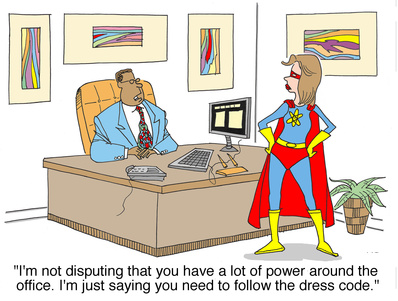
Employees may be able to get tax relief if they – and not their employer – spend money on any tools or specialist clothing they need to be able to do your job. Employees can go back several years to get the relief – the time you’ve got depends on whether you’ve previously sent in a Self Assessment tax return.
As a general rule an employee can’t get tax relief for the cost of clothing they wear to work – but there are some exceptions. For example, if you work in a sector like the building trade or the metal working industry you’ll have to wear protective clothing like:
- overalls
- gloves
- boots
- helmets
If you must pay for the cost of repairing, cleaning or replacing this type of specialist clothing yourself and your employer doesn’t reimburse you, then you are entitled to tax relief. However, you cannot claim for the initial cost of buying this clothing.
EIM32712 sets out some flat rate expenses that can be claimed and EIM32485 allows £60 per year for laundry.
If you are an employee who wants to claim the laundry allowance you should send HMRC a letter as follows:
Re: Uniform Tax Rebate
I have been employed at……… since….. My job title is ……. and I wear a company uniform.
I am obliged to launder the uniform, which is supplied to me by the company. I therefor wish to claim any payment to cover the laundry costs.
The uniform provided is not suitable to be worn outside of the work environment due to having the company logo on it.
I would like to receive the rebate in the form of a cheque….
Self Employed workers have tried to claim for clothes but whilst HMRC have allowed claims for ‘Uniforms’ and ‘Costumes’ they have rejected claims for everyday clothes.
BIM37910 explains to HMRC Inspectors…
You should disallow expenditure on ordinary clothing worn by a trader during the course of their trade. This remains so even where particular standards of dress are required by, for example, the rules of a professional body.
The case of Mallalieu v Drummond [1983] 57 TC 330 (which is discussed in detail below) established that no deduction is available from trading profits for the costs of clothing which forms part of an ‘everyday’ wardrobe. This remains so even where the taxpayer can show that they only wear such clothing in the course of their profession. It is irrelevant that the person chooses not to wear the clothing in question on non-business occasions, the only question is whether the clothing might suitably be worn as part of a hypothetical person’s ‘everyday’ wardrobe.
Most professionals have to keep up appearances but their clothing costs are not allowable (even where they amount to a quasi uniform as in Mallalieu v Drummond).
The cost of clothing that is not part of an ‘everyday’ wardrobe (for example a nurse’s uniform or evening dress (‘tails’) worn by a professional waiter) faces no such bar to deduction.
You should therefore allow a deduction for protective clothing and uniforms.
This was recently tested by Sian Williams who claimed, unsuccessfully…
In her 2004/05 tax return, a newsreader claimed certain deductions from employment income with the BBC for “travel and subsistence costs”, and “other expenses and capital allowances”.
Of these, the following were in dispute:
- Professional hairdo and colouring £975
- Professional clothing for studio £3,231
- Laundry of professional clothes £325
She also claimed that as a taxpayer she had the right to be treated fairly, HMRC should offer up details of the amounts which had been agreed as allowable expenses for other news readers and entertainers.
See article in the Guardian
steve@bicknells.net
What are the differences between employees and contractors?
According to figures released by the Office for National Statistics last week, self-employment is at its highest level since records began almost 40 years ago.
There are currently 4.6 million people self-employed, with the proportion of the total workforce that are making a living for themselves sitting at 15%, compared to 13% in 2008 and less than 10% in 1975.
As highlighted by Everreach and the Daily Mail.
A worker’s employment status, that is whether they are employed or self-employed, is not a matter of choice. Whether someone is employed or self-employed depends upon the terms and conditions of the relevant engagement.
Many workers want to be self-employed because they will pay less tax, this calculator gives you a quick comparison between being employed, self employed or taking dividends in a limited company.
HMRC have a an employment status tool to help you determine whether a worker can be self-employed or should be an employee http://www.hmrc.gov.uk/calcs/esi.htm

steve@bicknells.net
What flavour is your Accountant?

Thanks to http://www.freedigitalphotos.net
One of the great joys of working as a ‘CIMA MiP’ (“Chartered Institute of Management Accountants, Member in Pratice”) is that we are generally dealing with ‘small’ and ‘micro’ client firms (micro defined by EU regulations as firms with less than 10 employees/ £2m turnover; small defined as firms with less than 50 employees/ £10m turnover) and that we become involved in an enormous breadth and depth of subjects.
One of the less welcome challenges however is that as far as most small and micro business owners and managers are concerned, one accountant is the same as any other and this includes the myriad unqualified accountants who practice their particular brand of accounting services at rock-bottom rates. Indeed it is rare that I have been asked whether I am a ‘qualified’ accountant, and is rarer still that I am asked what that qualification is (in fact I cannot ever recall being asked that question by a client). The client generally assumes that because one calls oneself an ‘accountant’ then one can ‘do accounts’ and that accountants are all the same.
We’re not.
My particular practice specialises in manufacturing clients and most new clients have come from existing client referrals. Fortunately I do not need to be a great sales person to convert a prospect into a new client when (a). there is a recommendation from an existing client and (b). we appear to ‘speak the same language’. Clients generally put this down to my having owned and run manufacturing firms and to some degree that is true, but is is also because of my CIMA training.
If you’re looking for year end accounts, audit, or tax computation then you will likely be talking to a ‘Certified Accountant’ or ‘Chartered Accountant’, but where they will be reporting back to you on how well (or otherwise) you did overall last year and what your tax liability is, the CIMA ‘Chartered Management Accountant’ will be working with you to establish what activities made money and why, and whether you can do more of it, and of course which did not and how to avoid this in future; indeed the focus is very much ‘future’ as much as ‘past’.
In terms of the client business, it’s not difficult to see that helping the client to understand their business is a valuable element in managing, changing, and improving the business, and this is something which CIMA qualified people have to offer any business, so it’s a great shame that Chartered Management Accountants tend to be employed by big businesses who understand the difference between the different accounting disciplines.
None of this is to say that a Certified Accountant or Chartered Accountant could never do what the Chartered Management Accountant does, but it is not what they have been trained to do and equally as a Chartered Management Accountant in practice for twenty-two years I provide a ‘full service’ including year end accounts and tax returns for my clients, albeit the main focus remains helping them to improve their business.
I would urge Chartered Management Accountants to seriously consider a career in the small and micro business sector which accounts for 99.3% of the 4.7 million businesses in the UK (source: BIS 2013) and 47% of private sector employment (source: FSB 2013) and which is a vital part of the UK economy: whether in practice servicing a number of clients, or a full-time employee of a particular firm, I am sure that you will find the experience very rewarding
I would equally urge owners and managers in that sector to become aware of the differences between the main accounting bodies and the relative strengths of each, and to be sure that whoever they engage with will meet the needs of their particular business.
Paul Driscoll is a Chairman of CIMA MiPs in South West England and South Wales, a director of Central Accounting Limited, Cura Business Consulting Limited, Hudman Limited, and a number of manufacturing companies, and is a board level adviser to a variety of other businesses.
Are you accounting for VAT on Google AdWords and Linked In?

AdWords are invoiced from the Republic of Ireland and subject to ‘Reverse Charge‘ VAT.
When you buy services from suppliers in other countries, you may have to account for the VAT yourself – depending on the circumstances. This is called the ‘reverse charge’, and is also known as ‘tax shift’. Where it applies, you act as if you are both the supplier and the customer – you charge yourself the VAT and then, assuming that the service relates to VAT taxable supplies that you make, you also claim it back. So there’s no net cost to you – the two taxes cancel each other out. [HMRC]
If you can’t give Google a UK VAT registration number they will charge Irish VAT at 21%.
If you can supply a VAT registration number you won’t be charged Irish VAT and will be subject to ‘Reverse Charge’, this means you calculate the amount of VAT – Output Tax – on the full value of the services supplied to you, and then fill in the relevant boxes on your VAT Return as follows:
- put the amount of VAT you calculated in Box 1, and if you’re entitled to reclaim the VAT on your purchase of these supplies, also put the same figure in Box 4 (this in effect cancels out the figure in Box 1)
- put the full value of the supply in both Box 6 and Box 7
So all the figures net off to Zero!
If you make reverse charge sales – sales to which a reverse charge is applied – you must notify HMRC and send in regular Reverse Charge Sales Lists.
Linked In invoices are also subject to ‘Reverse Charge’ this is how you can give Linked In your VAT Registration:
If you purchase LinkedIn products for business purposes, you can provide your Value Added Tax # (for European Union or EU VAT customers) for proper tax handling. This information can be added for future orders (not past receipts) on the Payment section of your Privacy & Settings page.
To add your VAT number:
- Move your cursor over your profile photo in the top right of your homepage and click Privacy & Settings. For verification purposes, you may need to sign in again.
- Click Manage Billing Info.
- Click Edit next to the VAT # field.
- Enter the 2-character country code followed by your VAT#. For example, LinkedIn’s Irish VAT# is IE9740425P.
- Click Update.
steve@bicknells.net


 Business Accountant