Business Accountant

Home » Posts tagged 'HMRC' (Page 5)

Tag Archives: HMRC

Why Doctors should use Salary Sacrifice for CPE

Young Doctor with display board

Doctors often agree to pay for their own continuing training personally because of a shortage of NHS funds but when they do pay for courses its unlikely they will be able to claim tax relief.

EIM32530 states that it is well established that employees are not entitled to an expenses deduction under Section 336 ITEPA 2003 for the expenses continuing professional education (CPE). The Commissioners and the Courts have traditionally held that the duties of trainee doctors, for the purpose of the expenses rule, are limited to the clinical work that they do for the NHS Trust by whom they are employed. Their training activities are not undertaken “in the performance of” those duties for the purpose of Section 336 . That is so even though the training activities may be compulsory, and failure to complete them may lead to the employee losing his or her professional qualifications, and/or their job.

The Commissioners and the Courts upheld that view in a number of cases, as follows:

Parikh v Sleeman (63TC75) – a hospital doctor was refused relief for the expenses of attending training courses during periods of study leave.

Snowdon v Charnock (SpC282) – a specialist registrar was refused relief for the expenses of undergoing mandatory personal psychotherapy.

Consultant Psychiatrist v CIR (SpC557) – an NHS consultant was refused relief for the expenses of CPE necessary to maintain her professional qualification.

Decadt v CRC (TL3792) – a specialist registrar was refused relief for the expenses of taking professional examinations, even though it was a condition of his employment that he should do so.

In the recent case of Revenue & Customs Commissioners v Dr Piu Banerjee ([2010] EWCA Civ. 843), the Court of Appeal accepted that a deduction for training costs incurred by an employee should be allowed if the employee was employed on a training contract where training was an intrinsic contractual duty of the employment (see also EIM32535 & EIM32546) and where any personal benefit, unlike most CPE courses, would be incidental and not therefore give rise to a dual purpose of the expenditure.

Salary Sacrifice solves this problem.

Salary sacrifice works particularly well for training because except in the most extreme cases, employees cannot claim a tax deduction for training costs that they pay personally but if the employer pays for training that is work-related:

  • the employer gets the tax deduction
  • the employee is not taxed on the cost and
  • there is no National Insurance to pay.

EIM01210 confirms this.

steve@bicknells.net

Have you paid too much National Insurance?

dreamstimefree_75244

Unlike Income Tax which is cumulative and assessed across all earnings, National Insurance starts from zero on each individual employment and you also pay National Insurance on Self Employed earnings.

So if you are a Director of multiple businesses paid as an employee its easy to see how you could over pay and you might not even realise because National Insurance is not shown on your Self Assessment Return.

You can also over pay National Insurance if you are a part time employee with multiple employers and irratic earnings, this because National Insurance is calculated on a weekly/monthly basis, not a cumulative basis and its by employer.

What you need to do

Write to HM Revenue and Customs confirming:

  • your National Insurance number
  • why you’ve overpaid
  • the tax year(s) you’ve overpaid

You should include your P60 or a statement from your employer showing the tax and National Insurance for each year you’re claiming for.

You should apply within 6 years of the tax year you’re claiming for.

HM Revenue and Customs
Payment Reconciliation
National Insurance Contributions Office
Benton Park View
Newcastle upon Tyne
NE98 1ZZ

steve@bicknells.net

Musicians tax breaks

Will Scottish entertainers make more money with proposed musicians tax breaks?

One of the consequences of the Scottish Independence Referendum is a “Command Paper” to be produced by Lord Smith of Kelvin and the Scottish Devolution Commission.  Among the proposals being put to the commission is copying an idea from Ireland to give artists and musicians tax breaks.


Musicians tax breaks

Special treatment for artists

The Republic of Ireland has given artists a tax exemption since 1969 which means the profits from the sale of works do not attract income tax up to a maximum of €40,000, or £31,500.  Everyone agrees that the tax system should be simplified – except of course if it the complication benefits you.  Is this a valid sign of support for artists or will everyone want “special treatment”?

Alterledger can help

Why wait for the law to favour your industry?  Contact Alterledger or visit the website alterledger.com to see if you can organise yourself better and claim more expenses to cut your tax bill.


If I change my business activity what happens to my tax losses?

with computer

Let’s say your current business has been having a tough time and you want to change it to something new, can you carry forward the trading losses.

Probably not look at this example from BIM85050

For example, a publican who had owned a pub in Leeds for many years sold it and bought another in York. Although in the everyday sense the trader remains a publican throughout, the York pub is not the same trade as the Leeds pub.

Tax law requires any losses (including Corporation Tax Losses) carried forward to be offset against future trading profits from the same trade.

One solution to this may be Group Relief, companies which are part of the same Group can surrender losses within the Group.

The rules about which trading losses and other amounts may be surrendered are described at CTM80110. The company that transfers the losses, etc, is called the ‘surrendering company’. The company that claims the losses, etc, is called the ‘claimant company’.

Trading losses, excess capital allowances and non-trading deficits on loan relationships may be surrendered in full. This is irrespective of whether the surrendering company has other profits against which the loss etc might have been, but has not been, set off.

Alternatively it may be possible for the loss making business to sell services to the new business and in doing so reduce its loss.

steve@bicknells.net

More Tax on Companies owning High Value Residential Property

Contemporary house with pool

Most residential properties (dwellings) are owned directly by individuals. But in some cases a dwelling may be owned by a company, a partnership with a corporate member or other collective investment vehicle. In these circumstances the dwelling is said to be ‘enveloped’ because the ownership sits within a corporate ‘wrapper’ or ‘envelope’.

ATED is a tax payable by companies on high value residential property (a dwelling). It came into effect from 1 April 2013 and is payable each year.

Budget 2014 announced a reduction in the threshold from £2 million to £500,000 to be introduced over 2 years. From 1 April 2015 a new band will come into effect for properties with a value greater than £1 million but not more than £2 million with an annual charge of £7,000. From 1 April 2016 a further new band will come into effect for properties with a value greater than £500,000 but not more than £1 million with an annual charge of £3,500.

Chargeable amounts for chargeable period 1 April 2014 to 31 March 2015

Property value Annual chargeable amount 2014 to 15
More than £2 million but not more than £5 million £15,400
More than £5 million but not more than £10 million £35,900
More than £10 million but not more than £20 million £71,850
More than £20 million £143,750


There are reliefs that might lead to you not having to pay any ATED. You can only claim these by completing and sending an ATED return.

A dwelling might get relief from ATED if it is:

  • let to a third party on a commercial basis and isn’t, at any time, occupied (or available for occupation) by anyone connected with the owner
  • open to the public for at least 28 days per annum, if part of a property is occupied as a dwelling in connection with running the property as a commercial business open to the public, the whole property is treated as one dwelling and any relief will apply to the whole property
  • part of a property trading business and isn’t, at any time, occupied (or available for occupation) by anyone connected with the owner
  • part of a property developers trade where the dwelling is acquired as part of a property development business the property was purchased with the intention to re-develop and sell it on and isn’t, at any time, occupied (or available for occupation) by anyone connected with the owner
  • for the use of employees of the company, for the company’s commercial business and where the employee does not have an interest (directly or indirectly) in the company of more than 10%, the employee’s duties must not include services for any present or future occupation of the property by someone connected with the company, the relief is also available where a partner in a partnership does not have an interest of more than 10% in the partnership
  • a farmhouse, if it is occupied by a qualifying farm worker who farms the associated farmland, a former long-serving farm worker or their surviving spouse or civil partner
  • a dwelling acquired by a financial institution in the course of lending
  • owned by a provider of social housing

Alternatively in some cases it might be better to own the property as an individual or jointly with other individuals.

Joint tenants

As joint tenants (sometimes called ‘beneficial joint tenants’):

  • you have equal rights to the whole property
  • the property automatically goes to the other owners if you die
  • you can’t pass on your ownership of the property in your will
  • you can only sell or remortgage the property with the other owners’ agreement

Tenants in common

As tenants in common:

  • you can own different shares of the property
  • you can pass on your share of the property in your will
  • you can stop one owner from selling or remortgaging the property without the other owners’ agreement


The main source for this blog was HMRC


steve@bicknells.net

Is my hobby a business?

Shopping chart on notebook isolated

The criteria used to assess if an activity is a hobby or a business are:

  • The size and commerciality of the activity.
  • The frequency of the activity and transactions
  • The application of business principles.
  • Whether there is a genuine profit motive.
  • The amount of time devoted to the activities.
  • The existence of arm’s-length customers (as opposed to just selling your wares to family and friends).

HMRC have some great examples to help you decided, for example

Gail is a full-time employee working for a stationery company. She pays her PAYE tax on this employment every month.

In her free time Gail makes cushions and uses most of them in her home. Occasionally she sells them to friends and work colleagues for an amount that just covers the cost of materials of £15. Sometimes she makes a loss. Any money she does make goes towards her holiday fund.

She decides to make extra cash by selling cushions on an Internet auction site and starts auctioning three or four to see how they go. They all sell for more than £50, a profit of at least £35 each.

She uses this money to buy more materials and within a month she is selling around ten cushions a week, always at a profit, and is considering setting up her own website.

Gail’s initial sales of cushions to friends are not classed as trading. It lacks commerciality and she does not set out to make a profit. The occasional sales are a by-product of her hobby. Once she begins to auction her cushions, she has moved into the realms of commerciality.

She is systematically selling her goods to make a profit. She will need to inform HMRC about her trade, and keep records of all her transactions. On the level of sales shown in the example the potential turnover of around £26,000 is well below the VAT annual threshold so Gail does not need to register for VAT.

You can find more examples at HMRC

Many traders start off in a small way and don’t realise that they need to register with HMRC, they assume their activity will be treated as a hobby, but things can grow quickly.

You should register as Self Employed as soon as your hobby becomes a commercial venture, even if you are losing money!

If you don’t register, HMRC will be looking for you and if you have an online business it won’t be hard for them to find you.

Ebay say they work ‘hard to ensure that businesses that trade on the platform are aware of their tax obligations’.

It added: ‘We do not hesitate to share information with government agencies should there be evidence of wrongdoing. We require all sellers trading as a business on eBay to register for a business account.’

steve@bicknells.net

How do you tell HMRC a company is dormant or active?

relax

Dormant is a term that HMRC and Companies House use for a company or organisation that is not active, trading or carrying on business activity. But HMRC and Companies House use the term dormant in slightly different ways.

For Corporation Tax purposes, HMRC views a dormant company as a company that’s not active, not liable for Corporation Tax or not within the charge to Corporation Tax.

A dormant company can be, for example:

  • a new company that’s not yet trading
  • an ‘off-the-shelf’ or ‘shell’ company held by a company formation agent intending to sell it on
  • a company that will never be trading because it has been formed to own an asset such as land or intellectual property
  • an existing company that has been – but is not currently – trading
  • a company that’s no longer trading and destined to be removed from the Companies Register

Generally your company or organisation is considered to be active for Corporation Tax purposes when it is, for example:

  • carrying on a business activity such as a trade or professional activity
  • buying and selling goods with a view to making a profit or surplus
  • providing services
  • earning interest
  • managing investments
  • receiving any other income

This definition of being active for Corporation Tax purposes is not necessarily the same as that used by HMRC in relation to other tax areas such as VAT, or by other government agencies such as Companies House.

If your limited company has been dormant but is now active, you must tell HMRC within three months of starting your tax accounting period. The best way to do this is to use HMRC’s online registration service.

HMRC have further details on this link

To contact HMRC you will need your Company UTR number and the 3 digit tax office number, then you can use this link to find out contact details for you Corporation Tax Office

When you call, Option 3 is for Dormant Companies and Option 4 is for Active Companies.

Then you will need to write to HMRC to advise them of the change in activity status.

Companies House still require Annual Returns and Annual Accounts even if the company is dormant, but these are obviously easy as there are no changes from the previous year.

steve@bicknells.net

Can you claim a tax allowance for clothing?

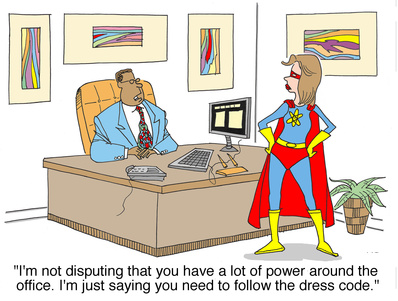
You need to follow the code

Employees may be able to get tax relief if they – and not their employer – spend money on any tools or specialist clothing they need to be able to do your job. Employees can go back several years to get the relief – the time you’ve got depends on whether you’ve previously sent in a Self Assessment tax return.

As a general rule an employee can’t get tax relief for the cost of clothing they wear to work – but there are some exceptions. For example, if you work in a sector like the building trade or the metal working industry you’ll have to wear protective clothing like:

  • overalls
  • gloves
  • boots
  • helmets

If you must pay for the cost of repairing, cleaning or replacing this type of specialist clothing yourself and your employer doesn’t reimburse you, then you are entitled to tax relief. However, you cannot claim for the initial cost of buying this clothing.

EIM32712 sets out some flat rate expenses that can be claimed and EIM32485 allows £60 per year for laundry.

If you are an employee who wants to claim the laundry allowance you should send HMRC a letter as follows:

Re: Uniform Tax Rebate

I have been employed at……… since….. My job title is ……. and I wear a company uniform.

I am obliged to launder the uniform, which is supplied to me by the company. I therefor wish to claim any payment to cover the laundry costs.

The uniform provided is not suitable to be worn outside of the work environment due to having the company logo on it.

I would like to receive the rebate in the form of a cheque….

Self Employed workers have tried to claim for clothes but whilst HMRC have allowed claims for ‘Uniforms’ and ‘Costumes’ they have rejected claims for everyday clothes.

BIM37910 explains to HMRC Inspectors…

You should disallow expenditure on ordinary clothing worn by a trader during the course of their trade. This remains so even where particular standards of dress are required by, for example, the rules of a professional body.

The case of Mallalieu v Drummond [1983] 57 TC 330 (which is discussed in detail below) established that no deduction is available from trading profits for the costs of clothing which forms part of an ‘everyday’ wardrobe. This remains so even where the taxpayer can show that they only wear such clothing in the course of their profession. It is irrelevant that the person chooses not to wear the clothing in question on non-business occasions, the only question is whether the clothing might suitably be worn as part of a hypothetical person’s ‘everyday’ wardrobe.

Most professionals have to keep up appearances but their clothing costs are not allowable (even where they amount to a quasi uniform as in Mallalieu v Drummond).

The cost of clothing that is not part of an ‘everyday’ wardrobe (for example a nurse’s uniform or evening dress (‘tails’) worn by a professional waiter) faces no such bar to deduction.

You should therefore allow a deduction for protective clothing and uniforms.

This was recently tested by Sian Williams who claimed, unsuccessfully…

In her 2004/05 tax return, a newsreader claimed certain deductions from employment income with the BBC for “travel and subsistence costs”, and “other expenses and capital allowances”.

Of these, the following were in dispute:

  • Professional hairdo and colouring £975
  • Professional clothing for studio    £3,231
  • Laundry of professional clothes   £325

She also claimed that as a taxpayer she had the right to be treated fairly, HMRC should offer up details of the amounts which had been agreed as allowable expenses for other news readers and entertainers.

See article in the Guardian


steve@bicknells.net

What are the differences between employees and contractors?

According to figures released by the Office for National Statistics last week, self-employment is at its highest level since records began almost 40 years ago.

There are currently 4.6 million people self-employed, with the proportion of the total workforce that are making a living for themselves sitting at 15%, compared to 13% in 2008 and less than 10% in 1975.

As highlighted by Everreach and the Daily Mail.

A worker’s employment status, that is whether they are employed or self-employed, is not a matter of choice. Whether someone is employed or self-employed depends upon the terms and conditions of the relevant engagement.

Many workers want to be self-employed because they will pay less tax, this calculator gives you a quick comparison between being employed, self employed or taking dividends in a limited company.

HMRC have a an employment status tool to help you determine whether a worker can be self-employed or should be an employee http://www.hmrc.gov.uk/calcs/esi.htm

Workers

steve@bicknells.net

Tax Efficiency Is Part Of A Board’s Duty To Shareholders.

MCS Corp Logo

by Greville Warwick

It is the case that we see a lot of Large and Small companies whose directors and advisers seem unaware of the availability and value of research and development tax credits and patent box. These two schemes to assist companies are actively encouraged by agencies of Government to stimulate innovation, research and development at all times.

Companies qualify, but remain unaware of qualifying criteria, which are quite simple: you must be a UK registered entity (Ltd or Plc) and a going concern for the periods claimed. If you can tick these two boxes, contact us.

mcs-corporate.com