
Home » Uncategorized (Page 3)
Category Archives: Uncategorized
How a Family Pension Scheme will save you Tax


First lets have a recap on why Pensions are a fantastic investment and a great way to save tax.
Inheritance Tax
IHT only applies if the pension company has to pay the value of your scheme to your estate, in which case it becomes like any other asset, but generally the pension pot is held in a discretionary trust, which means it isn’t taxed on death.
You can now nominate anyone not just dependents to be the beneficiary.
Since 6th April 2015 anyone who inherits a pension fund from a person who dies before the age of 75 is entitled to receive it tax free and the you can take the money as a lump sum or income. Once over 75 a special tax of 45% applies (previously 55%), you could reduce this by taking a regular income. The tax rate should drop again in April 2016.
Business Premises
Your…
View original post 773 more words
Why doesn’t my accountant remind me to do things?

Every business has important dates to remember!
VAT Quarterly (or Monthly), filed one month and 7 days later paid by one month and 10 days later
PAYE/CIS Monthly – tax period to 5th of the month, filed by 19th paid by 22nd (you should remember monthly tasks without reminders)
RTI/FPS/EPS everytime you pay employees (you probably don’t need to be reminded to do this)
Company Accounts – due 9 months after year end, corporation tax payable 9 months and 1 day after year end
Self Assessment payments on account in January and July
Annual Returns on the 12 month anniversary of when the company started
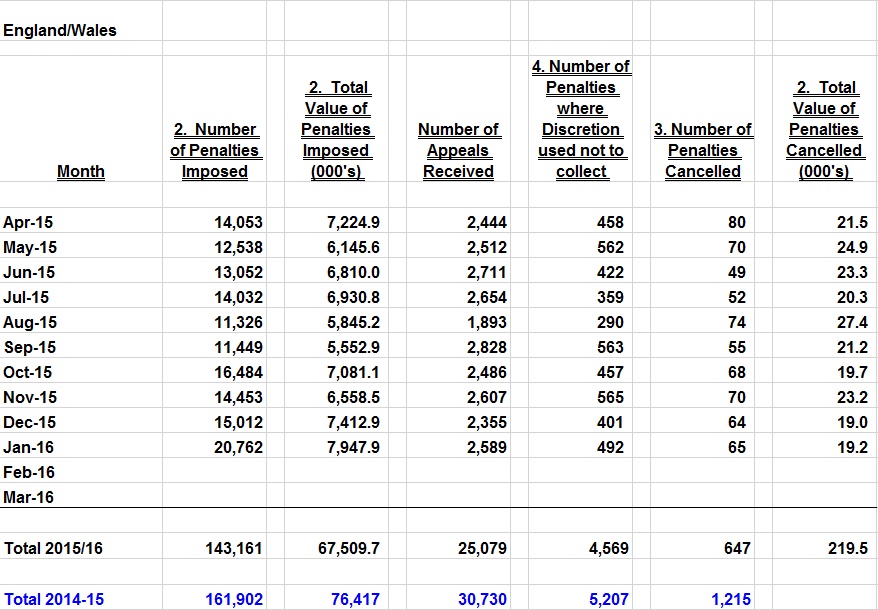
HMRC and Companies House apply tough penalties for filing late!
Its a common problem area, the fine comes in and then accountant and client blame each other

Its easy to understand how very large accounting practices simply lose track of when things need to be…
View original post 186 more words
Personal savings allowance update
From 6 April 2016, the personal savings allowance (PSA) will allow basic rate taxpayers to receive up to £1,000 of savings income tax-free. For higher rate taxpayers, this limit will be £500. HMRC have published guidance setting out details of what counts as savings income and how the allowance will be calculated, including some useful examples.
Savings income includes account interest from:
– bank and building society accounts;
– accounts with providers like credit unions or National Savings and Investments.
It also includes:
– interest distributions (but not dividend distributions) from authorised unit trusts, open-ended investment companies and investment trusts;
– income from government or company bonds; and
– most types of purchased life annuity payments.
Interest from Individual Savings Accounts (ISAs) does not count towards the PSA as it is already tax-free.

Dividend Tax – Good or bad news??
It’s early March and spring is in the air. The spring flowers are coming out into bloom – our garden is filled with snowdrops and daffodils. But then again last week we couldn’t see them because of snow! The start of spring though means not just the end of winter but also the end of one tax year and the start of another. This year, on the 6th April, though brings with it the start of a brand new tax – the dividend tax.
You may have seen lots of hype, but just what is it all about. For many of you David or I will already have had a chat, but we wanted to put a few thoughts down on paper for you!
Let’s have a brief look at what it’s all about.
What are the changes?
Change 1 –Grossing up of dividends is scrapped (believe it or not this little change is good news)
Currently all net dividends (this is same as the cash you receive) are grossed up by 100/90 before they are taxed. The 10% difference is a tax credit which is added to reflect the fact that the company paying the dividend has already paid corporation tax. Don’t worry if you don’t get this what it really means for most of us is that this ‘adjustment’ has the effect of reducing how much in terms of dividends taxpayers can really earn before they go into a higher tax band.
So for many company shareholder/directors the scrapping of this rule is good news as it
- Removes an area of tax which many tax payers find confusing as they grapple with gross and net dividends.
- It increases how much cash dividends they can take before they fall into a higher tax band.
Change 2 – Dividend Tax (This is the bad news for most Small & Micro business owner’s)
This new tax is applied to dividend income received in a year which is more than £5,000. The two groups of taxpayers who will be affected and therefore pay more tax in 2016/17 than they did in 2015/16 are:-
- Company directors who take a modest a salary and the rest of their income as dividends
- Taxpayers who have sizeable share portfolios which generate sizeable amounts of income
And when is an allowance not really an allowance?
Everyone will be entitled to a £5,000 tax free dividend allowance. This sounds very generous – after all its tax free. Well it’s not generous and that’s because it’s not really an allowance it’s a new 0% tax band has been created. The net result, is that it reduces a taxpayer’s basic rate tax band.
How much more tax could I pay?
Let’s have a look at the numbers (well I am an Accountant). This should make it easier to understand how the changes are likely to affect you!
The following table summarises the extra income tax which will be payable next year (2016/17) compared to this year (2015/16). Or put in simple terms for any Dividends you take from 6th April 2016 onwards!
| Cash Dividend | 2015/16 Tax | 2016/17 Tax | Increase |
| £ | £ | £ | £ |
| 15,000 | 0 | 455 | 455 |
| 30,000 | 0 | 1,655 | 1,655 |
| 50,000 | 4,777 | 6,920 | 2,143 |
| 75,000 | 11,027 | 15,045 | 4,018 |
| 100,000 | 20,843 | 24,615 | 3,772 |
The dividend tax is particularly punitive for the many family owned businesses where both the shares and income is split between both the husband and wife. In these cases the tax increases (as shown above) are doubled. So now coupled with increased operating costs in your business as a result of Auto Enrolment and the National Living Wage you can see why I am concerned that this is all too much for many small business owners. 2016 is the year of going backwards for many business owners’ in terms of PROFITABILITY unless they act now!
When will I be paying the extra tax for 2016/17?
Under the usual self-assessment rules then this extra tax would be payable in one lump sum payment by 31/1/2018. That gives taxpayers time to put some money aside each month and can budget accordingly.
It appears though that HMRC doesn’t want to wait that long for the extra tax. We understand that HMRC is in the process of amending tax codes for many company directors so that the lower ‘new’ code reflects the estimated amount of tax due on dividend income.
If you are a taxpayer where cashflow is challenging then this change will be bad news as you will be required an extra monthly tax payment to HMRC potentially as early as May this year. This doesn’t give much time to plan and budget.
How will it work?
Every taxpayer is notified of their tax code via a P2 (PAYE coding notice) and those affected the estimated amount of dividend tax will be shown within the notes.
Tip: If you get one of these tax coding notices it’s advisable to check the figures – an incorrect tax code could mean you unwittingly pay way too much or too little tax.
If you are unsure that the code is correct get in touch with your accountant.
What Can I do?
Everyone’s situation is different which I’m afraid mean the possible tax saving options that are available will also be different. That said here are a few ideas:-
Maximise the annual tax free dividend allowance
Everyone is entitled to the new £5,000 allowance. Married couples can spread their share portfolios in order to spread their dividend income and thereby use the whole of their allowance.
Use an ISA
ISA dividends are tax free and will be not be subject to the new dividend tax. You can transfer up to £15,240 worth of shares and investments into ISAs this year.
Maximise a spouse’s income tax allowance and tax band
Married couples should use the whole of their personal allowances and basic rate tax bands, where applicable, so that any dividends that paid to the spouse who pays the lowest rate of tax.
Invest in VCTs
VCT (Venture Capital Trust) are for taxpayers who are willing to take higher risks. Exactly like ISAs VCTs will give a taxpayer tax free dividends. Also like ISAs when the investment is sold the gain or profit is also tax free as it’s not subject to Capital Gains Tax.
Kim KMA Accountancy
Disclaimer
This article is for general information only and no action should be taken, or refrained from, as a result of this information. Professional advice should be taken based on specific circumstances in each individual case. Whilst we endeavor to ensure that the information contained in this article is correct, no liability will be accepted by KMA Accountancy for damages of any kind arising from the contents of this communication, or for any action or decision taken as a result of using any such information.
Time to prepare for tax year end April 2016

Now you have filed your April 2015 Return (50% will have been filed in January 2016) you only have 2 months left to take action to save tax on your April 2016 tax return.
What should you be doing right now to save tax?
Contribute to your Pension
Transitional rules, for 2015/16 only, mean that there’s an annual allowance of £80,000, although only £40,000 of this can be used between 9 July 2015 and 5 April 2016. You may also have unused annual allowances from the three previous tax years.
These Transitional rules are to align PIP’s (Pension Input Periods) with the Tax Year.
Pensions have huge tax saving advantages
How a family pension scheme will save you tax
Optimise your 2015/16 Salary
You can’t carry forward any unused personal allowances so generally the optimum salary will be £10,600
What is the optimum tax efficient salary 2015-16?
Take Dividends now
When…
View original post 225 more words
Practical implications of the dividend tax allowance
The new rules governing the taxation of dividends are set to take effect in relation to dividends received after 5 April 2016. The changes include:
– a £5,000 dividend nil rate (also known as the ‘dividend tax allowance’ (DTA)), which will effectively tax at the nil rate, the first £5,000 of taxable dividend income (i.e. after deducting the personal allowance, but treating dividends as the top slice of income, so the personal allowance is used last against dividends). Any dividends above the first £5,000 will be taxed as if the £5,000 used up either the basic rate band or the higher rate band;
– dividends exceeding the dividend nil rate will be taxed at:
– 7.5% in the basic rate band (the ordinary rate);
– 32.5% in the higher rate band (the upper rate); and
– 38.1% in the additional rate band (the additional rate);
– the tax credit, which currently attaches to dividends paid by UK companies, will be abolished from 5 April 2016, which means that the dividend paid will no longer be grossed up by one-tenth when calculating the shareholder’s taxable income; and
– dividends will not be set off by either:
– the personal savings allowance (PSA) (from 2016/17); or
– the £5,000 savings allowance (from 2015-16),
which are both used only against savings income (generally interest).
The PSA is £1,000 for any saver whose highest rate of income tax in the year is the basic rate (20%), but only £500 for any saver whose highest rate of income tax in the year is the higher rate (40%). If any of an individual’s income is liable to tax at the higher rate, then the higher rate PSA will apply. The PSA and the DTA do not reduce total income for tax purposes and still count towards basic or higher rate bands.
Over recent years, since the 10% tax credit has covered all their income tax liability, some basic rate taxpayers have had no assessable income and have therefore had no reporting obligations to HMRC. However, some dividends received after 5 April 2016 may not be fully covered, e.g. by the personal allowance and DTA, so taxpayers in this position will now have to notify a liability to pay tax to HMRC for the first time for 2016-17. There has been speculation within the tax and accountancy professions that this change can be regarded as a new form of ‘stealth’ tax.
It is also worth noting that the withdrawal of the tax credit for dividends may create a liability to pay the income tax relating to donations under the Gift Aid Scheme. There is no income tax liability on dividends taxed at the nil rate, so such dividends cannot frank the income tax on a Gift Aid donation made after 5 April 2016.
Assuming the provisions in the Finance Bill 2016 are enacted, practitioners should advise certain clients promptly, so they can plan to transfer shareholdings if appropriate, and, where possible, time dividends to best effect.
Why your SME needs a CGMA CFO!

Many businesses require the skills of professionals to oversee and direct financial operations. These professionals are referred to CFOs, chief financial officers, or financial directors (FD).
So what should your Chief Financial Officer be doing for your business…..
1. The CFO should be able to look into to future to see what the future financial needs of the business will be
2. He/She should negotiate funding facilities to ensure the business can manage its cash flow needs
3. The CFO should be able to foresee the future tax consequences and risks of decisions
4. He/She should help the business to achieve the best possible credit scores
5. Identify ways to reduce costs and improve profitability
6. Understand the business owners objective and focus the business on achieving those objectives
7. Ensure financial and regulatory compliance
8. Ensure accurate and timely reporting of management information
9. Evaluate growth opportunities
10. Apply…
View original post 427 more words
Buy to Let interest relief tax saving ideas

Restriction of Mortgage Interest Tax Relief
The governments’ plan is to restrict individuals on claiming mortgage interest as a cost against their property investment income, for individuals it will work as follows
2017/18 75% of the interest can be claimed in full and 25% will get relief at 20%
2018/19 50% of the interest can be claimed in full and 50% will get relief at 20%
2019/20 25% of the interest can be claimed in full and 75% will get relief at 20%
2020/21 100% will get only 20% relief
For a 20% tax payer that’s fine but for higher rate taxpayer its a disaster that will lead to them paying a lot more tax
These rules will not apply to Companies, Companies will continue to claim full relief.
What could a Property Investor do to reduce the impact of these changes?
Here are a few ideas….
- Pension Contributions –…
View original post 181 more words
2015 in review
The WordPress.com stats helper monkeys prepared a 2015 annual report for this blog.

Here’s an excerpt:
The concert hall at the Sydney Opera House holds 2,700 people. This blog was viewed about 14,000 times in 2015. If it were a concert at Sydney Opera House, it would take about 5 sold-out performances for that many people to see it.
Ways a Relevant Life Plan can help you – let the tax man pay for your life cover…
If you are an accountant this could be great fit for you and your clients, if you have life insurance why not place that cost on company expenses. Either way anyone who pays for life cover out of their own account can now benefit if they are LTD company Director. Life is full of examples of people buying exactly the same thing but for very different reasons. A Relevant Life Plan is no different. We took a moment to ask a few of our clients why they chose to go with a Relevant Life Plan. A few of their responses are below:
- “I am a business owner and heard a shocking statistic that businesses in the UK are terrible at putting in place adequate business continuity plans. The result is that of those without plans, 70% will go out of business within two years if they were to lose a key person.
- I didn’t want my business to be one of the 70%, so I took out a tax-efficient Relevant Life Plan to ensure if the worst ever did happen, there would be the funds to support the business and its employees through a difficult time.”
- “Now we have kids, I was conscious how financially vulnerable my family would be if I was to die. I’m an IT contractor and the sole source of income for the family. We enjoy a very comfortable lifestyle now and I wanted to help secure the financial security of the family if something were to happen to me. A Relevant Life Plan was an incredibly tax-efficient way for me to achieve this.”
- “I am an employer running a small business. It is often difficult for us to compete with larger employers on salary and benefits to attract the best staff. When I heard about Relevant Life Plans and how tax-efficient they were, for both the business and employee, I immediately recognised here was an affordable opportunity for me to be able to offer our staff a benefit akin to the bigger companies.It was a no-brainer to help retain and attract the best people.”
- “As a business owner, I am always looking to save tax.When a client mentioned their Relevant Life Plan and how it allowed them to put their life insurance through their business, with no need to put it on their P11D, I couldn’t believe it. Not only did it save them personally tax and NI, it was also a fully tax-deductable business expense, thereby reducing the business’ Corporation Tax liability too. When I heard that it was all HMRC-approved I didn’t hesitate to get a policy in place for myself.”
You can see from the small sample of responses above the array of reasons that someone takes out a Relevant Life Policy. What they all had in common was the tax-efficient nature of the plan.
Whatever your motivation is for looking into a Relevant Life Plan, we can assure you that you’ll be as delighted as the 1000s of other people that have taken out a tax-efficient Relevant Life Policy already.
For more information on relevant life plans please contact Tom Hitchcock at Broadbench on 01202 978663.

|
Thomas Hitchcock
Director, Broadbench Ltd p:01202 978663 | m:07813142121 | e:tom.hitchcock@broadbench.co.uk | w:www.broadbenchglobalbenefits.com | a:2 Stanley Road, Poole, Dorset. BH15 1QY
|
 Business Accountant