
Home » Start Ups (Page 3)
Category Archives: Start Ups
15 ways to improve profitability

Profit is vital to every business, what is the point of being in business if you don’t make a profit?
So here are my tips on how to improve your profitability:
- Weed out loss making products, clients and departments – concentrate on high margin products and services
- Reduce Employment Costs – use Freelancers instead of Permanent Employees where appropriate
- Use Virtual Communication Technology – meetings can be held over the internet with Skype or other systems, it will cut traveling time and costs
- Use Social Media and Networking – marketing can be costly and the results can be hard to measure, use your contacts to generate leads and sales and always ask for referrals
- Increase Productivity – eliminate wasteful and unnecessary processes, I was told it used to take 17 people in the NHS to change a light bulb on a hospital ward (requisitions, approvals, payments, changing the bulb…) the solution to cut wasted processes was to keep a stock of bulbs on the ward
- Negotiate with suppliers – always look at ways to reduce cost including using alternative suppliers
- Understand your clients requirements – the client knows what he wants and what represents value, if you deliver value you will get more business
- Seek add on sales – what other products or services might be useful to your existing clients
- Keep an eye on your competitors – competitor analysis will enable you to understand differences in price, distribution, market and demand
- Find New Markets – use market research to expand into new areas
- Decrease Overheads – analyse all of your overheads including Rent, Rates, Utilities – could you sub-let part or your premises or reduce waste
- Reduce Stock Levels – can you turnover your stock more quickly or buy to order
- Improve your Cash Cycle – reduce slow payment by debtors, invoice promptly and settle disputes quickly
- Invest in Technology – automate processes with ERP systems
- Use Key Performance Indicators – KPI’s help you achieve your goals
steve@bicknells.net
10 reasons why UK Micro Businesses are taking off

New analysis from Direct Line for Business (DL4B), based on data from the Office for National Statistics (ONS), reveals that just over half of all UK small firms are run from the home of the business owner.
The findings show that there are currently 2.5 million home-based business owners in the UK, representing just over half (52%) of the total number of UK SMEs. These home-based business owners now account for 8% of the UK’s total workforce.
The largest concentration of all is in Herefordshire – where 27% of the county’s 92,000 total workforce is a home-based business owner. Pembrokeshire is second with 23% and Eastbourne is third with 20%.
Men are more than twice as likely as women to run their own business from home, with 1.7 million male home business owners across the country, compared to around 818,000 female home business owners.
http://www.itdonut.co.uk/news/it/most-small-firms-are-now-home-based-businesses
Small businesses are a vital part of the UK economy.

Marketing Donut reported this week that a study of UK small businesses has shown a rise in the number of people setting up micro businesses and hiring people for part-time work.
The study by Freelancer.co.uk assessed 300,000 businesses over the past 12 months and it concludes that an entrepreneurial boom is taking place in the UK, with significant numbers of people starting up new ventures across the country.
According to the study, Brighton and Newcastle have seen the highest growth in the number of new micro businesses being launched (up by 24%), followed closely by Manchester and Southampton with 23% growth. London has seen 21% growth, Edinburgh and Liverpool 20%, Birmingham 19% and Sheffield 8%.
The research also shows that there have been positive knock-on effects for freelance workers in business support sectors, such as website design. It found there has been a 19% increase in the number of micro businesses commissioning new ecommerce websites.
In addition, orders for shopping carts to be installed on new small business websites are up 18%, email marketing is up 20%, graphic design is up 12% and logo design is up 6%.
So why are micro businesses taking off:
- You can start off working at home
- Your start up costs are low
- You can do it part time when it suits you
- With wages frozen and costs rising it can provide a useful additional income
- Its easy to be price competitive with low overheads
- The Internet makes it easy to sell your goods and services
- Your social capital can be used to generate sales ie use your contacts and connections
- There could tax advantages – employees generally pay more tax than sole traders
- Some clients prefer the personal touch
- It could be start of something big
steve@bicknells.net
The Perfect Corporate Video
Depending on which research you believe, including video within your campaign can increase click through rates by 300%. If you want to correspond with a company’s senior executives, you had better include a video link as 60% of them prefer receiving video to text. Yet click through only generates traffic. In order to be successful you really need to convert this into sales. That means generating compelling content. Whilst I could write a book on the subject, let’s break it down into three steps.
To find out more on video statistics, watch this:
Step 1: Know your audience
This is your starting point; it steers the whole production in a single, clear direction informing not only how the video looks and sounds, but also how it’s filmed, edited and presented.
In broadcast media it’s standard practice to have a profile of a typical viewer or listener. We give them a name, we know how old they are, where they live, how many kids they have, what car they drive, the newspaper they read and what other programmes they are watching.
You may think being too specific could lose you business; it won’t. The more specific you are the greater the clarity of your production.
Step 2: Know what outcome you want
It doesn’t take long in business to realise that nearly every marketing message your company puts out must have a clearly defined objective. If the aim is to make a sale then everything you do should point the viewer in that direction. If it’s to raise awareness you’ll need a mechanism for measuring that too.
Step 3: Know how you are going to get a response from your video
Now we have to determine how we’re going to achieve the final step – the all-important conversion. This is where a significant number of people are lost. Imagine promoting a holiday destination with an enticing video of the hotel. The pool looks inviting and there are lots of happy people saying what a great time they’ve had. The video ends on a call to action to visit the website to book. That’s another hoop, more typing and more effort. To increase conversions include directions in the video to a simple tracking link included in the email. Autoresponders such as Aweber and GetResponse allow you to manage your campaign.
Even with a compelling video, the maxims of email marketing still hold true – a captivating subject header, personalisation, call to action and tracking.
Alan Coote’s career spans 35 Years in Creative and Digital Media including the BBC, BAE Systems and numerous Independent broadcasters. He is the MD of 5 Digital and broadcasts weekly on the national business radio programme Let’s Talk Business. Follow him on Twitter @TheAlanCoote
Are you a Business Owner with No Private Pension?
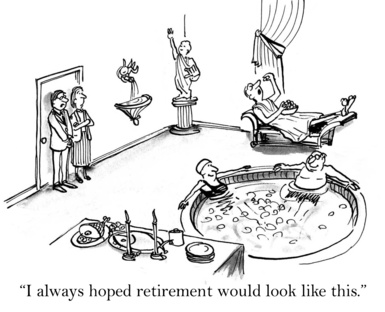
You’re not alone its estimated that 1.3 million business owner have no private pension that’s approx one in two UK Business Owners (according to Prudential).
https://www.moneyadviceservice.org.uk/en/articles/uk-business-owners-lack-pension-savings
Nearly one in three business owners (or 792,000 people) say they will be entirely reliant on the State Pension when they come to retire, compared with twice as many people across all employment types retiring this year in the UK.
Other self-employed workers will supplement their retirement incomes with money from a mix of alternative sources:
- half will draw on other savings and investments
- one in four will use equity from their properties or plan to use their partners’ pensions, and
- one in five plan to use funds from the eventual sale of their businesses.
Most of us know we should be saving more for retirement and the government knows that we need to save more too. That’s why they give pensions tax breaks and employers are being forced to auto enrole staff into pension schemes and make payments.
But how many of us stand a chance of saving £400k into our pensions? it’s a huge amount of money and yet it only buys a modest pension. Work out your strategy now before its too late.
http://stevejbicknell.com/2012/07/29/what-is-the-minimum-pension-fund-you-will-need-to-retire-400k/
steve@bicknells.net
Why Sage 50 will fall to the information revolution
At the heart of small and medium sized businesses up and down the UK lies Sage 50, the UK’s favourite accounting software. Like the Remington typewriter, it’s a great product, well designed and does what its designers intended very well.
Unfortunately, like the Remington typewriter, it is also designed with a 20th century mindset to fix a 20th century problem. And accountants and bookkeepers all over the country are using Sage 50 to make themselves indispensable to business owners in a way that holds their accounting back in the last century, reduces their effectiveness, reduces competitiveness and ultimately destroys value.
Here’s an example. Google “sage 50 year end” and you will see references to support with Year End, training on Year End, problems with Year End, questions about Year End, accountants asking each other for help with Sage year end processes. It is a process that is irreversible and therefore important to get right. A great deal of effort goes into getting it right. You might even need to get your accountant to do it for you.
But it is an utterly unnecessary process.
In the old days, when revenues and expenses were all kept on handwritten ledgers and added up throughout the year, they had to be written back to zero ready for the start of the financial year. The net total of all the year’s revenues and expenses was then added to retained profit. This was an important accounting procedure, and one that Sage 50 faithfully replicates.
Yet all transactions in an accounting system have a date. If you want to see a report for a date range, your accounting software should simply filter transactions outside that range (or, for a balance sheet or trial balance, treat the transaction appropriately according to the date of the report). More importantly, it should allow this to be done for whatever range is important for the business or period under review – regardless of whether it spans a year end – to identify performance, key trends, anomalies, and potential errors.
Precisely because of the Year End process in Sage 50, data for prior years has to be accessed in a very different way. But year ends are relevant only for statutory reporting and tax purposes. Customers, staff, and suppliers do not behave differently in a new financial year. Trends are no less relevant or important just because they span a financial year end.
So not only is it an unnecessary process – it also reduces accessibility and usefulness of information.
Of course, once the accounts are finalised for a year, it is important that the transactions are not changed thereafter. But for some companies that is important on a quarterly basis (so VAT returns are not out of sync) or even on a monthly basis (so that published monthly accounts are not adjusted). A simple restriction on all but the “Admin” user making changes before a certain date is all that is required. Not an irreversible process that permanently eliminates access to data.
That’s not all. Sage 50 costs £700 for two users, and whilst it is a powerful system it is, to all intents and purposes, closed to all outside the finance team or book-keeper. Business owners, managers, and forward-thinking accountants are waking up to the fact that with today’s cloud technology financial information can be accessed anywhere, instantaneously. Owners and managers want information now, not when the book-keeper is next in or when the accountants have examined the files at the end of the year. They are realising that it is possible to access scanned copies of supplier invoices just by clicking on their management reports and wondering why they are still telephoning their accountant and paying them to look up the information on Sage. They are wondering why they are paying over £700 for a 2-user licence to Sage 50 when solutions like Xero will allow access at different levels to many users within the company for less than half the cost.
It won’t be a quick death. Traditional accountants will resist this change. They will focus on the dangers of allowing too many people to change or view information without proper training; on the dangers of looking at information without the benefit of their annual adjustments or their considered interpretation; and on the risk of fraud without a full visible audit trail of any change made to any transaction anywhere in the system. These are all valid concerns. Accounting systems and good financial information are vital to the successful operation of any business.
Ultimately, however, our job as modern accountants – and as management accountants – is to properly evaluate the risks and benefits of precisely these kind of changes, and to help business owners get the benefits of the new technologies whilst at the same time ensuring that the information stored and produced is meaningful and secure. And the benefits of up to date, accurate information, accessible instantly and on the move, are huge.
Typewriter manufacturers may have correctly pointed out that with a word processor you could lose the entire document with an untrained accidental press of the wrong button. But ultimately the benefits far outweighed the risks. Sage 50 will go the same way.
Do you accept Bitcoins? you could be missing out

Bitcoins (BTC) are a digital currency that can be bought and sold for cash.
Watch this Video which explains how Bitcoins work
Here is a link to a UK Bitcoin Exchange
According to Bitcoin the current market price is $109.74 and currently 50,000 transactions are done per day using bitcoins.
These rules are enforced collectively by the Bitcoin network.
- Hard limit of about 21 million bitcoins.
- Bitcoins are divisible to 8 decimal places, yielding a total of approximately 21×1014 currency units.
- Transactions are cheap and mostly free.
Before you dismiss it as another crazy idea, both the BBC and Institute of Directors have commented on Bitcoins, in this months (June 2013) Director Magazine, page 17, 60 Second Expert, the IoD gave an excellent summary of key points including this comment on system safety:
US security expert Dan Kaminsky referred to the system as an ‘alien technology’ written to a standard of quality you don’t see in most software.
Bitcoin transactions are secured by military grade cryptography. Nobody can make a payment on your behalf or charge you money without having a copy of your wallet.
Mobile payments can be made too…
Bitcoin on mobiles allows you to pay with a simple two step scan-and-pay. No need to swipe your card, type a PIN, or sign anything. And all you need to do to receive Bitcoin payments is to display the QR code in your Bitcoin wallet app and let your friend scan your mobile, or touch the two phones together (using NFC radio technology).
International payments are quick…
Bitcoins can be transferred from Africa to Canada in 10 minutes. There is no bank to slow down the process, level outrageous fees, or freeze the transfer. You can pay your neighbors the same way as you can pay a member of your family in another country.
So should you accept payment by bitcoins?
steve@bicknells.net
Cash Accounting has arrived, but will it reduce your tax bill?

You can use the cash basis for Self Assessment Tax Returns (starting from 6th April 2013) if you:
- are a small self-employed businesses (sole traders and partnerships but not Limited Liability Partnerships)
- have an income of £79,000 or less a year (this is the threshold when you have to register for VAT)
You can choose to record your business income and expenses over the tax year in 1 of the following ways:
- using cash basis – record money when it actually comes in and goes out of your business (all money counts – cash, card payments, cheque, any other method)
- using traditional accounting (accruals basis) – record income and expenses when you invoice your customers or receive a bill
Cash basis might suit smaller businesses because, at the end of the tax year, you won’t have to pay Income Tax on money you haven’t received yet.
You must keep records of:
- business income received
- business expenses paid
Depending on what you use simplified expenses for, you need to record business miles for vehicles, hours you work at home and how many people live on your business premises over the year.
Sounds simpler so far, doesn’t it.
But what about …..
- Suppliers – if you have trade accounts with suppliers then you will have creditors, many small businesses get paid quickly for example a shop or a window cleaner, they don’t have debtors, so the cash basis may not be the best option
- Capital Allowances – many small businesses will claim capital allowances for their car (and claim most of the running costs too), with the cash basis you can only claim a set mileage allowance https://www.gov.uk/simpler-income-tax-simplified-expenses/vehicles-
- Equipment Finance – Under cash accounting money you owe isn’t counted until you pay it (unlike traditional capital allowances) and interest and charges are limited to £500 https://www.gov.uk/simpler-income-tax-cash-basis/income-and-expenses-under-cash-basis
Cash accounting may be simpler but will it reduce your tax bill?
steve@bicknells.net
The Cash Cycle – What is it? what is your Cycle? How can you improve it?

As the saying goes, Sales are Vanity, Profit is Sanity and Cash is King. The Cash Cycle also known as the Working Capital Cycle helps you to quickly understand how much cash you need to run your business.
Here is a great example from Steve Grice for an average business
| Average time to collect payment from customers | 60 days | Add |
| Average days sales held in stock | 25 days | Add |
| Average days taken to pay suppliers | 35 days | Subtract |
| Cash cycle | 50 days |
http://stevegrice.wordpress.com/2012/02/06/working-capital-cycle/
Here is a brilliant Cash Flow Improvement Tool from NAB http://oms.nab.com.au/media/10/power_of_one/CF.html
This model quickly and easily calculates your cash cycle but also shows the effect of making improvements.
Having discovered what the cashflow cycle is, what can you do to improve it? well that depends, assuming you have agreed the best possible terms with your suppliers, you need to find ways to speed up cash received from Customers, if your business Sells to other businesses the first thing to look at is Credit Management.
CIMA have produce a comprehensive guide http://www.cimaglobal.com/Documents/ImportedDocuments/cid_improving_cashflow_using_credit_mgm_Apr09.pdf.pdf
But Credit Management may not be enough on its own, perhaps Invoice Finance might help?
Invoice discounting is an excellent, cost-effective way for certain businesses to improve their cashflow position.
- Invoice discounting is most suitable for businesses with good financial controls in place and a strong financial background.
- Invoice Discounting is ideal if you have an annual turnover above £500,000
- Invoice discounting is suitable for business with an established credit control department.
- Invoice Discounting is suitable for a wide range of businesses including manufacturers, wholesalers, transport firms, employment agencies and providers of some business services.
- Suitable businesses for invoice discounting are growing businesses because the level of funding grows in line with increasing sales.
If your business sells to end customers you might consider Card Processing Advances.
You must be masterful. Managing cash flow is a skill and only a firm grip on the cash conversion process will yield
results.
steve@bicknells.net
Related Parties and Conflicts of Interest – Directors Responsibilities

The disclosure requirements for Related Party Transactions in published accounts are a common cause of confusion, on the face of it, its sounds easy but getting it right is often a balance between compliance and relevance. The rules are set out in the Companies Act 2006, FRS8 and for smaller companies FRSSE (April 2008). The rules apply to both Full and Abbreviated Accounts.
- FRS 8 defines a related party to include an entity’s subsidiaries, associates, joint venture interests, directors and close family members of directors.
- The standard requires an entity’s transactions with related parties, regardless of whether a price is charged, to be disclosed in that entity’s financial statements.
FRS 8 section 3 and FRSSE section 15.7 states that disclosure of the following is not required:
- Pension contributions paid to a pension fund
- Emoluments in respect of services as an employee or the reporting entity
- Transactions with parties simply because of their role as:
- Providers of Finance
- Utility Companies
- Government Departments
- Customer, Supplier, Franchiser, Distributor or Agent
The disclosure under FRS8 and FRSSE should include:
(a) the names of the transacting related parties
(b) a description of the relationship between the parties
(c) a description of the transactions
(d) the amounts involved
(e) any other elements of the transactions necessary for an understanding of the financial statements
(f) the amounts due to or from related parties at the balance sheet date and provisions for doubtful debts due from such parties at that date
(g) amounts written off in the period in respect of debts due to or from related parties.
Dividends to directors do meet the definition of related party transactions and are disclosable as such.
Trival items don’t require disclosure and the principle of materiality should be applied.
An item of information is material to the financial statements if its misstatement or omission might reasonably be expected to
influence the economic decisions of users of those financial statements, including their assessments of management’s stewardship.
The Companies Act 2006 places a statutory duty on directors in relation to potential conflicts of interest:
A director must “avoid a situation in which he has, or can have, a direct or indirect interest that conflicts, or possibly may conflict, with the interests of the company”.
Related Party Transactions will often create a potential conflict of interest.
Authorisation may be given by the directors—
(a)where the company is a private company and nothing in the company’s constitution invalidates such authorisation, by the matter being proposed to and authorised by the directors; or
(b)where the company is a public company and its constitution includes provision enabling the directors to authorise the matter, by the matter being proposed to and authorised by them in accordance with the constitution.
The authorisation is effective only if—
(a)any requirement as to the quorum at the meeting at which the matter is considered is met without counting the director in question or any other interested director, and
(b)the matter was agreed to without their voting or would have been agreed to if their votes had not been counted.
So it is vital that Directors disclose any potential conflict of interest and seek authorisation from the Board of Directors.
steve@bicknells.net
How does Overlap Relief work?
Overlap Relief applies to Sole Traders and Partnerships.
Where 5 April is used as the annual accounting date throughout the entire life of a business, there will be no overlaps between basis periods. In such cases the total profits assessed to income tax will automatically equal the total profits made during the life of the business.
In any other case there will be one or more years in which the basis periods for two successive tax years overlap. These overlaps may occur:
- In years 2 or 3 during the period in which the basis periods and accounting periods are brought into alignment; or
- During the period of realignment following a change of accounting date.
To ensure that the total profits assessed to income tax exactly equal the total profits made during the life of the business, “overlap relief” is given.
The amount available to be given as overlap relief is the amount of profits which arise in any overlap periods. An overlap period is a period which falls within two basis periods. Guidance on computing overlap relief is at BIM71080.
Overlap relief is given as a deduction in calculating the profits of the trade for the tax year:
- in which the trade ceases (see BIM71095), and / or
- an earlier tax year in which a change of accounting date occurs if the basis period for that tax year is longer than 12 months (see BIM71090).
Here is an example:
A business commences on 1 October 2010. The first accounts are made up for the 12 months to 30 September 2011 and show a profit of £45,000.
The basis periods for the first 3 tax years are:
| 2010-2011 | Year 1 | 1 October 2010 to 5 April 2011 |
| 2011-2012 | Year 2 | 12 months to 30 September 2011 |
| 2012-2013 | Year 3 | 12 months to 30 September 2012 |
The period from 1 October 2010 to 5 April 2011 (187 days) is an “overlap period”.
steve@bicknells.net
 Business Accountant