
Home » Articles posted by Steve Bicknell (Page 23)
Author Archives: Steve Bicknell
The 10 worst excuses for not paying Minimum Wage

On the 3rd April, to coincide with the 15th anniversary of the introduction of National Minimum Wage, HMRC issued a list of the worst and most elborate excuses given to their officers in the last 12 months.
- An employer said a woman on the premises was not entitled to NMW as she was his wife. When asked what his wife’s name was the employer said “err.. her name, err what’s your name love?..”
- An employer told HMRC: “I don’t think my workers know anything about the NMW because they don’t speak English.”
- Another employer told HMRC: “When the NMW goes up I do increase the amount I pay a little, even if the total pay is still below the NMW. I don’t think its right to ignore the rises in NMW.”
- A number of employers were paying rates below NMW, suggesting that accommodation they provided workers made up for their shortfall in wages.
- Upon inspection an employer told HMRC: “I know I am paying them too little, but they are happy to work for this amount because they are getting experience.”
- An employee claimed to be just working for a few days with a view to buying the business. When HMRC checked food safety records, the employee’s name was found on historic food temperature records.
- An employer claimed they realised they were not paying employees NMW and had just this week increased their wages… to an hourly rate which was still below the minimum wage.
- An employer told HMRC: “It wasn’t a conscious decision to say ‘I’m not going to pay this’, but I’ve never really considered doing it because I’ve not had people come to me and say, ‘I’m not getting paid enough’ or ‘Is this the minimum wage?’”
- An employee ran out of the premises when HMRC officers arrived to check for NMW infringements. The same employee then returned – minus the work pinafore – pretending to be a customer.
- Another employee claimed to be a friend of the owner and only in the restaurant as they were in the area. HMRC officers returned another day to find the person in the kitchen preparing food.
Jennie Granger, Director General of Enforcement and Compliance, HMRC, said:
Most employers are honest and pay their staff the correct rate. But this research shows that some still view the National Minimum Wage as a choice and will even try these crazy excuses to avoid paying workers what they are due.
Last year, HMRC’s investigations resulted in over 26,000 people getting a share of £4 million in back pay. HMRC investigate all complaints of employers failing to pay minimum wage. We will take action to recover back pay for employees and fine employers who are not playing by the rules.
HMRC officers work hard across the UK to ensure that everyone is paid at least the National Minimum Wage, and anyone who isn’t should call us.
steve@bicknells.net
Are you waiting for a New ISA?

From 1st July 2014, individual savings accounts (ISAs) will be reformed into New ISAs (NISAs) with an annual limit of £15,000.
You can invest your NISA in Cash, Stocks and Shares or in any combination.

The limits for Junior ISAs and Child Trust Funds have already been increased from £3,700 to £4,000.
From July, restrictions on corporate bonds and gilts will have the 5 year rule removed allowing you to invest in short dated securities such as Retail Bonds.
There are plans to enable Peer-to-Peer loans to be held in NISA’s but that’s still in the consultation stage.
Between now and July the most you can invest in an Cash ISA is £5,940.
So are you waiting for a New ISA?
steve@bicknells.net
Do you get tax free parking?

If you work in town or city parking costs can be high.
So if your employer gives you a parking space its a big help.
There is a tax exemption (tax and NI) for parking facilities that are within a reasonable distance of where you work and its not restricted to on-site parking.
The parking space can also be used in the evenings and weekends and isn’t restricted to the nearest car park.
You can also use Salary Sacrifice.
See EIM 21685 for further details
So yes its tax free, so why is there any confusion?
Well a few years ago (2009), we had stories like….
Commuters who drive to work face a new ‘parking tax’ of up to £350 a year.
Ministers are backing a ‘workforce parking levy’ which will come into force in Nottingham in 2012 – and is likely to be adopted across the country.The pilot scheme will see firms with more than ten parking places for staff charged £250 a year for each, rising to £350 in two years.
Time for Tax Credits
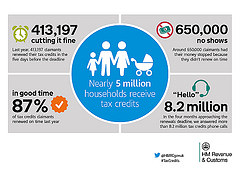
HM Revenue and Customs (HMRC) is sending out 5.8 million tax credits renewals packs which will arrive by 30 June. Over 3 million of these claims need to be renewed before the deadline for claimants to continue receiving tax credits. Last year some 650,000 claimants had their money stopped because they did not renew by the 31 July deadline.
Claimants must tell HMRC about any changes to their circumstances that they haven’t already reported, including changes to working hours, childcare costs and income, or if a partner has moved in.
Full information about renewing tax credits: ow.ly/xyPtg
HMRC 3rd June 2014
Would you like to borrow against a single invoice?
In August 2013, the UK Government became a Buyer of invoices on the MarketInvoice Platform, investing directly in UK SMEs looking to access working capital and grow their businesses.
Why is the Government investing funds through MarketInvoice?
The UK Government, via the Department of Business Innovation and Skills (‘BIS’) and as part of the ‘Business Finance Partnership’, has committed to using alternative finance providers to channel much needed growth funding to UK SMEs. The scheme is investing £1.2 billion into increasing lending to small and medium sized businesses from sources other than banks.
How does it work?
Any company can use MarketInvoice provided its sells goods or services to other large businesses.
Its a ‘pay as you go’ service and you can see the estimated costs by using their calculator
Companies are vetted and the invoice must be to a large corporate not to other SME’s.
Its confidential so your customer will not know you have used MarketInvoice, if the customer doesn’t pay you will have to refund the investor.
So far £163m of invoices have been funded by MarketInvoice.
Of course it would be better if customers always paid quickly!
steve@bicknells.net
HMRC announce – Annual Tax Summaries are coming

Tax Summaries are part of the Government’s commitment to creating a more transparent personal tax system, one that shows individual taxpayers how much tax they are paying and how the Government spends it.
Tax Summaries will detail individual taxpayers’ income tax and National Insurance contributions for the tax year, and will include a table and chart to show how this contributes to different areas of public expenditure, such as health, education and defence and so on..
In this first year they will be issued to:
• Self Assessment (SA) customers who have registered and enrolled for online services
• PAYE customers who have receive a P2 Notice of Coding or a P800 Tax Calculation
SA customers will access their Tax Summary online. Individuals in PAYE will receive theirs by post.
Individuals who are registered for SA online will be able to view their Tax Summary soon after their tax return has been filed. It will be updated if the return is amended.
Tax Summaries are for information purposes only. You and/or your clients will not need to take any action – and you won’t need to contact HMRC when you receive it. Supporting web information will also be available.
Ruth Bulteel (HMRC) 24th April 2014
Are your charity accounts being correctly examined?
To maintain public confidence in the work of charities, charity law requires most charities (income over £10,000) to have an external scrutiny of their accounts. Provided a charity is not required by law or its governing document to have an audit then trustees may choose a simpler and less expensive form of external scrutiny called an independent examination.
Trustees may opt for an independent examination instead of an audit provided their charity’s gross income is not more than £500,000, or where gross income exceeds £250,000 its gross asset are not more than £3.26 million
Details in Charity notice CC31
Its estimated that approximately 90,000 UK charities require independent examination and that there are approximately 20,000 independent examiners.
The Charity Commission has a Framework in Notice CC32 to explain what the examiner needs to do
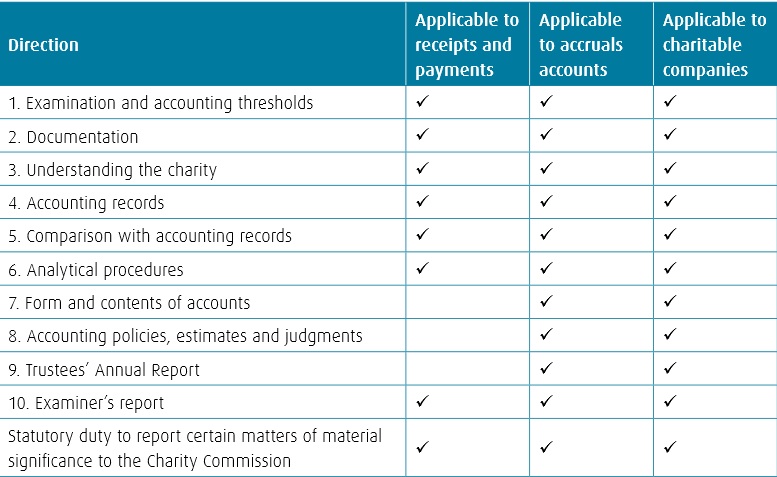
Common problems found by the charity commission include:
- The examiners report being signed by an organisation when in fact the must be signed by an individual
- Failing to address all the directives in the framework
- Insufficient scrutiny of the records
steve@bicknells.net
My staff want to Opt Out of Auto Enrolment…

Not every employee will want to be in Auto Enrolment, for example they may have their own pension arrangements.
But be very careful that you don’t induce or encourage them to opt out.
Most employees will want to be IN
Once staff have been enrolled into the pension scheme, they have one calendar month during which they can opt out and get a full refund of any contributions. This is known as the ‘opt-out period’. It starts from the whichever date is the later of:
- the date active membership was achieved, or
- the date they received your letter with the enrolment information.
Staff can’t opt out before the opt-out period starts or after it ends. If they decide to leave the scheme outside this period, they will instead be ‘ceasing active membership’. Whether they get a refund of contributions will depend on the pension scheme rules.
Staff opt out by giving you an ‘opt-out notice’. The opt-out notice is provided by the pension scheme. This is to avoid any employer involvement in the decision to opt out, which could lead to a breach of the law.
If an employer does anything to encourage or induce an employee or potential employee (at interview) to opt out they will be subject to harsh penalties.
If an employee does Opt Out they will be re-enrolled every 3 years.
steve@bicknells.net
5 reasons to move business premises into your pension?

Often business premises are owned by the business, this could be for many reasons for example the business has multiple owners or it helps to increase the business net worth.
But in many cases it would be better for the premises to be owned by the business owners pension fund because:
- The object of the business is not to own its own property, the objective should be for the business to make profits from trading
- The business could use cash tied up in the premises to invest in trading activities
- Pensions are a very tax efficient method of ownership – no capital gains, no tax on rental profits
- Company Pension Contributions are Tax Deductible and Individual contributions get income tax refunds
- You may be able to use 3 year Carry Forward to get funds into your pension scheme
In summary to move your business premises from your business to a SIPP or SSAS pension you would do the following:
- Find a lender prepared to lend a third of the property value to your pension scheme (which will be half the value of the fund ie if the property was valued at £300k, your pension could borrow £100k which is 50% of the £200k which will need to be funded by your pension scheme)
- Have the premises independently valued and rent assessed and appoint solicitors
- Create a SSAS or SIPP pension (you can include other people in your SSAS or SIPP investments)
- Transfer into your SSAS or SIPP any funds you have in other pension schemes
- As you are the business owner and its your pension scheme your business could make a payment into your pension scheme, the maximum for the last 3 years would be £140k (£50k + £50k + £40k) see details of NRE
- The pension contribution from your company could be an In Specie payment (meaning its in kind not cash)
- You could make a personal payment to your pension and if you are a higher rate tax payer your will get a tax refund via your self assessment return
- Then your pension scheme buys the premises from your business and rents it back to the business
steve@bicknells.net
Can I have a Tax Free Lunch?

Let’s look at the options….
Exemption for Canteen Meals
Employees can be provided with free or subsidised meals provided generally to employees served on the business premises where the following 3 conditions are met:
- The meals are provided on a reasonable scale
- That all employees or all those at a specific location may obtain free or subsidised meals
- If the meals are provided in a restaurant or hotel at a time when meals are being served to guests/clients part of the dining area is designated for employees
Not everyone needs to use the facility they just need the option to use it and its is possible for senior management to have superior meals.
This exemption is not available where only select employees are able to get a free lunch.
HMRC are happy to accept Tea and Coffee as trivial benefits that can be ignored.
Benchmark Subsistance
Since April 2009 employers have been able to pay their employees HMRC approved flat rate allowances referred to as Benchmark Subsistance, the rates are:
- £5 if you buy a breakfast and start your business journey before 6am
- £5 if you’re out of the office on business for more than 5 hours, and buy one meal
- £10 if you’re out of the office on business for more than 10 hours, and buy 2 meals
- £15 if your business trip keeps you beyond 8pm, and you buy an evening meal
So £15 is the maximum
You can only claim if:
- travel is required as part of your dutues or you are working at a temporary work place
- you are away from your work place or home for more than 5 hours
- you are expected to pay for food and drink after starting your journey
Meal Vouchers
Vouchers can be issued tax free but only up to the value of 15p per working day and the voucher must be non-transferable and used for meal only.
Travel Expenses
I have separate blog on this topic http://stevejbicknell.com/2013/02/13/what-travel-expenses-will-the-taxman-allow/
steve@bicknells.net
 Business Accountant