
Home » Posts tagged 'VAT' (Page 2)
Tag Archives: VAT
Are you accounting for VAT on Google AdWords and Linked In?

AdWords are invoiced from the Republic of Ireland and subject to ‘Reverse Charge‘ VAT.
When you buy services from suppliers in other countries, you may have to account for the VAT yourself – depending on the circumstances. This is called the ‘reverse charge’, and is also known as ‘tax shift’. Where it applies, you act as if you are both the supplier and the customer – you charge yourself the VAT and then, assuming that the service relates to VAT taxable supplies that you make, you also claim it back. So there’s no net cost to you – the two taxes cancel each other out. [HMRC]
If you can’t give Google a UK VAT registration number they will charge Irish VAT at 21%.
If you can supply a VAT registration number you won’t be charged Irish VAT and will be subject to ‘Reverse Charge’, this means you calculate the amount of VAT – Output Tax – on the full value of the services supplied to you, and then fill in the relevant boxes on your VAT Return as follows:
- put the amount of VAT you calculated in Box 1, and if you’re entitled to reclaim the VAT on your purchase of these supplies, also put the same figure in Box 4 (this in effect cancels out the figure in Box 1)
- put the full value of the supply in both Box 6 and Box 7
So all the figures net off to Zero!
If you make reverse charge sales – sales to which a reverse charge is applied – you must notify HMRC and send in regular Reverse Charge Sales Lists.
Linked In invoices are also subject to ‘Reverse Charge’ this is how you can give Linked In your VAT Registration:
If you purchase LinkedIn products for business purposes, you can provide your Value Added Tax # (for European Union or EU VAT customers) for proper tax handling. This information can be added for future orders (not past receipts) on the Payment section of your Privacy & Settings page.
To add your VAT number:
- Move your cursor over your profile photo in the top right of your homepage and click Privacy & Settings. For verification purposes, you may need to sign in again.
- Click Manage Billing Info.
- Click Edit next to the VAT # field.
- Enter the 2-character country code followed by your VAT#. For example, LinkedIn’s Irish VAT# is IE9740425P.
- Click Update.
steve@bicknells.net
How do you handle Input VAT on Insurance Claims?

This often causes confusion, firstly because many people wrongly assume that IPT (Insurance Premium Tax) is VAT, it isn’t! and then when they make a claim they may get a VAT only invoice.
HMRC VIT13500 has the answer…
Insurers cannot recover any VAT incurred in obtaining replacement goods or having repairs carried out for a policy holder. The supply of goods (or services in the case of repairs) is considered to be made to the policy holder. This is so even when payment is made directly to the supplier by the insurer.
Subject to the normal rules a VAT registered policy holder may treat any VAT incurred on the supply as input tax. The insurer will normally pay the policy holder compensation exclusive of VAT. The policy holder will pay the supplier the tax and recover it as input tax.
If an insurance claim is for loss or damage at a domestic property you should make sure that any VAT claimed as input tax relates only to goods used for a business purpose.
Insurance and reinsurance is exempt from VAT under article 135 of the Sixth VAT Directive.
This also explains why an insurer may ask a contractor engaged in repair work not to invoice them VAT, its simply that they want the VAT only element to be invoiced to the insured.
steve@bicknells.net
VAT Mini One Stop Shop (VAT MOSS)
How will the VAT Mini One Stop Shop (VAT MOSS) work?
You may opt to use the VAT Mini One Stop Shop (VAT MOSS) online service to save you having to register for VAT in every EU Member State where you supply digital services. This will be available from 1 January 2015, but you will be able to register to use it from October 2014.
If you are an EU business, you may register and use the VAT Mini One Stop Shop (VAT MOSS) online service in the Member State where you have your business. Using the VAT MOSS online service means you can submit a single calendar quarterly VAT MOSS return and payment covering all your EU digital service supplies. For example, if you register for the VAT MOSS online service in the UK, you will be able to account for the VAT due on your B2C digital service sales in any other Member States where you do not have an establishment by submitting a single VAT MOSS return and any related payment to HM Revenue & Customs (HMRC). HMRC will send an electronic copy of the appropriate part of your VAT MOSS return, and the related VAT payment, to each relevant Member State’s tax authority on your behalf. The VAT rate used will be that of each Member State of Consumption at the time the service was supplied.
VAT on digital services to consumers
Did you know that you will have to charge VAT on digital services to consumers from 1st January 2015?
On 1 January 2015, The European Union (EU) VAT place of supply of services rules will change for business to consumer (B2C) supplies of broadcasting, telecommunications and e-services (digital services). A consumer means a private individual.
These changes will affect all businesses that supply digital services to consumers, whether or not they are registered for UK VAT. This is because there are no registration limits for digital service supplies made to consumers outside the UK. Any business supplying digital services to a consumer in another Member State therefore has to charge VAT on the supply in that Member State and register for VAT in that Member State.
If your customer does not provide you with a VAT Registration Number (VRN), and you have no other information that suggests that your customer is in business and VAT registered, you can treat this as a B2C supply.
VAT Mini One Stop Shop (VAT MOSS)
To save you having to register for VAT in every EU Member State where you supply digital services, you may opt to use the VAT Mini One Stop Shop online service (VAT MOSS). This will be available from 1 January 2015, but you will be able to register to use it from October 2015
Remember this affects all businesses not just VAT registered ones. Contact us on 01243 788041 if you need help with this.
VAT crisis for Stalls, Car Boots, Serviced Offices and Markets

Until now the hire of stalls and other pitches used for temporary sales events have generally been considered to be the supply of land and exempt from VAT in accordance with Item 1, Group 1, Scedule 9 VAT Act 1994 and http://www.hmrc.gov.uk/vat/managing/reclaiming/partial-exemption.htm
But following discussions at EU level in connection with antiques fairs HMRC now feel that VAT should be chargeable at Standard Rate.
Not only that HMRC want VAT to be payable on add-on services such as promoting the fair, providing power and security which had been treated as incidental and VAT exempt.
The change in policy (according to http://www.tipsandadvice-vat.co.uk) came about following a VAT inspection and the decision is now being appealed.
Whilst the case applies to antiques if HMRC win it will be applied to:
- Car Boot Sales
- Services Office Accomodation
- Market Stalls
This could have a massive effect on small traders who are not VAT registered.
steve@bicknells.net
How a Snowball created a £2.8m VAT rebate

It is a question to challenge some of the finest legal minds in the land: when is a cake not a cake, and a biscuit not a biscuit?
Two judges solved it last week by letting their taste buds decide – after testing a plateful of Snowballs, a chocolate and coconut covered marshmallow treat that has been popular with the sweet-toothed masses for generations.
Verdict: Snowballs are cakes. And that means the snack’s manufacturers are in line for a £2.8million rebate from the taxman after a lengthy legal wrangle over whether Snowballs should attract VAT (which biscuits do) or be zero-rated (as a cake).
Prompt Payment Discounts – new VAT rules
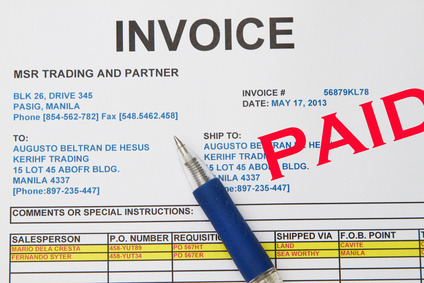
Changes to UK legislation relating to prompt payment discounts will take effect in relation to supplies made on or after 1 April 2015. From that date, the way many businesses account for VAT when offering prompt payment discounts will change.
Currently businesses can issue invoices that give details of the amount of the prompt payment discount and its terms and show the VAT due calculated on the discounted price. If the discount is not taken up HMRC has not required businesses to alter the amount of VAT invoiced and accounted for.
After the change businesses must account for VAT on the consideration they actually recieve.
HMRC are currently consulting on the implementation of this legislation and the consultation ends on 9th September.
In many ways its surprising that it hasn’t always been the case that you pay VAT on the consideration!
steve@bicknells.net
5 ways to pay less VAT

Many small businesses assume there is only one type of VAT scheme, the standard VAT scheme where you pay VAT on Sales and reclaim VAT on Purchases but in fact there are several schemes and they could save you money:
Cash Accounting
Using the Cash Accounting Scheme, you:
- pay VAT on your sales when your customers pay you
- reclaim VAT on your purchases when you have paid your suppliers
You can use the Cash Accounting Scheme if your estimated VAT taxable turnover during the next tax year is not more than £1.35 million.
Cash Accounting can improve your cashflow if your customers pay later than you need to pay your suppliers.
Flat Rate Scheme
You can join the Flat Rate Scheme for VAT and so pay VAT as a flat rate percentage of your turnover if:
- your estimated VAT taxable turnover – excluding VAT – in the next year will be £150,000 or less.
Generally you don’t reclaim any of the VAT that you pay on purchases, although you may be able to claim back the VAT on capital assets worth more than £2,000
There’s a one per cent reduction in the flat rate percentages for your first year of VAT registration.
You can get a list of Flat Rates by following this Link
Flat Rate is easy to use and can save you money if you have a lower than average level of VAT purchases.
Annual Accounting Scheme
Using the Annual Accounting Scheme, you make either nine interim payments at monthly intervals, or three quarterly interim payments, throughout the year. You only need to complete one return at the end of each year. At that point you must pay any outstanding amount. If you have overpaid, you will receive a refund.
You can use the Annual Accounting Scheme if your estimated VAT taxable turnover for the coming year is not more than £1.35 million.
This could save you money by saving time.
Retail Schemes
Using standard VAT accounting, if you are VAT-registered then you must record the VAT on each sale in your accounting records. But with the VAT retail schemes, you work out the value of your total VAT taxable sales for a period – for example, a day – and the proportions of that total that are taxable at different rates of VAT (standard, reduced and zero) according to the scheme you are using. You then apply the appropriate VAT fraction to that sales figure to calculate your VAT due.
You do not need to record VAT separately in your accounts for each and every retail sale you make. This is particularly beneficial if you make a number of low value and/or small quantity sales to the general public. This can save you a lot of time and record keeping.
Margin Schemes
Normally you charge VAT on your sales, and reclaim VAT on your purchases. However, if you sell second-hand goods, works of art, antiques or collectibles, there may have been no VAT for you to reclaim when you bought them. You may be able to use a VAT margin scheme. This enables you to account for VAT only on the difference between the price you paid for an item and the price at which you sell it – your margin. You won’t pay any VAT if you don’t make a profit on a deal. You can still use standard VAT accounting for other sales and purchases such as overheads.
steve@bicknells.net
The missed opportunity of Self Billing in e commerce

I think e commerce and EDI has focused too much on billing clients and consumers (mainly B2C rather that B2B) and not enough on improving the efficiency of processing supplier invoices.
According to research and analysis group, Gartner, typically the cost of processing an invoice in the UK averages between £4 and £25, and in some cases even up to £50, per individual invoice.
You can check the costs for yourself using pay streams calculator.
A typical purchase invoice goes though these stages:
- Its checked against the purchase order
- Its entered as unauthorised to the accounting system
- Its copied and sent to the manager to check the goods were received and were in good order
- The manager signs the invoice off
- Its status is changed to approved or in query
- Queries are sent to the supplier
- Authorised invoices are scheduled for payment
- Payment is made with a remittance advice
- Supplier statements are reconciled to the accounts system
The more suppliers you have and the bigger the volume of either invoices or transactions on invoices, the more complicated and long winded the process becomes.
Although all invoices contain the same basic information they are all formatted and laid out differently.
In some systems invoices are scanned and given a bar code to help index them to accounting system entries.
But it seems to me that many businesses have overlooked what should be a simple solution, Self Billing.
With Self Billing you generate the tax invoice for your supplier and send it to them with the payment.
The following is an extract from HMRC Self-billing:
Putting in place a self-billing arrangement with your suppliers can bring certain advantages for your business:
- it can save time and money – you can send self-billed invoices electronically so long as you can set up suitable systems
- purchase invoices are produced to a standard format, making life easier for your accounts department
- you retain control of how much you’re invoiced for – this can be helpful if your business is responsible for determining the value of the goods or services it receives
- flexibility – you can outsource the production of the self-billing invoices to a third party if you want to
Your suppliers don’t have to be based just in the UK. You can self-bill businesses in other EU countries or in countries outside the EU.
Advantages for suppliers
If you’re a supplier, entering into a self-billing agreement with your customers can be helpful for your business because:
- your customer is responsible for making sure that the VAT details on the invoices are correct
- as part of the agreement with your customer you may be able to specify when you’ll receive payment – this can help with your cash flow
Self billing has been used by the Construction Industry for many years, in fact I created a Self billing system when I worked at Rollalong in 1994, the key issues are:
- Getting suppliers to agree to join the self billing scheme
- Getting approval from HMRC
- Keeping your VAT registration records up to date
But the cost and time savings are significant, the whole process changes and could become:
- Purchase Order Sent
- Goods received and matched my the manager
- Value of Goods received entered to accounting system – this could be automated on matching
- Payment made and remittance changed to Self billing invoice
The number of queries are reduced because you aren’t invoiced for things you haven’t had, there is no need to copy and distribute invoices for sign off as this is replaced with stronger goods inward systems.
Why aren’t more businesses adopting self billing?
steve@bicknells.net
A Trillion Euro’s lost to tax evasion in the EU

A Trillion is a huge amount, its almost too large to imagine.
Here is the latest campaign video
http://ec.europa.eu/avservices/video/player.cfm?ref=I080915
As part of the intensified battle against tax fraud, the Commission launched on 6th February 2014 the process to start negotiations with Russia and Norway on administrative cooperation agreements in the area of Value Added Tax (VAT). The broad goal of these agreements would be to establish a framework of mutual assistance in combatting cross-border VAT fraud and in helping each country recover the VAT it is due. VAT fraud involving third-country operators is particularly a risk in the telecoms and e-services sectors. Given the growth of these sectors, more effective tools to fight such fraud are essential to protect public budgets. Cooperation agreements with the EU’s neighbours and trading partners would improve Member States’ chances of identifying and clamping down on VAT fraud, and would stem the financial losses this causes. The Commission is therefore asking Member States for a mandate to start such negotiations with Russia and Norway, while continuing exploratory talks with a number of other important international partners.

http://ec.europa.eu/taxation_customs/taxation/tax_fraud_evasion/missing-part_en.htm
steve@bicknells.net
 Business Accountant