
Home » Posts tagged 'Payroll'
Tag Archives: Payroll
Are you ready for the changes to employee expenses?

From April 2016 all employee expense Dispensations agreed with HMRC will cease to apply!
You will need new systems for checking expenses, HMRC will be supply examples.
Expenses which are not covered by benchmark scale rates are likely to paid and taxed via the payroll with the employee claiming relief through P87 and Self Assessment SA100.

Are you ready for the new regime?
Holiday Pay – does it include Overtime?

Back in November 2014, the BBC reported..
Workers have won a ground-breaking case at the Employment Appeal Tribunal to include overtime in holiday pay.
This means some people working overtime could claim for additional holiday pay. Currently, only basic pay counts when calculating holiday pay.
Since then we have had further legislation, the Deduction from Wages (Limitation) Regulations 2014 (the Regulations), which impose the 2 year limit on any new holiday pay claims raised from 1st July 2015 onwards. Separately, a recent case from the Northern Ireland Court of Appeal (Patterson v Castlereagh Borough Council) suggests that voluntary overtime may – in some circumstances – have to be included in holiday pay calculations.
The Northern Ireland Court of Appeal has just held that there is no reason why voluntary overtime cannot be part of an individual’s normal working week and therefore could be included in holiday pay calculations.
This will be bad news for many employers and in Scotland there are now 21,000 holiday pay claims in the Scottish Tribunal system alone. [Law-Now]
Whilst I am sure may employees will welcome the decision, this will surely lead employers to reconsider whether using contractors would be cheaper? No Holiday Pay, No Auto Enrolment Pension, No Redundancy or Statutory Pay
Many already predict that by 2020 50% of workers will be self employed!
steve@bicknells.net
R&D – impact on director remuneration
Example
You are the sole director in a company that undertakes some R&D. The annual profit is estimated at £140,000 for the year ended 31 March 2016 before taking into account the director’s remuneration.
You might think that the most tax-efficient remuneration package is £10,600 for 2015/16 to cover the personal allowance and then net dividends of £28,606 to take the director up to the basic rate band. You also need to consider whether the company can make an R&D relief claim and, if it can, how this might affect your decision.
Salary vs Dividends
If the director takes a typical remuneration package, then the net tax and NI savings over taking a salary of £39,206 would be £5,265, assuming the £2,000 employment allowance is available. This saving is made because dividends received within the basic rate band attract no further income tax plus no NI for the director or the company. This more than outweighs the additional corporation tax suffered on profits retained for dividends.
Taking R&D relief into account
From 1 April 2015 the R&D tax credit for SMEs increased from 225% to 230%. There is no R&D uplift on dividends received – only on salary. This means that paying a £39,206 salary would actually result in a saving over taking a small salary and dividends of £1,208.
What about a larger salary? In fact, if the client wanted to take out more than the basic rate band, then the salary may become even more tax efficient. A £70,000 salary would result in net tax/NI due of £1,366 after the R&D relief (assuming there was sufficient profit to offset the CT relief), whereas a salary of £10,600 and net dividends of £59,400 would result in net tax/NI of £5,883 – so the saving by taking a salary over dividends is £4,517.
HMRC will generally not accept 100% of a director’s salary costs within the R&D claim unless it can be clearly demonstrated that the director was exclusively involved in R&D activity.
Pension contributions
While dividends don’t qualify as eligible staff costs for R&D claims, company pension contributions do. New pension freedoms make pension contributions a much more attractive option, so you might want to consider this as part of your remuneration package.
If a company makes pension contributions of £40,000 for the director and they spend 60% of their time on R&D, the R&D relief on this will be £55,200 (£40,000 x 60% x 230%). This means that the overall CT saving on the pension contribution will be £14,240 (((£40,000 x 40%) + £55,200) x 20%). As there’s no NI due on pension contributions, this is an even more efficient option than taking additional salary.
Get the best deal for yourself
For advice on the best split between salary and dividends or help with setting up a limited company and registering for VAT, please contact Alterledger.
Related articles


New Childcare Vouchers from Autumn 2015
Childcare vouchers to be withdrawn for new employees
The existing benefits available in the form of childcare vouchers to employees will be withdrawn to new entrants in the Autumn of 2015. The current scheme saves National Insurance contributions for both employers and employees. Employees also save income tax.

English: British National Insurance stamp. (Photo credit: Wikipedia)
New scheme to start in Autumn 2015
The new scheme for childcare vouchers will not be as good for many employees who currently benefit from the current scheme, but where both parents work and are self employed, they can get the government to pay £2,000 towards registered childcare.
How do I set up childcare vouchers?
Childcare vouchers are set up through your payroll scheme and must be available to all eligible employees to receive the tax benefit.
Alterledger can help
For more information on saving employer’s national insurance and preparing for changes to childcare vouchers, contact Alterledger or visit the website alterledger.com.
Related articles


Letters for under 21s
Changes for employees under 21
From 6th April 2015 employer national insurance contributions will be abolished for under 21s. If you employ anyone over 16 and under 21 years old you will need to use one of the new letters for under 21s in the national insurance category setting of your payroll software.
English: British National Insurance stamp. (Photo credit: Wikipedia)
Secondary contribution rates
This table shows how much employers pay towards employees’ National Insurance for tax year 2014 to 2015. The contribution rate calculated by your payroll software is set by the category letter.
| Category letter | £111 to £153
a week |
£153.01 to £770
a week |
£770.01 to £805
a week |
From £805.01
a week |
|---|---|---|---|---|
| A | 0% | 13.8% | 13.8% | 13.8% |
| B | 0% | 13.8% | 13.8% | 13.8% |
| C | 0% | 13.8% | 13.8% | 13.8% |
| D | 3.4% rebate | 10.4% | 13.8% | 13.8% |
| E | 3.4% rebate | 10.4% | 13.8% | 13.8% |
| J | 0% | 13.8% | 13.8% | 13.8% |
| L | 3.4% rebate | 10.4% | 13.8% | 13.8% |
National insurance categories
Most employees will have a category letter of A or D depending on whether or not they are in a contracted-out workplace pension scheme. There are categories for mariners and deep-sea fisherman; the more common categories are shown below:
Employees in a contracted-out workplace pension scheme
| Category letter | Employee group |
|---|---|
| D | All employees apart from those in groups E, C and L in this table |
| E | Married women and widows entitled to pay reduced National Insurance |
| C | Employees over the State Pension age |
| L | Employees who can defer National Insurance because they’re already paying it in another job |
Employees not in contracted-out pension schemes
| Category letter | Employee group |
|---|---|
| A | All employees apart from those in groups B, C and J in this table |
| B | Married women and widows entitled to pay reduced National Insurance |
| C | Employees over the State Pension age |
| J | Employees who can defer National Insurance because they’re already paying it in another job |
Employees in a money-purchase contracted-out scheme
This kind of scheme ended in April 2012 but some employees might still be part of one.
| Category letter | Employee group |
|---|---|
| F | Tax years before 2012 to 2013 only: all employees apart from the ones in groups G, C and S in this table |
| G | Tax years before 2012 to 2013 only: married women and widows entitled to pay reduced National Insurance |
| C | Employees over the State Pension age |
| S | Tax years before 2012 to 2013 only: employees who can defer National Insurance because they’re already paying it in another job |
How to claim zero rate of employer contributions
You should already have proof of age for all your employees. A copy of a passport, driving licence or birth certificate will be required to show that your employee qualifies for the new zero rate of employer’s contribution. The seven new categories are valid from 6th April and must be applied from the first salary payment after 5th April 2015 to benefit from the new zero contribution rate for employers.
What does this have to do with Auto Enrolment?
You need to have proof of age for all your employees aged under 21 to claim the zero contribution rate for employer’s National Insurance. By the time of your staging date you must assess all your workers, based on their earnings and age. To help you prepare for Pension Auto Enrolment you can make sure that all your employee records are up to date and that your payroll software has the full details for all workers including their date of birth. This is a good opportunity to clean up all your employee data.
Alterledger can help
For more information on saving employer’s national insurance and preparing for Pension Auto Enrolment, contact Alterledger or visit the website alterledger.com.
Related articles


What a difference a day makes
How about three extra days?
HMRC has relaxed the rules on “Real Time Information” for payroll reporting. UK employers are required to send electronic reports to HMRC with each payment of wages to employees. HMRC are now saying that you can submit your RTI report up to three days after the payment date without incurring a penalty.
Any employer who has received an in-year late filing penalty for the period 6 October 2014 to 5 January 2015 and filed within three days, should appeal online by completing the “Other” box and add “Return filed within 3 days”.
Outsource your payroll
Despite the relaxation provided by three extra days, the burden on employers is only likely to increase over the coming months. Auto enrolment is being rolled out to all UK employers over the next couple of years. With the new payroll year about to start on 6th April, now is a good time to consider using a payroll bureau – or at least checking that your current systems will deal effectively with auto enrolment pensions. For more information please and see how Alterledger can help please click here.
Related articles


15 Benefits that won’t be on your P11D
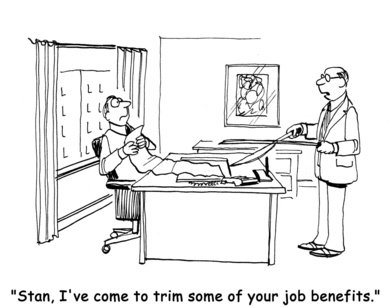
It’s P11D time, but have you considered giving your employees benefits in kind that are tax free, here are some to choose from:
- Pensions – Up to £40k can be paid in to you pension schemem by your employer (2014/15) and you can use carry forward to pay in even more
- Childcare – Up to £55 per week but check the rules to makesure your childcare complies (HMRC Leaflet IR115)
- Mobile Phone – One per employee
- Lunch – Tax Free Lunch Blog
- Cycle Schemes – Cycle to Work Blog
- Fitness – Fitness Blog
- Parties and Gifts – Christmas Blog
- Parking – Parking Blog
- Business Mileage Allowance – 45p for the first 10,000 miles then 25p
- Long Service Award – A bit restrictive as you need 20 years service, the tax free amount is £50 x the number of years
- Eye Tests and Spectacles – The Eye Test must be needed under the Health & Safety at Work Act
- Suggestion Schemes – Suggestion Scheme Blog
- Insurance such and Death in Service and Income Protection – Medical Insurance Blog
- Travel Expenses – Travel Blog
- Working From Home – Working from Home Blog
steve@bicknells.net
Time for a new payroll process?
A recent experience of a client being selected for a National Minimum Wage review by HMRC led me to recommend some changes to their payroll process.
Like many businesses this one paid its staff by the day and adjusted for absences such as unpaid sick. Some of the staff were at or just above the minimum wage for their age, so increasing the risk of an error pushing them below the minimum. HMRC conducted a check which spanned several months, with much to-ing and fro-ing over detail and found some errors which had resulted in a few staff being underpaid small amounts.
Having gone through the results with the client I suggested some changes to the payroll process:
- Stop basing pay on a daily rate, pay by the hour instead.
- Implement a simple timesheet process, where hours per day are recorded and the employee signs it at the end of the pay period as a correct record of hours worked.
- Where staff are on piece work, ensure the equivalent hourly rate is calculated to check it is above the minimum wage.
- Check each month for staff birthdays or other changes in circumstances that might change their minimum wage level.
So if you pay by the day, it is worth checking you can easily produce records of the actual hours worked. My client has only a few employees, so can manage with a paper record, if you have enough staff to warrant a computerised time recording system, this may be worth considering.
Chris Dixon, Eightoaks
chris.dixon@eightoaks.ltd.uk
Can I process my payroll once a year?

Yes, HMRC are now able to process requests for annual payrolls.
An annual scheme must meet all of the following requirements:
- all the employees are paid annually
- all the employees are paid at the same time/same date
- the employer is only required to pay HMRC annually
Once a business is registered as an annual scheme, an Employer Payment Summary (EPS) is not required for the 11 months of the tax year where no payments are made to the employees.
We all have busy schedules………
Annual schemes are likely to be adopted mainly by very small businesses and single person companies as you can pay all your salary in one go and save yourself 11 months of RTI reporting.
steve@bicknells.net
Top 5 useful things I have learnt about RTI

Real Time Information (RTI) has now been with us for a few months and once you get used to Full Payment Submissions (FPS) and Employer Payment Summaries (EPS) its not too bad.
HMRC recently reported:
With over 1.4 million PAYE schemes successfully reporting in real time, the launch of PAYE Real Time Information (RTI) continues to go well. The vast majority of employers (83% of small & medium size employers and 77% of more than 1 million micro employers) have started reporting in real time, but we are aware that there are still some employers who have not started yet.
Given time you might even get to Love doing your RTI Payroll as much as Suzie Humphreys…
Here are some things that I have learnt that you might find helpful:
Split FPS Submissions
You can only submit each employee once for each payment period but you can make more than one Full Payment Submission, this is useful if you have Monthly and Weekly payrolls, or a late starter you have process after the FPS has been submitted, or if you split your payroll by seniority and different staff process sections.
Hashtag and Paying by BACS
At the moment if you pay employees by Direct BACS using systems such as Nat West Payaway the Direct BACS submission needs to include a Hashtag to enable HMRC to match the payment with the FPS, however, if you don’t use Direct BACS and you just pay by Online Banking, Bankline, BACS or CHAPS or any other method you don’t need the Hashtag. I am sure that will change!
Starters and Leavers
When you enter a new employee HMRC are notified on the first FPS that they appear on and you must no longer use a P46 to get starter information you need to us the new HMRC Starter Checklist
P45’s are just for the Employee to refer to and are useful to show to their new employer, don’t send them to HMRC. HMRC are notified of leavers on the FPS.
CIS
If you have deductions under the Construction Industry Scheme you need to enter them on the EPS to reduce the amount of tax payable.
NI Holiday
NI Holidays for new companies end in September 2013 but until then need to be entered on the EPS. Form E89 is used to keep track of how much has been claimed.
Here are some more useful tips and facts on RTI:
Relaxation of Rules for Small Companies
HM Revenue & Customs (HMRC) recognise that some small employers who pay employees weekly, or more frequently, but only process their payroll monthly may need longer to adapt to reporting PAYE information in real time. HMRC have therefore agreed a relaxation of reporting arrangements for small businesses.
HMRC is planning to extend the temporary relaxation for employers with fewer than 50 employees to April 2014. This relaxation means that these businesses are still required to report through the new system, but are able to do so once a month (but no later than the end of the tax month (5th)), rather than each time they pay their employees. This gives small businesses that pay weekly (or more frequently), but who only run their payroll at the end of the month, some extra time to adjust to the new requirements.
Annual Schemes
Many micro businesses such as one person companies are switching to annual payrolls.
An annual scheme must meet all of the following requirements:
- all the employees are paid annually
- all the employees are paid at the same time/same date
- the employer is only required to pay HMRC annually
Once a business is registered as an annual scheme, an Employer Payment Summary (EPS) is not required for the 11 months of the tax year where no payments are made to the employees.
But currently HMRC are unable to process requests to become Annual.
HMRC are working to rectify this position and will publish a further ‘What’s New’ message to announce when this is ready.
Late Filing Penalties
If you do not report the final payment made to an employee, for the tax year 2013-2014, by 19 May in the following tax year you will be charged a late filing penalty.
Penalties are calculated on the basis of £100 per 50 employees and accrue for each month (or part month) that a return remains outstanding after 19 May.
If you fail to report this information by 19 May, or tell HMRC no return was due by sending an EPS, they will write to you (and your authorised agent if you have one) advising that a penalty may already have been incurred and that you must report this information as soon as possible to prevent the penalty building up any further.
steve@bicknells.net
 Business Accountant