
Home » Posts tagged 'HMRC' (Page 6)
Tag Archives: HMRC
We love Self Employment in UK…..

The UK has seen the fastest growth in self-employment in Western Europe over the past year, according to the Institute for Public Policy Research (IPPR).
The number of self-employed workers rose by 8%, faster than any other Western European economy, and outpaced by only a handful of countries in Southern and Eastern Europe.
The IPPR’s analysis shows that the UK – which had low levels of self-employment for many years – has caught up with the EU average. If current growth continues, it says, the UK will look more like Southern and Eastern European countries which tend to have much larger shares of self-employed workers.
According to Tax Research UK…
Something like 80% of all the new jobs created since 2010 are, in fact, self-employments, and there are a number of things that very significantly differentiate self-employments from jobs.
The first is security: there is none.
The second is durability: vast numbers of new small businesses fail, which is one reason why I doubt the official statistics. I am sure they record the supposed start-ups correctly but seriously doubt if they have properly counted the failures.
Then there is the issue of pay. The evidence is overwhelming that in recent years earnings from self-employment have, on average, declined significantly.
A worker’s employment status, that is whether they are employed or self-employed, is not a matter of choice. Whether someone is employed or self-employed depends upon the terms and conditions of the relevant engagement.
Many workers want to be self-employed because they will pay less tax, this calculator gives you a quick comparison between being employed, self employed or taking dividends in a limited company.
HMRC have a an employment status tool to help you determine whether a worker can be self-employed or should be an employee http://www.hmrc.gov.uk/calcs/esi.htm
In summary, why is it attractive to use Self Employed Freelancers?
- Skill is more important than location in many business sectors – we live in world where internet can allow you to work with anyone at anytime, you can now track down the best person to work with even if they live thousands of miles away
- Lower fixed costs – Using Freelancers will lower your fixed costs (in similar way to Zero Hours Contracts), you employ them for a specific project and only pay for what you need so there isn’t any surplus capacity
- Tax advantages – Freelancers run their own business and that means they pay less tax than employees. Employers save tax too, such as Employers NI.
- Competitive Advantage – You can put together a team for a contract rather than finding contracts that fit your workforce, this means you can hire the best.
- 110% Commitment – A Freelancers success and future work depends on them performing to the highest level on every contract, failure is not an option for a successful contractor.
So do you think self employment is good for the UK?
Is it a Van or a Car?
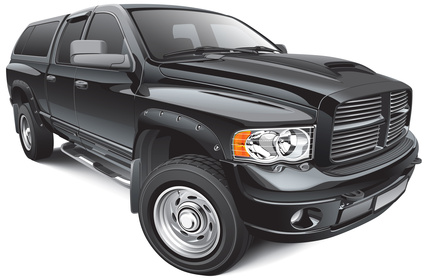
It makes a big difference whether a double cab pick up is treated as Car or a Van for tax purposes, in summary:
- Benefit in Kind on Cars is linked to CO2 where as on a Van its Flat Rate (and could be zero if your private use is insignificant)
- Vans qualify for the Annual Investment Allowance, Cars have restricted Capital Allowances
- You can reclaim VAT on Vans but its much harder to reclaim VAT on cars
HMRC have some guidance in EIM23150….
Under this measure, a double cab pick-up that has a payload of 1 tonne (1,000kg) or more is accepted as a van for benefits purposes. Payload means gross vehicle weight (or design weight) less unoccupied kerb weight (care is needed when looking at manufacturers’ brochures as they sometimes define payload differently).
Under a separate agreement between Customs and the Society of Motor Manufacturers and Traders (SMMT), a hard top consisting of metal, fibre glass or similar material, with or without windows, is accorded a generic weight of 45kg. Therefore the addition of a hard top to a double cab pick-up with an ex-works payload of 1,010 kg will convert the vehicle into a car (net payload reduced to 965 kg). Under this agreement, the weight of all other optional accessories is disregarded. HMRC has also adopted this treatment.
http://www.hmrc.gov.uk/manuals/eimanual/eim23150.htm
A double cab with a payload in excess of 1000kg can still be classified as a car if the taxman dealing with the case decides it is a car. You may have to justify a genuine business need for the vehicle.
steve@bicknells.net
Are you ready for the OTS to check your employment status?

Contractor Weekly reported on th 29th July 2014…
As part of the ongoing mission to create a simpler and fairer tax system the Office of Tax Simplification (OTS) has been tasked with carrying out reviews of employment status and also tax penalties, with a view to producing a report in time for next year’s Budget.
According to the OTS, the boundary between employment and self-employment no longer reflects modern working patterns, particularly in recent years. Many people have multiple jobs and can be classed as employed in one whilst self-employed in another. The rise of the freelancing business model has also caused some to suggest this is a ‘third way’ between employment and self-employment.
A worker’s employment status, that is whether they are employed or self-employed, is not a matter of choice. Whether someone is employed or self-employed depends upon the terms and conditions of the relevant engagement.
Many workers want to be self-employed because they will pay less tax, this calculator gives you a quick comparison between being employed, self employed or taking dividends in a limited company.
HMRC have a an employment status tool to help you determine whether a worker can be self-employed or should be an employee http://www.hmrc.gov.uk/calcs/esi.htm
It will be interesting to see the report that the Office of Tax Simplification (OTS) produce, especially if they find a ‘third way’
steve@bicknells.net
Is there any point in DOTAS if the tax will be paid upfront?

The Finance (No2) Bill 2014, which is due to receive Royal Assent in July, contains legislation which will enable HMRC to demand payment upfront of disputed tax in certain cases, principally involving tax avoidance or deferral. It is estimated that up to 43,000 taxpayers could receive such a demand. Those demands will be issued over an extended period but the first are likely to be issued as early as September 2014.
Taxpayers who have sought tax advantages through tax avoidance schemes that fall within the Disclosure of Tax Avoidance Schemes (DOTAS) are likely to be most affected.
Here is a link to the SRNs (Scheme Reference Numbers) affected – click here
Over the next 2 years HMRC estimates that it will rake in £7 billion through the use of these notices. Of this £7 billion, individuals will weigh in with £5.1 billion. This would equate to each person having a gross income of £262,000.
Last week the Financial Times reported that Ingenious Media, an investment company, warned 1,300 of its investors, including business leaders, entertainers and sporting celebrities, such as David Beckham, to expect substantial tax bills with interest, as reward for using its tax avoidance scheme. (Contractor Weekly)
This is a radical change and many might say its been a long time coming.
It has always struck me as slightly bizarre the DOTAS were registered and allowed to exist.
steve@bicknells.net
VAT crisis for Stalls, Car Boots, Serviced Offices and Markets

Until now the hire of stalls and other pitches used for temporary sales events have generally been considered to be the supply of land and exempt from VAT in accordance with Item 1, Group 1, Scedule 9 VAT Act 1994 and http://www.hmrc.gov.uk/vat/managing/reclaiming/partial-exemption.htm
But following discussions at EU level in connection with antiques fairs HMRC now feel that VAT should be chargeable at Standard Rate.
Not only that HMRC want VAT to be payable on add-on services such as promoting the fair, providing power and security which had been treated as incidental and VAT exempt.
The change in policy (according to http://www.tipsandadvice-vat.co.uk) came about following a VAT inspection and the decision is now being appealed.
Whilst the case applies to antiques if HMRC win it will be applied to:
- Car Boot Sales
- Services Office Accomodation
- Market Stalls
This could have a massive effect on small traders who are not VAT registered.
steve@bicknells.net
What is your status – Self Employed or Employed?

A worker’s employment status, that is whether they are employed or self-employed, is not a matter of choice. Whether someone is employed or self-employed depends upon the terms and conditions of the relevant engagement.
Many workers want to be self-employed because they will pay less tax, this calculator gives you a quick comparison between being employed, self employed or taking dividends in a limited company.
HMRC have a an employment status tool to help you determine whether a worker can be self-employed or should be an employee http://www.hmrc.gov.uk/calcs/esi.htm
If a worker should be an employee HMRC will seek to recover the employment taxes from the employer not the worker, so there are considerable risks for the employer if the status of its workers is wrongly assessed.
Some employers might decide to insist that sub-contractors must be limited companies, as companies can’t not be reclassified as employees.
The sub-contractor would then need to assess whether IR35 applies to their contract. If IR35 does apply then please read this blog on Deemed Payments
steve@bicknells.net
Don’t forget your 31 July Payment on Account!

The 31 July 2014 is the date that you should make your second payment on account to HMRC.
For example on 31 July 2014, you’d make your second payment on account for the 2013-14 tax year.
From the 31 July you will have to pay interest on anything you owe and haven’t paid, including any unpaid penalties, until HMRC receives your payment.
As well as the 4.54 million self-employed people in the UK, higher rate taxpayers, company directors and anyone with more than one income are required to make a payment on account – part of their annual tax payment.
Don’t forget to pay!
steve@bicknells.net
Prompt Payment Discounts – new VAT rules
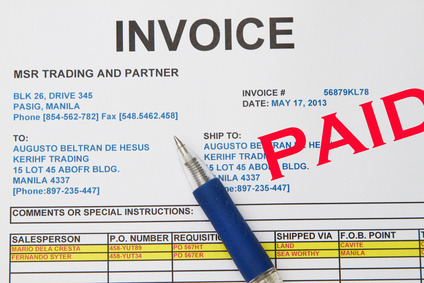
Changes to UK legislation relating to prompt payment discounts will take effect in relation to supplies made on or after 1 April 2015. From that date, the way many businesses account for VAT when offering prompt payment discounts will change.
Currently businesses can issue invoices that give details of the amount of the prompt payment discount and its terms and show the VAT due calculated on the discounted price. If the discount is not taken up HMRC has not required businesses to alter the amount of VAT invoiced and accounted for.
After the change businesses must account for VAT on the consideration they actually recieve.
HMRC are currently consulting on the implementation of this legislation and the consultation ends on 9th September.
In many ways its surprising that it hasn’t always been the case that you pay VAT on the consideration!
steve@bicknells.net
5 Creative Tax Reliefs

The Creative Industries have done rather well in the last couple of years as far as tax reliefs go and more are just about to come on stream.
Creative industry tax reliefs (CITR) are a group of 5 Corporation Tax reliefs that allow qualifying companies to claim a larger deduction, or in some circumstances claim a payable tax credit when calculating their taxable profits.
These reliefs work by increasing the amount of allowable expenditure. Where your company makes a loss, you may be able to ‘surrender’ the loss and convert some or all of it into a payable tax credit.
Film Tax Relief (FTR) was introduced in April 2007 and 2 additional reliefs were introduced in April 2013. These are Animation Tax Relief (ATR) and High-end Television Tax Relief (HTR). A fourth relief for Video Games Development was introduced from 1 April 2014. A fifth relief for Theatre Tax Relief is to be introduced in Autumn 2014. HMRC
Let’s take a look at the 5 tax reliefs:
Film Tax Relief (FTR)
Your company will be entitled to claim FTR on a film as long as:
- the film passes the culture test – it is considered a ‘British film’
- the film is intended for theatrical release
- at least 25% of the total production costs relate to activities in the UK
Animation Tax Relief (ATR)
Your company will be entitled to claim ATR on an animation programme if:
- the programme passes the cultural test – a similar test to that for FTR but within the European Economic Area
- the programme is intended for broadcast
- at least 51% of the total core expenditure is on animation
- at least 25% of the total production costs relate to activities in the UK
High-end Television Tax Relief (HTR)
Your company will be entitled to claim HTR on a programme if:
- the programme passes the cultural test – a similar test to that for FTR but within the European Economic Area
- the programme is intended for broadcast
- the programme is a drama, comedy or documentary
- at least 25% of the total production costs relate to activities in the UK
- the average qualifying production costs per hour of production length is not less than £1million per hour
- the slot length in relation to the programme must be greater than 30 minutes
Video Games Development
Your company will be entitled to claim VGTR as long as:
- the video game is British
- the video game is intended for supply
- at least 25% of core expenditure is incurred on goods or services that are provided from within in the European Economic Area (EEA)
Theatre Tax Relief
Details to follow in the Autumn of 2014
steve@bicknells.net
5 ways to pay less VAT

Many small businesses assume there is only one type of VAT scheme, the standard VAT scheme where you pay VAT on Sales and reclaim VAT on Purchases but in fact there are several schemes and they could save you money:
Cash Accounting
Using the Cash Accounting Scheme, you:
- pay VAT on your sales when your customers pay you
- reclaim VAT on your purchases when you have paid your suppliers
You can use the Cash Accounting Scheme if your estimated VAT taxable turnover during the next tax year is not more than £1.35 million.
Cash Accounting can improve your cashflow if your customers pay later than you need to pay your suppliers.
Flat Rate Scheme
You can join the Flat Rate Scheme for VAT and so pay VAT as a flat rate percentage of your turnover if:
- your estimated VAT taxable turnover – excluding VAT – in the next year will be £150,000 or less.
Generally you don’t reclaim any of the VAT that you pay on purchases, although you may be able to claim back the VAT on capital assets worth more than £2,000
There’s a one per cent reduction in the flat rate percentages for your first year of VAT registration.
You can get a list of Flat Rates by following this Link
Flat Rate is easy to use and can save you money if you have a lower than average level of VAT purchases.
Annual Accounting Scheme
Using the Annual Accounting Scheme, you make either nine interim payments at monthly intervals, or three quarterly interim payments, throughout the year. You only need to complete one return at the end of each year. At that point you must pay any outstanding amount. If you have overpaid, you will receive a refund.
You can use the Annual Accounting Scheme if your estimated VAT taxable turnover for the coming year is not more than £1.35 million.
This could save you money by saving time.
Retail Schemes
Using standard VAT accounting, if you are VAT-registered then you must record the VAT on each sale in your accounting records. But with the VAT retail schemes, you work out the value of your total VAT taxable sales for a period – for example, a day – and the proportions of that total that are taxable at different rates of VAT (standard, reduced and zero) according to the scheme you are using. You then apply the appropriate VAT fraction to that sales figure to calculate your VAT due.
You do not need to record VAT separately in your accounts for each and every retail sale you make. This is particularly beneficial if you make a number of low value and/or small quantity sales to the general public. This can save you a lot of time and record keeping.
Margin Schemes
Normally you charge VAT on your sales, and reclaim VAT on your purchases. However, if you sell second-hand goods, works of art, antiques or collectibles, there may have been no VAT for you to reclaim when you bought them. You may be able to use a VAT margin scheme. This enables you to account for VAT only on the difference between the price you paid for an item and the price at which you sell it – your margin. You won’t pay any VAT if you don’t make a profit on a deal. You can still use standard VAT accounting for other sales and purchases such as overheads.
steve@bicknells.net
 Business Accountant