
Home » Posts tagged 'HMRC' (Page 12)
Tag Archives: HMRC
IR35 – How are deemed payments taxed?

The Intermediaries legislation known as IR35 was introduced on 6th April 2000.
The aim of the legislation is to eliminate the avoidance of tax and National Insurance Contributions (NICs) through the use of intermediaries, such as Personal Service Companies or partnerships, in circumstances where an individual worker would otherwise –
- For tax purposes, be regarded as an employee of the client; and
- For NICs purposes, be regarded as employed in employed earner’s employment by the client.
Many Freelance Contractors have some assignments within IR35 and some outside, you can ask HMRC for their opinion.
If you would like HMRC’s opinion on a particular engagement you should send your contract(s) to:
IR35 Customer Service Unit
HMRC
Ground Floor North
Princess House
Cliftonville Road
Northampton
NN1 5AE
e-mail: IR35 Unit
Tel No: 0845 303 3535 (Opening hours 8.30am to 4.30pm, Monday to Friday. Closed weekends and bank holidays) Fax No: 0845 302 3535
If your contract is within IR35 its not the end of the world, the chances are that you will still pay less tax than a direct employee, to calculate the tax you have to work through 8 stages of calculation, here is a summary:
- How much were you paid? deduct 5% for business costs
- Add any other payments/non cash benefits
- Deduct business expenses – travel, meals, accommodation
- Deduct capital allowances relevant to the work done
- Deduct pension contributions made by your company
- Deduct any NIC paid by your company on your salary and benefits
- Deduct any salary or benefits already paid and taxed
- If the answer is zero or negative then there is no deemed payment, if the answer is positive you do have a deemed payment which will be taxable
HMRC have a spreadsheet you can download which has further details.
steve@bicknells.net
Disincorporation Relief – its not just for Window Cleaners

Discorporation Relief is new, it came in to effect from 1st April 2013 and is currently available until 31st March 2018.
HMRC estimate that 610,000 businesses are eligible to use the Disincorporation Relief.
Here is the HMRC example from the Consultation document:
Window Cleaners Ltd a one man company that incorporated on 1 April 2004 and the shareholder, Mr Smith, had previously carried on the business as a self employed individual before 1 April 2002. Turnover is below the VAT threshold. The business has an established repeat customer base. The only significant business assets are a van, equipment and goodwill. The van and equipment are worth around £3,000 and the goodwill is valued at £15,000, together worth £18,000. The goodwill was acquired from Mr Smith for £5,000 on 1 April 2004. The Capital Gains rules apply and Corporation Tax is payable @ 20 per cent.
Tax chargeable on goodwill:
If the assets are distributed back to the shareholder (Mr Smith) on 1 February 2012 the following charge would arise on the goodwill:
· Corporation Tax on goodwill gain £8,540 (£15,000 – £5,000 less indexation £1,460 (£5,000 x 0.292)) @ 20 per cent = £1,708
There is no Corporation Tax to pay on any gains made on the transfer of the van and equipment because these are chattels worth no more than £6,000.
Shareholder charges:
Mr Smith will also have to consider what tax he will have to pay on the value of the distributed assets of £18,000. The amount of charge will depend on whether the assets are treated as income or capital.
If distributed as capital, the actual amount of Capital Gains Tax that Mr Smith will have to pay will depend on a number of factors, including how much was paid for the shares, whether incorporation relief was claimed, whether Entrepreneurs’ Relief conditions are satisfied and availability of capital loss relief.
Assuming £100 was paid for the shares, that Mr Smith has no other gains in the tax year (and so the annual exempt amount of £10,600 can be used against the gain) and that he is entitled to Entrepreneurs’ Relief, then the amount of Capital Gains Tax to pay would be:
· (£18,000 – £100 – £10,600) x 10 per cent = £730
If the assets are distributed as income (i.e. a dividend) Mr Smith will only have to pay Income Tax if any part of the dividend is liable to Higher Rate Tax.
Criteria to qualify for disincorporation relief
Below is a basic summary of the main qualifying criteria:
- The company must have been operational for 12 months and the shareholders must have held their shares for 12 months
- The business must be transferred as a going concern to the existing company shareholders
- The transfer must become effective before 31st March 2018
- All assets, including goodwill, capital assets, trading stock and cash, must be included in the transfer. The value of those assets must be no greater than £100,000
- Recipients of the new “disincorporated” entity must either be individuals or partnership members (not members of an LLP)
Why would you want to disincorporate?
- Reduced compliance – Company Accounts, Corporation Tax Returns, PAYE, Annual Returns
- Reduced Costs – Accountancy Fees
- Cash Based Accounting
steve@bicknells.net
Cash Accounting has arrived, but will it reduce your tax bill?

You can use the cash basis for Self Assessment Tax Returns (starting from 6th April 2013) if you:
- are a small self-employed businesses (sole traders and partnerships but not Limited Liability Partnerships)
- have an income of £79,000 or less a year (this is the threshold when you have to register for VAT)
You can choose to record your business income and expenses over the tax year in 1 of the following ways:
- using cash basis – record money when it actually comes in and goes out of your business (all money counts – cash, card payments, cheque, any other method)
- using traditional accounting (accruals basis) – record income and expenses when you invoice your customers or receive a bill
Cash basis might suit smaller businesses because, at the end of the tax year, you won’t have to pay Income Tax on money you haven’t received yet.
You must keep records of:
- business income received
- business expenses paid
Depending on what you use simplified expenses for, you need to record business miles for vehicles, hours you work at home and how many people live on your business premises over the year.
Sounds simpler so far, doesn’t it.
But what about …..
- Suppliers – if you have trade accounts with suppliers then you will have creditors, many small businesses get paid quickly for example a shop or a window cleaner, they don’t have debtors, so the cash basis may not be the best option
- Capital Allowances – many small businesses will claim capital allowances for their car (and claim most of the running costs too), with the cash basis you can only claim a set mileage allowance https://www.gov.uk/simpler-income-tax-simplified-expenses/vehicles-
- Equipment Finance – Under cash accounting money you owe isn’t counted until you pay it (unlike traditional capital allowances) and interest and charges are limited to £500 https://www.gov.uk/simpler-income-tax-cash-basis/income-and-expenses-under-cash-basis
Cash accounting may be simpler but will it reduce your tax bill?
steve@bicknells.net
What if I give my shares away?
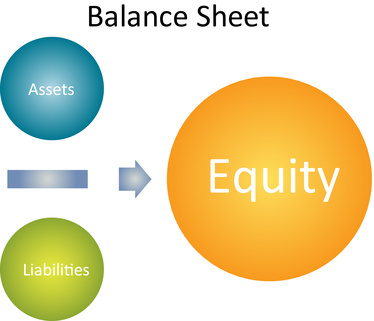
There is a common mis-conception that if you give something away it doesn’t have any tax implications, unfortunately, that isn’t the case.
When you give away shares you usually work out your gain or loss as if you’ve sold the shares at market value. The market value is the price you would expect to receive if you sold them on the open market. This also applies if you sell them for less than their full value.
There are some exceptions:
- if you can claim Gift Hold-Over Relief
- if you give the shares to your husband, wife or civil partner
- if you give shares to a registered charity
To qualify for Gift Hold-Over Relief, the shares must be in a trading company, or the holding company of a trading group, and one of the following must apply:
- the shares aren’t listed on a recognised stock exchange
- you’ve at least 5 per cent of the voting rights in the company
You don’t pay Capital Gains Tax when you give (or otherwise dispose of) shares, to your husband, wife or civil partner, providing both of the following apply:
- you’ve lived together for any part of the tax year in which you made the gift
- the gift isn’t ‘trading stock’ (trading goods bought for resale)
You won’t have to pay Capital Gains Tax on a gift of shares to a registered UK charity.
HMRC have further details and a Help Sheet 295 containing further details.
You can ask HMRC to check your market valuation by submitting Form CG34 it will take at least 2 months.
Settlements Legislation S624/S660
If you think moving shares in your company between yourself and your spouse sounds like a great way to save tax, think again!
Since the 1930’s we have had Settlements Legislation which prevents you from giving income or assets to someone else in your family in order to pay less tax.
Where the anti-avoidance Settlements legislation applies, all income transferred by a settlement is treated as that of the settlor.
steve@bicknells.net
Can I process my payroll once a year?

Yes, HMRC are now able to process requests for annual payrolls.
An annual scheme must meet all of the following requirements:
- all the employees are paid annually
- all the employees are paid at the same time/same date
- the employer is only required to pay HMRC annually
Once a business is registered as an annual scheme, an Employer Payment Summary (EPS) is not required for the 11 months of the tax year where no payments are made to the employees.
We all have busy schedules………
Annual schemes are likely to be adopted mainly by very small businesses and single person companies as you can pay all your salary in one go and save yourself 11 months of RTI reporting.
steve@bicknells.net
Top 5 useful things I have learnt about RTI

Real Time Information (RTI) has now been with us for a few months and once you get used to Full Payment Submissions (FPS) and Employer Payment Summaries (EPS) its not too bad.
HMRC recently reported:
With over 1.4 million PAYE schemes successfully reporting in real time, the launch of PAYE Real Time Information (RTI) continues to go well. The vast majority of employers (83% of small & medium size employers and 77% of more than 1 million micro employers) have started reporting in real time, but we are aware that there are still some employers who have not started yet.
Given time you might even get to Love doing your RTI Payroll as much as Suzie Humphreys…
Here are some things that I have learnt that you might find helpful:
Split FPS Submissions
You can only submit each employee once for each payment period but you can make more than one Full Payment Submission, this is useful if you have Monthly and Weekly payrolls, or a late starter you have process after the FPS has been submitted, or if you split your payroll by seniority and different staff process sections.
Hashtag and Paying by BACS
At the moment if you pay employees by Direct BACS using systems such as Nat West Payaway the Direct BACS submission needs to include a Hashtag to enable HMRC to match the payment with the FPS, however, if you don’t use Direct BACS and you just pay by Online Banking, Bankline, BACS or CHAPS or any other method you don’t need the Hashtag. I am sure that will change!
Starters and Leavers
When you enter a new employee HMRC are notified on the first FPS that they appear on and you must no longer use a P46 to get starter information you need to us the new HMRC Starter Checklist
P45’s are just for the Employee to refer to and are useful to show to their new employer, don’t send them to HMRC. HMRC are notified of leavers on the FPS.
CIS
If you have deductions under the Construction Industry Scheme you need to enter them on the EPS to reduce the amount of tax payable.
NI Holiday
NI Holidays for new companies end in September 2013 but until then need to be entered on the EPS. Form E89 is used to keep track of how much has been claimed.
Here are some more useful tips and facts on RTI:
Relaxation of Rules for Small Companies
HM Revenue & Customs (HMRC) recognise that some small employers who pay employees weekly, or more frequently, but only process their payroll monthly may need longer to adapt to reporting PAYE information in real time. HMRC have therefore agreed a relaxation of reporting arrangements for small businesses.
HMRC is planning to extend the temporary relaxation for employers with fewer than 50 employees to April 2014. This relaxation means that these businesses are still required to report through the new system, but are able to do so once a month (but no later than the end of the tax month (5th)), rather than each time they pay their employees. This gives small businesses that pay weekly (or more frequently), but who only run their payroll at the end of the month, some extra time to adjust to the new requirements.
Annual Schemes
Many micro businesses such as one person companies are switching to annual payrolls.
An annual scheme must meet all of the following requirements:
- all the employees are paid annually
- all the employees are paid at the same time/same date
- the employer is only required to pay HMRC annually
Once a business is registered as an annual scheme, an Employer Payment Summary (EPS) is not required for the 11 months of the tax year where no payments are made to the employees.
But currently HMRC are unable to process requests to become Annual.
HMRC are working to rectify this position and will publish a further ‘What’s New’ message to announce when this is ready.
Late Filing Penalties
If you do not report the final payment made to an employee, for the tax year 2013-2014, by 19 May in the following tax year you will be charged a late filing penalty.
Penalties are calculated on the basis of £100 per 50 employees and accrue for each month (or part month) that a return remains outstanding after 19 May.
If you fail to report this information by 19 May, or tell HMRC no return was due by sending an EPS, they will write to you (and your authorised agent if you have one) advising that a penalty may already have been incurred and that you must report this information as soon as possible to prevent the penalty building up any further.
steve@bicknells.net
Everybody has to pay tax but what if HMRC get it wrong?

If you don’t file your tax returns HMRC will assess the amount of tax due but it will probably not be the correct amount. So what can you do to correct the tax payable?
A person can claim overpayment relief to recover overpaid income tax, CGT, Class 4 NIC or corporation tax or to reduce an excessive assessment. A person can claim overpayment relief to recover overpaid bank payroll tax or to reduce an excessive assessment.
This includes amounts paid under a contract settlement.
This is an important ‘relief of last resort’ for taxpayers who have missed all other deadlines and face a tax bill from HMRC, where there is no statutory right to amend the actual legal liability because the relevant time limits have passed.
Special relief is intended as a final and exceptional remedy where it would be unconscionable for HMRC to pursue tax that is legally due. HMRC has a duty to both Parliament and taxpayers generally to collect the tax due under relevant tax law and to ensure the tax system is operated fairly. This means that HMRC cannot simply disregard the time limits for making a self-assessment if it appears that a determination might be excessive. There must be further circumstances which make it unconscionable to recover the full amount due under the determination or not to repay an amount already paid.
Such circumstances might be where a person
- is suffering from a temporary or sporadic illness, including mental illness, and consequently finds it particularly difficult to engage with the tax system
- has not received our notices or other communications for reasons outside their control
- is insolvent. Where the debt is based on determined sums, and the late submitted evidence (or returns) prove that a different amount would have been due if returns had been made in time, we would consider using this relief. Relief would be considered where doing so is fair to other creditors – so the unconscionable element would be that pursuing the amount in the determination would be to the detriment of other creditors.
For a claim to special relief to be successful, it must, among other things, explain why the person considers that it would be unconscionable for HMRC to recover the full amount charged by a determination. Unconscionable means “completely unreasonable” or “unreasonably excessive”. SACM12240
HMRC may in their discretion mitigate any penalty, or stay or compound any proceedings for recovery thereof, and may also, after judgment, further mitigate or entirely remit the penalty. TMA70/S102.
Mitigation will be considered in three circumstances.
- Where some sort of HMRC maladministration, usually delay, has caused or contributed to the size of the penalty – where delay and/or lack of co-operation by the taxpayer have caused the department additional costs that will weigh against mitigation.
- Where to enforce payment of the penalty would cause the taxpayer genuine and absolute hardship.
- Other exceptional circumstances such as the penalty or penalties being wholly disproportionate to the offence – for example a large tax-geared failure penalty under S93(5) following upon very large S93(3) daily penalties for the same offence, or belated information revealing the type of situation set out at EM5212 (“In-built” penalty).
There is no appeal against HMRC’s decision on S102 mitigation and a taxpayer wishing to litigate would need to seek Judicial Review.
steve@bicknells.net
Tax Advantages of a Classic Car

A classic car is one where:
- the age of the car at the end of the year of assessment is 15 years or more and
- the market value of the car for the year is £15,000
I found a 1968 Jaguar MkII for sale for £15,000 on
http://www.classiccarsforsale.co.uk/classic-car-page/165880/1968-jaguar-mkii/
The Mark 2 gained a reputation as a capable car among criminals and law enforcement alike; the 3.8 Litre model being particularly fast with its 220 bhp (164 kW) engine driving the car from 0-60 mph (97 km/h) in 8.5 seconds and to a top speed of 125 mph (201 km/h) with enough room for five adults. Popular as getaway cars, they were also employed by the Police to patrol British motorways.
The Mark 2 is also well known as the car driven by fictional TV detective Inspector Morse played by John Thaw
http://en.wikipedia.org/wiki/Jaguar_Mark_2
Assuming the list price was £2,000 (I can’t find the actual list price), the taxable benefit in kind would be £2,000 x 35% (maximum)x 40% (higher rate tax) = £280
As long as the Market Value is below £15,000 these rules apply above £15,000 the market value is used for the calculation, you can pay for your private fuel to avoid the tax on that.
steve@bicknells.net
How HMRC use IT systems to seek out tax evaders

There is no doubting the resolve of HMRC to track down and prosecute tax evaders.
The Government has committed to spend £917m to tackle tax evasion and raise an additional £7bn each year by 2014/15.
HMRC are using 2,500 staff to tackle avoidance, evasion and fraud, there is also a website to help those who want to declare income https://www.gov.uk/sortmytax
In the search for tax evaders, HMRC have a £45m computer system called Connect which in 2011 delivered £1.4bn in tax revenue and the system is getting bigger and better all the time. According to Accounting Web:
It uses a mathematical technique to search previously unrelated information and detect otherwise invisible ‘relationship’ networks. Using Connect, HMRC sifts through information on property transactions at the Land Registry, company ownerships, loans, bank accounts, employment history, voting and local authority rates registers and compares with self-assessment records to spot taxpayers who might be under-declaring or not declaring income.
Last year Connect made links between tax records and third party data from hospitals, pharmaceutical companies, insurers and even gas SAFE registrations. DVLA records and the shipping and Civil Aviation Authority registers help identify owners of cars and planes who declare income that the computer suggests cannot support such purchases.
In addition HMRC have also identified 200 accountants, lawyers and professionals who advise on tax avoidance structures and its currently unclear how HMRC will be dealing with them and their clients.
It is important to remember that most people pay the correct tax, in fact HMRC calculate that 93% of tax due is paid correctly, its only a small minority who try to evade tax.
steve@bicknells.net
Deadline to register for self assessment tax return is 5th October
You may never have worried about filling in a tax return before now. Unfortunately you could be in for a shock and a penalty if you fail to register a new source of income for the tax year ending April 2013. You have until October 5th to register any change in circumstances with HMRC. This is particularly likely to affect those employees with earnings over £50,000 still claiming child benefit.
So who needs to complete a tax return?
You need to complete a self assessment tax return if any of the following apply:
- You are self-employed
- You are a company director, unless it is a non-profit organisation and you don’t receive payments or benefits
- You are a Minister of Religion of any faith
- You are a Lloyds Name/Member
- You have annual income over £100,000
- You are an employee/pensioner but have other taxable income
- You are over £10,000 taxed income from savings/investments.
- You have over £2,500 of untaxed savings/investments.
- You have over £10,000 of property income before expenses or £2,500 property income after expenses
- You earn over £50,000 and are still claiming child benefit.
A phone call to the HMRC self assessment helpline on 0300 200 3310 will enable you to beat the deadline and register for a tax return for your income source. But allow yourself plenty of time for the call. My phone call this morning to register for a tax return took 25 minutes to be connected to an HM Revenue & Customs Officer.
Helen Alexander ACMA
helen@millbrookfm.co.uk
 Business Accountant