
Home » Posts tagged 'HMRC' (Page 10)
Tag Archives: HMRC
5 Pitfalls to avoid with Entrepreneurs Tax Relief

If you sell or close your business, you may be able to claim Entrepreneurs’ Relief – this means that you only pay 10% Capital Gains Tax on any qualifying profits.
There’s no limit to how many times you can claim Entrepreneurs’ Relief, and you can claim up to £10 million of relief in total during your lifetime.
Companies
To claim Entrepreneurs’ Relief you must:
- own at least 5% of the shares in the business for a year
- be a director, partner or employee of the business
Sole traders
To claim Entrepreneurs’ Relief you must have been trading for at least a year.
Full details are on the HMRC Helpsheet HS275
But here are some pitfalls to avoid…….
- Entrepreneurs Tax Relief is not available to companies, so if your company sold the part of its business then that won’t qualify, it’s common for a buyer to want to buy the assets into a New Co but ask that the old company remains alive in case of future claim.
- Significant Non Trading Activity could be a problem too, some business contain investments and if these were more than 20% in terms of turnover, net assets, time spent by directors or profit it could mean that your business is not counted as a trading business
- Less than 5% share ownership this can be an issue where share options are granted and exercised before a sale
- Voting rights of classes of shares or when at an AGM votes are based on a show of hands
- Shares transferred to a non working spouse prior to sale to save tax – to qualify you have to be an employee/officer and hold the shares for a year
steve@bicknells.net
Are your workers ‘Fit for Work’? or would use of a tax free fitness option help?

Now Christmas is over and we may have eaten more than we should, many of us will be thinking of getting back into shape.
Did you know the NHS daily recommendation for steps per day is 10,000 steps and a recent article in Workplace Savings and Benefits pointed out that according to an American study:
- Secretaries take 4,300 steps per day
- Lawyers take 5,000 steps per day
- Construction and Factory 9,000 steps per day
Sickness absence in the UK costs £17bn per year.
You could reduce sickness by promoting an active lifestyle and it could be tax efficient too!
HMRC allow tax free treatment provided sporting or recreational facilities (or vouchers that are exchangeable for their use) that meet all of the following conditions:
- The facilities are available for use by all of your employees.
- The facilities aren’t available to the general public.
- The facilities are used mainly by employees or former employees or members of employees’ families and households. (The facilities don’t have to be used mainly by your employees – this condition also covers use of the facilities by employees of other employers if you’ve grouped together with them to provide the facilities.
The tax and NICs exemption doesn’t apply if you provide any of the following:
- facilities based at premises used wholly or mainly as a private dwelling
- holiday or other overnight accommodation (including any associated sporting facilities)
- use of a mechanically propelled vehicle (including road vehicles, boats and aircraft)
So that seems to rule out most Gyms, so what can you do?
Personal Trainers could be your ‘sports facility’ provided they are made available to all employees as part of a benefits package
Join a club run by other employers, many large businesses have their own sports and social club perhaps your company could use their facilities
Get together with other employers and hire a local Gym or Health Club at specific times for example set evenings and exclude members of the public on those evenings
If these options don’t work for you, you could still get your employer to pay for Gym Membership as part of your package, the benefit in kind tax will be less than if you pay direct out of net pay.
steve@bicknells.net
Self Assessment Payment – Shipley or Cumbernauld
For all those struggling to work our whether to make a bank transfer to HMRC Shipley or Cumbernauld
Your payslip tells you which HMRC account to use. If you’re not sure, use HMRC Cumbernauld. You must use your UTR as the payment reference.
| Sort code | Account number | Account name |
|---|---|---|
| 083210 | 12001039 | HMRC Cumbernauld |
| 083210 | 12001020 | HMRC Shipley |
If you make a Faster Payment this will clear the same day if the amount is within your bank’s limits.
https://www.gov.uk/pay-self-assessment-tax-bill
steve@bicknells.net
HMRC reveals ‘Top 10 oddest excuses’ for late tax returns

I found this on the Gov.uk website and thought is was well worth re-blogging
The following bizarre, exotic and flimsy excuses have all been used by tardy taxpayers:
- My pet goldfish died (self-employed builder)
- I had a run-in with a cow (Midlands farmer)
- After seeing a volcanic eruption on the news, I couldn’t concentrate on anything else (London woman)
- My wife won’t give me my mail (self-employed trader)
- My husband told me the deadline was 31 March, and I believed him (Leicester hairdresser)
- I’ve been far too busy touring the country with my one-man play (Coventry writer)
- My bad back means I can’t go upstairs. That’s where my tax return is (a working taxi driver)
- I’ve been cruising round the world in my yacht, and only picking up post when I’m on dry land (South East man)
- Our business doesn’t really do anything (Kent financial services firm)
- I’ve been too busy submitting my clients’ tax returns (London accountant)
All of these people and businesses received a £100 penalty from HM Revenue and Customs (HMRC) for filing late. They appealed against the decision using these excuses, but were unsuccessful.
HMRC’s Director General of Personal Tax, Ruth Owen, said:
There will always be unforeseen events that mean a taxpayer could not file their tax return on time. However, your pet goldfish passing away isn’t one of them.
If you haven’t yet sent your 2012 to 2013 tax return to HMRC, you need to do it online and pay the tax you owe by the end of January. With all the help and advice available, there’s no excuse not to.
To send an online tax return, you must be registered for HMRC Online Services. This involves HMRC sending you an Activation Code in the post, so allow a few days for this to arrive. To register for HMRC Online Services go to the HMRC website and follow the on-screen instructions.
Have you filed your Self Assessment Return?
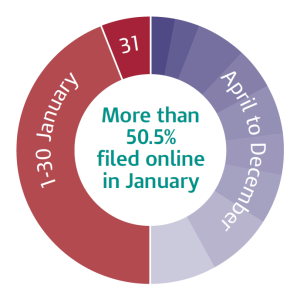
Last year, while millions of people were exchanging presents, feasting on turkey, and nodding off in front of the television, 1,548 people decided to take time out from the yuletide festivities and do their tax return online – a 40 per cent increase on Christmas Day 2011, when 1,100 people filed online.
The penalties for late Self Assessment returns are:
- an initial £100 fixed penalty, which applies even if there is no tax to pay, or if the tax due is paid on time;
- after three months, additional daily penalties of £10 per day, up to a maximum of £900;
- after six months, a further penalty of 5 per cent of the tax due or £300, whichever is greater; and
- after 12 months, another 5 per cent or £300 charge, whichever is greater.
There are also additional penalties for paying late of 5 per cent of the tax unpaid at: 30 days; six months; and 12 months.
Make sure you get yours done before the end of January!
steve@bicknells.net
Key Points from the Autumn Statement 2013

The Chancellor George Osborne presented the Autumn Statement to the House of Commons on 5th December 2013 and things are getting better, economic growth forecasts for this year have more than doubled from 0.6% to 1.4% but the austerity plan is set to continue.
Here is a summary of the key announcements:
Business Rates
Business rate increases in England will be capped at 2% in 2014/15 (they were set to increase by 3.2%) and businesses will be able to pay over 12 months rather than 10.
The Retail Sector will also get a £1,000 discount in 2014/15 and 2015/16, this applies to pubs, cafes, restaurants and charity shops with a rateable value below £50,000.
A reoccupation relief of 50% is being introduced for up to 18 months on premises that have been empty for a year or more and it will apply from 1st April 2014 to 31st March 2016.
Small Business Rate Relief has been extended to April 2015 under the scheme small businesses with a rateable value of £6,000 or less can get 100% relief, the relief is scaled down to zero on rateable values of £12,000 and there is a lower multiplier on rates between £12,001 and £17,999.
Income Tax
As previously announced the personal allowance will be £10,000 for the tax year 2014/15.
From April 2015, a spouse or civil partner who is not liable to income tax will be able to transfer £1,000 of their allowance to a basic rate tax paying spouse and as a result save £200 in tax.
State Pension Age
By 2020 it will be 66, by 2028 it will be 67 and by mid 2030′s 68, then in 2040′s 69.
Capital Gains Tax
The annual exempt amount will be £11,000 for individuals for 2014/15.
But there was an exemption for principle private residence letting for 36 months and from 6th April 2014 it will be reduced to 18 months.
Consultation will start in April on non-residents paying capital gains on property disposals.
Individual Savings Account (ISA)
The limit will rise to £11,880 for 2014/15 and of this £5,940 can be invested in cash ISA’s
Mortgage Guarantee Scheme
The scheme started in October will run for 3 years and end in January 2017.
Buyers will only need a 5% deposit and the government and the funder will guarantee 15% of the loan in return for a fee.
IR35
Legislation will be tightened from April 2014.
Anti-avoidance
A range of measures were discussed in addition to IR35 and these included:
- Partnership Tax
- Controlled foreign companies
- Charities
- High risk tax avoidance schemes
- Dual contracts
Other headline measures
- Employers NI for under 21′s to be scrapped in 2015
- Rolling back green levies to allow an average saving of £50 on energy bills
- Free school meals for infants
- Scrapping of 1% above inflation rail fare increases
- Electronic tax discs
- Abolition of next years 2p per litre fuel duty rise
steve@bicknells.net
VAT Simplified Invoices

HMRC have released an update this month to their notice on Keeping VAT records. One of these changes relates to VAT simplified invoices which were introduced earlier this year as part of the simplification and harmonisation of VAT rules in the EU. Previously only retailers were exempt from providing full VAT invoices to unregistered businesses.
However the changes mean that any business issuing VAT invoices for £250 or less (including VAT) can issue simplified invoices.
What to include in a simplified invoice:
Your name, address and VAT registration number
The time of supply (date)
A description which identifies the goods or services supplied
The each VAT rate charged, the amount of VAT charged.
How does a simplified invoice differ from a full VAT invoice:
In addition, a full VAT invoice must include:
A sequential number based on one or more series which uniquely identify the document
The date of issue (if different from the time of supply)
The name and address of the person to whom the goods or services are supplied
For each description, the quantity of the goods or the extent of the services, and the rate of VAT and the amount payable, excluding VAT, expressed in any currency
The gross total amount payable, excluding VAT, expressed in any currency
The rate of any cash discount offered
The total amount of VAT chargeable, expressed in sterling
The unit price
The reason for any zero rate of exemption.
VAT invoices over £250
If issuing VAT invoices over £250, a full invoice must still be issued or a modified VAT invoice showing VAT inclusive rather VAT exclusive values.
Rebecca Taylor ACMA
If you’re in health care the tax man is coming

The latest HMRC Task Force has been named as ‘The Health and Wellbeing Tax Plan’.
If you work in a health and wellbeing profession such as:
- physical therapy – eg physiotherapist, chiropractor, chiropodist, osteopath, occupational therapist
- alternative medicine or therapy – eg homeopathy, acupuncture, nutritional therapy, reflexology, nutrition
- other therapy – eg psychology, speech therapy, arts therapy
You have until 31st December 2013 to notify HMRC and any unpaid tax has to be paid by 6th April 2014.
Health and wellbeing tax plan helpline
Telephone: 0845 600 4507
From outside the UK: +44 1792 657 324
Monday to Friday, 8am to 6:30pm
Marian Wilson, Head of HMRC Campaigns, said:
“I urge health and wellbeing professionals to take advantage of our quick and straightforward way of bringing their tax affairs up to date. Help, advice and support is available.
“After the opportunity closes on 6 April, HMRC will use information it holds from third parties and regulatory bodies to identify people who have not paid what they owe. Penalties – or even criminal prosecution – could follow.”
Do you have anything to declare? HMRC can go back 6 years
steve@bicknells.net
High Income Child Benefit Charge
The High Income Child Benefit Charge (HICBC) is a tax charge which repays part of the child benefit received by high earners earning over £50,000 to a 100% repayment for those earning over £60.000. It applies to child benefit received from 7th January 2013.
 Who does it affect?

You may need to pay a tax charge if:
- you have an individual income over £50,000
- and either you or your partner receive Child Benefit or someone else gets Child Benefit for a child living with you and they contribute at least an equal amount towards the child’s upkeep.
It doesn’t matter if the child living with you is not your child.
What do you need to do?
If you are affected by the tax charge, you can:
- Stop receiving the Child Benefit (only recommended if you’re adjusted net income is over £60k). Follow this link for how to do this.
- Carry on receiving the benefit and pay any tax charge at the end of the tax year.
How to calculate adjusted net income?
It is important to realise that the income used to calculate the tax charge is your adjusted net income. You can use the calculator on Gov.uk to work out your adjusted income.
How to pay the tax charge
If the tax charge does apply to you, you will need to submit a self-assessment return to HMRC by 31st January following the end of the relevant tax year. Do not rely on HMRC writing to tell you that you need to submit a return as they may not realise you need to. Normal self-assessment penalties apply if returns are late or incorrect.
How much do you need to pay?
The charge is 1% of child benefit received for every £100 of income over £50,000 of adjusted net income. The charge will never be higher than the amount of child benefit received and if the income is over £60,000 the amount paid back to HMRC will be equal to the benefit received.
Rebecca Taylor ACMA
Fake email alerts from HMRC and Companies House
 Fake email alerts from Companies House and HMRC have become increasingly sophisticated. There was a time when it was relatively easy to spot a fake email alert but even accountants have been caught out by recent fake email alerts. And it isn’t just Companies House and HMRC. Be careful of emails from banks, other institutions, postal services, voicemail services and even Skype. Previously harmful emails have tried to direct you to a fake website to steal your personal details but these recent emails have attachments which could harm your computer.
What to look for
These fake email alertss have an attachment which appears to support details in the email message. For example, it could claim to be a customer complaint from Companies House, a missed delivery or a bank transaction. The email address could give you a clue that it is a fake email alert but many now look like they have come from a genuine email address. Some fake emails have footers which have been obviously copied from another email. If you are not expecting an email from the sender, think twice before opening any attachments, particularly .zip files.
Why
These emails are all trying to get you to do one thing: open the attachment. The attachment invariably contains malware or a virus and will either damage your computer, steal your details or even demand a ransom (see an article from the National Crime Agency on Cryptolocker).
Advice
The National Crime Agency provides this advice:
This is a case where prevention is better than cure.
- The public should be aware not to click on any such attachment.
- Antivirus software should be updated, as should operating systems.
- User created files should be backed up routinely and preserved off the network.
- Where a computer becomes infected it should be disconnected from the network, and professional assistance should be sought to clean the computer.
- Various antivirus companies offer remedial software solutions (though they will not restore encrypted files).
Example of fake emails
Follow the links for some examples of fake emails:
 Business Accountant