
Home » Management (Page 5)
Category Archives: Management
Compare the market!
As a nation we seem obsessed with comparison websites and we readily switch insurers to save £50-100 on our car or home insurance. So why don’t businesses market test their accountant more often? Is it because they are happy enough with the basic service and see little differentiation between local firms, or do they think its a lot of hassle to change even if they are open to the idea? I often meet business owners who aren’t entirely happy with their accountant but can’t bring themselves to do much about it, so when I get the chance I explain how easy it is to change, at the right time.
Service and other benefits aside, businesses can often save significant amounts by shopping around. This particularly applies the more services you require. Take a look at your accountancy and bookkeeping costs over the last year. How many items were billed separately, or in addition to the core fee you had agreed? Was your personal tax on top of the fee for the accounts?
In a future blog I’ll look at how to go about changing accountants and the differences a CIMA accountant can bring.
Meanwhile if you can see some benefit in changing your accountant, go (and) compare!
What are your KPI’s and why did you choose them?

Key Performance Indicators (KPI) are used by organisations to evaluate success and when you choose KPI’s you should follow the smart approach:
S pecific – a well defined goal that is clearly understood by everyone.
M easurable – can you track your progress towards the goal?
A greed – both employer and employee must agree on what the goals are.
R ealistic – can you achieve the goal with the resources provided?
T ime related – will there be enough time to complete the task?
Here are some examples of E Commerce KPI’s
Sales Key Performance Indicators:
- Hourly, daily, weekly, monthly, quarterly, and annual sales
- Average order size (sometimes called average market basket)
- Average margin
- Conversion rate
- Shopping cart abandonment rate
- New customer orders versus returning customer sales
- Cost of goods sold
- Total available market relative to a retailer’s share of market
- Product affinity (which products are purchased together)
- Product relationship (which products are viewed consecutively)
- Inventory levels
- Competitive pricing
Marketing Key Performance Indicators:
- Site traffic
- Unique visitors versus returning visitors
- Time on site
- Page views per visit
- Traffic source
- Day part monitoring (when site visitors come)
- Newsletter subscribers
- Texting subscribers
- Chat sessions initiated
- Facebook, Twitter, or Pinterest followers or fans
- Pay-per-click traffic volume
- Blog traffic
- Number and quality of product reviews
- Brand or display advertising click-through rates
- Affiliate performance rates
Customer Service Key Performance Indicators:
- Customer service email count
- Customer service phone call count
- Customer service chat count
- Average resolution time
- Concern classification
What do UK Businesses use?
What are your KPI’s and why did you choose them?
Having chosen your KPI’s this clip shows you how to create a dashboard in Excel
steve@bicknells.net
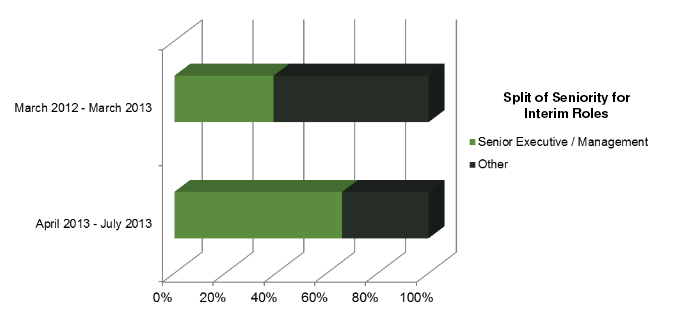
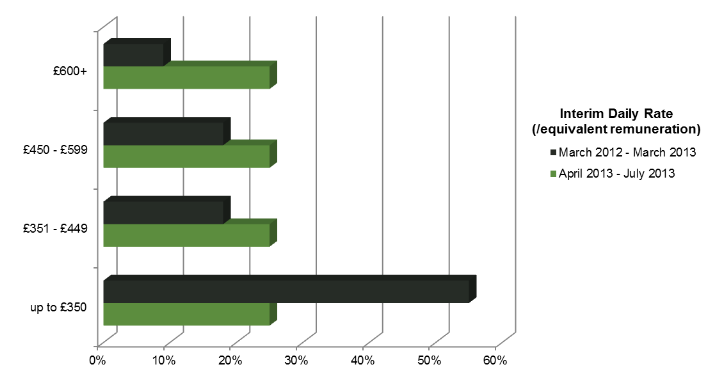
Why has demand for senior interim accountants doubled in April to July 2013?

Many companies that put projects on hold during the recession are now reinvigorating them as the market continues to show signs of recovery. This has created demand for experienced senior interims who can lead projects efficiently, ensuring that they run within budget and timescales. CIMA
The Interim market is estimated to be worth £1.5bn.
Key demand continues to be for experienced professionals who can ensure companies’ systems and processes are running as efficiently as possible. They will be challenged with the task of making any necessary improvements to achieve the project objectives. Their focus continues to be on commercial skills and profitability. Organisations want professionals who are able to make a calculated decision about things that will have an impact on how the business will run in the future.
Partner Financial Trend Survey July 2013 reported
steve@bicknells.net
Does your accountant work for you?

The role of an accountant in a business.
Many small businesses do not have an accountant on the payroll and hire external consultants to fulfil their financial needs. In too many cases the accountant is only working for the benefit of external stakeholders such as Companies House and HMRC. This role is described as financial accounting, with a focus on historical information prepared for people outside the organisation.
To be in control of your business you need to have up to date and forward-looking information. This role is fulfilled by a Management Accountant.
What is a management accountant?
The definition from Wikipedia at the time of writing:
[Management accounting] is concerned with the provisions and use of accounting information to managers within organizations, to provide them with the basis to make informed business decisions that will allow them to be better equipped in their management and control functions.
The summary definition from the Chartered Institute of Management Accountants:
Management accounting combines accounting, finance and management with the leading edge techniques needed to drive successful businesses.
Working together.
To get the best value out of your accountant and to deliver the best return from your business, you and your accountant need to work in concert. Accountants hate the dreaded shoebox moment where a whole year’s transactions are delivered months after the financial year end. This approach costs the client more as the accountant will be charging for sifting through pieces of paper. The value to the business of the accounts is reduced as any analysis is out of date.
With cloud software systems you and your accountant can work in real time. Cash transactions can be entered into the system automatically from your online banking meaning that you are not taking up your accountant’s time or yours with inputting figures from paper statements. This also means that your accountant can see the business in real time and is able to support you and perform a leading role.
Leading or following?
If your accountant is someone you hear from once a year, the service they provide is passive and follows your business. It may be time for a change to a firm with a focus on leading your organisation and being active throughout the year.
For more information on an accountancy firm who can provide the statutory accounting, but focuses on leading your business to greater success please contact a member of the Chartered Institute of Management Accountants using the link to The Team above.
Useful links
| CIMA: | http://www.cimaglobal.com/About-us/What-is-management-accounting/ |
| Wikipedia: | http://en.wikipedia.org/wiki/Management_accounting |
Top 5 accounting mistakes made by small businesses

Statistics show that businesses that keep good accounting records are less likely to fail.
HMRC have some excellent advice on how records should be kept
So here are my top 5 mistakes that small businesses make:
1. Not doing any accounts – the shoe box approach to business
This is the most common mistake, book keeping is best done as you go along, putting all the paperwork in a shoe box or carrier bag is a really bad idea as you have no idea how your business is performing.
2. Not keeping receipts
Often small business miss out on claiming all their expenses because they fail to keep receipts and lose track of their spending
3. Not reconciling
Reconciling your bank statements to your cash book is vital to make sure that all of your income and expenses have been recorded in your accounts.
4. Using the wrong accounting system
For some businesses a manual cash book and records are fine but for many accounting software will be needed to keep track of debtors, creditors and VAT. Make sure you understand your accounting system and operate it correctly.
5. Mixing business and personal expenses
Some sole traders even mix up business and personal bank accounts and in extreme cases don’t even have a business bank account. This can cause errors and often means that a sole trader will either claim to many expenses or to few.
Improve your chances of business success, avoid the common mistakes listed above.
steve@bicknells.net
UK Private Limited Company Formation – A brief guide.

Image courtesy of renjith krishnan / FreeDigitalPhotos.net
What is a private limited company?
A private limited company is a company limited by shares. The company is run by its directors on behalf of its shareholders. There must be at least one director and one shareholder for any new private company. The same person can be director and shareholder. The shares in a private company cannot be traded on a stock exchange, this is only open to public limited companies.
A limited company is a legal person, which means that it is separate from its owner’s finances. This legal separation brings various advantages and obligations / disadvantages that you would need to consider before setting up a company for your business.
Limited company advantages
Some of the reasons business owners decide to incorporate a company include:
- Separation of the business from the owner’s personal finances and other business interests.
- Limitation of personal liability (limited to unpaid share capital).
- Tax benefits (Corporation tax is currently lower than personal tax rates).
- Greater credibility with banks, funders, suppliers and customers.
Limited company disadvantages
With the rights that a limited company enjoys come responsibilities and restrictions including:
- Requirements for governance procedures e.g. annual meetings.
- Annual filing obligations with Companies House and HMRC.
- Additional cost compared to operating as a sole trader.
- Restrictions on withdrawing money from the business (see below).
- Company details must be presented on official documents and website (see below).
Withdrawing money from a company
Although a company is a separate legal person from its directors and shareholders there are restrictions on how money can be taken out of the business. As a director of a company there are only three ways to take cash out of the business:
- Salary
- Dividends to shareholders
- Directors’ loans
Companies must pay National Insurance at the rate applicable to salaries paid under a contract of employment. Deductions must also be made from the gross salary for National Insurance and Income Tax. Any salary must be paid under a contract of employment and is subject to the National Minimum Wage. Directors are not able to invoice their own company for their personal time spent working on the company.
Dividends are paid at a rate agreed by the company for each class of share. If a director is also a shareholder any dividend paid to shareholders will be paid to the director. Dividends can only be paid out of retained profits (after tax). If you want to pay dividends, you must have financial records to show that there are sufficient retained profits in the company.
Any money paid to a director that isn’t salary or a dividend must be considered a director’s loan. Full records of directors’ loans must be kept and depending on when they are repaid there are different rules on how they are treated for tax purposes.
Business stationery
All companies are required to use their official company name with any business correspondence. The company name must be stated on all stationery including Limited or Ltd at the end to signal that it has limited liability.
All business letters / emails, order forms websites must include the following information:
- Place of registration e.g. Scotland
- Registered number e.g. SC433814
- Registered office address e.g. 4 Dolphin Road, Glasgow G41 4LE
For more information on forming a company for your business or keeping financial records please contact member of the Chartered Institute of Management Accountants using the link to The Team above.
 Business Accountant