
Home » Cash Flow (Page 2)
Category Archives: Cash Flow
Would you borrow from PayPal?

The PayPal Working Capital fund will be trialled in the UK this autumn, with a more extensive rollout scheduled for 2015. Merchants (including eBay sellers) will be able to repay their advance with a share of their PayPal sales via card payments.
PayPal Working Capital is a loan of a fixed amount, with a single fixed fee. There are no due dates, minimum monthly payments, periodic interest charges, late fees, pre-payment fees, penalty fees, or any other fees. When you apply, simply select the amount you want — up to the maximum you qualify for. You choose the percentage of your sales that will be deducted from your PayPal account. (Deductions are made the day following each day of sales.) You’ll pay this percentage of your sales until your balance is repaid in full. You only make payments when you get paid.
PayPal Working Capital state that Working Capital offers major advantages compared with traditional ways of funding a business:
• Funding in minutes – PayPal’s strong relationship with its business customers means we can approve an advance based on their PayPal sales history. This means the customer completes a quick online application – there’s no need to spend hours gathering information about their business. And PayPal can make a decision and provide the funds in minutes.
• Pay when you get paid – Unlike traditional bank loans, PayPal Working Capital allows a business to repay the advance with a share of their PayPal sales. If they have a day without any PayPal sales that’s fine – they don’t repay anything that day.
• No credit check – PayPal Working Capital is a merchant cash advance against future sales – it’s not a loan – so no credit checks are needed and the advance does not impact on the customer’s business or personal credit record. There is a single, fixed fee that is displayed to the customer before they sign up. There are no interest charges or late payment fees.
Is this something your business will be able to use? or want to use?
steve@bicknells.net

Prompt Payment Discounts – new VAT rules
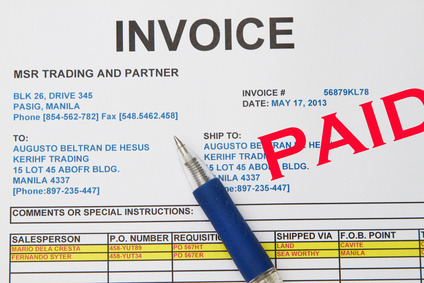
Changes to UK legislation relating to prompt payment discounts will take effect in relation to supplies made on or after 1 April 2015. From that date, the way many businesses account for VAT when offering prompt payment discounts will change.
Currently businesses can issue invoices that give details of the amount of the prompt payment discount and its terms and show the VAT due calculated on the discounted price. If the discount is not taken up HMRC has not required businesses to alter the amount of VAT invoiced and accounted for.
After the change businesses must account for VAT on the consideration they actually recieve.
HMRC are currently consulting on the implementation of this legislation and the consultation ends on 9th September.
In many ways its surprising that it hasn’t always been the case that you pay VAT on the consideration!
steve@bicknells.net
5 ways to pay less VAT

Many small businesses assume there is only one type of VAT scheme, the standard VAT scheme where you pay VAT on Sales and reclaim VAT on Purchases but in fact there are several schemes and they could save you money:
Cash Accounting
Using the Cash Accounting Scheme, you:
- pay VAT on your sales when your customers pay you
- reclaim VAT on your purchases when you have paid your suppliers
You can use the Cash Accounting Scheme if your estimated VAT taxable turnover during the next tax year is not more than £1.35 million.
Cash Accounting can improve your cashflow if your customers pay later than you need to pay your suppliers.
Flat Rate Scheme
You can join the Flat Rate Scheme for VAT and so pay VAT as a flat rate percentage of your turnover if:
- your estimated VAT taxable turnover – excluding VAT – in the next year will be £150,000 or less.
Generally you don’t reclaim any of the VAT that you pay on purchases, although you may be able to claim back the VAT on capital assets worth more than £2,000
There’s a one per cent reduction in the flat rate percentages for your first year of VAT registration.
You can get a list of Flat Rates by following this Link
Flat Rate is easy to use and can save you money if you have a lower than average level of VAT purchases.
Annual Accounting Scheme
Using the Annual Accounting Scheme, you make either nine interim payments at monthly intervals, or three quarterly interim payments, throughout the year. You only need to complete one return at the end of each year. At that point you must pay any outstanding amount. If you have overpaid, you will receive a refund.
You can use the Annual Accounting Scheme if your estimated VAT taxable turnover for the coming year is not more than £1.35 million.
This could save you money by saving time.
Retail Schemes
Using standard VAT accounting, if you are VAT-registered then you must record the VAT on each sale in your accounting records. But with the VAT retail schemes, you work out the value of your total VAT taxable sales for a period – for example, a day – and the proportions of that total that are taxable at different rates of VAT (standard, reduced and zero) according to the scheme you are using. You then apply the appropriate VAT fraction to that sales figure to calculate your VAT due.
You do not need to record VAT separately in your accounts for each and every retail sale you make. This is particularly beneficial if you make a number of low value and/or small quantity sales to the general public. This can save you a lot of time and record keeping.
Margin Schemes
Normally you charge VAT on your sales, and reclaim VAT on your purchases. However, if you sell second-hand goods, works of art, antiques or collectibles, there may have been no VAT for you to reclaim when you bought them. You may be able to use a VAT margin scheme. This enables you to account for VAT only on the difference between the price you paid for an item and the price at which you sell it – your margin. You won’t pay any VAT if you don’t make a profit on a deal. You can still use standard VAT accounting for other sales and purchases such as overheads.
steve@bicknells.net
Would you like to borrow against a single invoice?
In August 2013, the UK Government became a Buyer of invoices on the MarketInvoice Platform, investing directly in UK SMEs looking to access working capital and grow their businesses.
Why is the Government investing funds through MarketInvoice?
The UK Government, via the Department of Business Innovation and Skills (‘BIS’) and as part of the ‘Business Finance Partnership’, has committed to using alternative finance providers to channel much needed growth funding to UK SMEs. The scheme is investing £1.2 billion into increasing lending to small and medium sized businesses from sources other than banks.
How does it work?
Any company can use MarketInvoice provided its sells goods or services to other large businesses.
Its a ‘pay as you go’ service and you can see the estimated costs by using their calculator
Companies are vetted and the invoice must be to a large corporate not to other SME’s.
Its confidential so your customer will not know you have used MarketInvoice, if the customer doesn’t pay you will have to refund the investor.
So far £163m of invoices have been funded by MarketInvoice.
Of course it would be better if customers always paid quickly!
steve@bicknells.net
Would your Suppliers like to be paid faster?
Yes of course they would, silly question, everyone wants to be paid faster but how can it be done?
Santander may have the answer, they are offering a facility to SME’s called Supplier Payments and its part of the Funding for Lending Scheme.
Supply Chain Finance has been around for a while, this an extract from an article in the Telegraph in October 2012
Supply-chain finance, which is sometimes known as “reverse factoring”, allows big businesses to notify a bank as soon as a supplier’s invoice has been approved. The bank, armed with the assurance the bill will be paid, will then extend a full, immediate advance of the bill to the supplier at a low interest rate.
The Prime Minister hailed the technique as “win-win” because large companies get greater protection from small suppliers going bust, while the small business avoids having to wait for payment and, since the invoice is approved, avoids any risk of non-payment.
Most of the main banks have solutions for large businesses but it isn’t normally available to SME’s.
Is this an option for your suppliers?
steve@bicknells.net
Get HMRC to pay you
HMRC will pay you interest
It is not that well-known that HMRC will pay you interest on tax paid early. The interest rate is only 0.5% though, so it isn’t going to change your life.
In the case of Corporation Tax, any payment is due 9 months and a day after your year-end. If you have a business bank account that pays no interest and the cash to pay your tax early you can pay your tax as soon as you have filed your return. After the 9 months is up HMRC will send you the interest calculated.

What spare cash?
See my earlier post on paying your debts first. In the situation where you have cash in the bank that you aren’t putting to good use and no outstanding debts paying your tax liability early will yield a small benefit.
Get your tax return done early
It is difficult to plan your cash flow if you don’t know how much tax you are due to pay. Even if you don’t want to pay your tax early, it is helpful to know how much cash you will need to set aside. The later you leave it to file your tax return the more pressure you can end up putting on your cash flow. More importantly the later you leave it, the more pressure you put on your accountant. Most accountants increase their fees as tax deadlines approach – or to put it another way you are likely to get a discount for starting early!
Don’t be late!
It won’t surprise anyone that HMRC will charge interest on late payments. The interest rate isn’t the measly 0.5% mentioned above but is currently 3%. As Bank of England rate increases – expect this to increase too!
For support and advice on preparing your annual accounts and filing your tax returns contact Alterledger or visit the website alterledger.com.

Importing transactions into your accounts system
I find many businesses I start to work with still manually input their sales and purchase ledger or detailed general journal transactions. With most accounts packages (even the smaller ones) having the ability to import transactions from spreadsheets or directly from another system, there is very little need to spend hours on manual inputting directly into your system.
Some of the reasons/excuses businesses don’t import their transactions:
- No one knows how to do the imports. Once a template has been established, most imports are very simple to do and require minimal training.
- They believe it’s quicker to input directly as they don’t need to look up the accounts seperately. Very simple formulae in a spreadsheet could help with this. It’s easier to see from a spreadsheet whether the totals are correct and reduces the time taken to drill down into multiple screens on each transaction.
- By the time they’ve set up the template, they could’ve input it already. This is usually true of the first time but when staff members get used to processing this way, they are able to get a handle on it’s further potential uses and like anything, the time taken to do this reduces.
There are many reasons why I believe businesses should consider importing their transactions, here are some:
- Most transactions within accounts are repetative on a daily, monthly or quarterly basis. By having import templates ready to edit not only acts as a checklist of which entries are needed but will (after the initial set up) save time and improve accuracy of the data.
- Having information on a spreadsheet allows quicker reviews and clarity on what’s being input without the need to ‘drill down’ into the transactions.
- Importing saves manual processing time allowing staff to do more value added activities. By having more detailed information in your accounts system it vastly improves the information you’re able to then get out of it for management reporting and budgeting.
- The quality of data will improve as you’re likely to have more fields completed if you import due to the copy/paste function within spreadsheets and having all fields on one line rather than different screens.
- The accuracy of the data improves due to the ability to set up checks within the template file that let you know if something is incorrect. Transposition errors are less likely.
- If you link your accounts system to another database e.g. CRM system or Project Management software, then it can remove duplication of the data entry. A lot of accounts systems now allow you to import or link directly to your banking software which is a huge benefit as often bank reconciliations can be done daily which helps monitor cashflow.
Some examples of what can be set up to import (system dependent) and be of value to your business:
- Detailed payroll journals (by department) – Payroll is often the largest cost to a business yet often the one most overlooked in terms of reporting. You can improve a potentially complicated journal by setting up a template to import to a higher level of detail.
- Bank Statement Imports – By importing your bank statements from the data downloaded from your online banking, you eradicate the all too common transposition errors or possible duplication if you have multiple transactions of the same value. Some accounts software now has the facility of ‘bank feeds’ which imports transactions directly for you on a daily basis e.g. Xero.
- Sales invoicing especially when periodic – For example one of my clients was a group of private schools which had complicated discount structure based on age of each child and sibling discounts. This processing went from several weeks of manual inputting each term (with a high chance of errors and lots of disputes/complaints) down to 3 hours and a far greater level of accuracy. Checks were put in place on the import preparation spreadsheet to ensure that family invoices were grouped together and that all children had been accounted for and the correct discounts applied.
- Prepayments & other month end general ledger journals – Full descriptions on each line with each value seperated and not grouped together. This provides clearer transactional analysis and helps greatly when it comes to budgetting and cashflow forecasting.
- Customer/Supplier Records – updating or adding. If you have a lot of fields to complete often they’re omited with manual entry, by using a spreadsheet to complete the data it is likely to contain more consistent information as you can copy/paste or fill down on certain fields.
- Budgets – Depending on your reporting software, this could streamline your management pack by utilising functionality already available in the system without the needfor further processing in spreadsheets.
If you’re still not convinced of the value to your business by utilising data imports, consider this:
Saving just 1 day of processing time per month for a £25k employee is a saving of approximately £1,580pa* to your business. Use the ‘saved’ time on producing more timely, informative management information and KPIs (which you can now get as the transactional level data is of better quality).
Better business information leads to better business decisions and ultimately to better business profits.
If you’d like to discuss your accounts system and how to better utilise it’s functionality including imports, please contact Kat Hipsey, kat@hipseyconsulting.com
*Taking into account ER NI/Pension.
Will you “Pay Em”? (PAYM)

A new way to pay is coming this month, its called PAYM and it will be available from the 29th April.
Customers of the following banks can now register to link their mobile number with their bank account: Bank of Scotland, Barclays, Cumberland Building Society, Halifax, HSBC, Lloyds, Santander and TSB.
Other banks – including NatWest, RBS and First Direct – will join the scheme later in the year.
People who wish just to receive money – as opposed to paying it – will still be able to use the system, even if their phone is not a smartphone, or they do not use mobile banking.
-
To send money, a user will have to log into their bank’s mobile banking app, using a pass code as normal.
-
They will then have to select the recipient of the payment, using their existing contacts or by typing in that person’s mobile phone number.
-
After confirming the name of the recipient, they will have to check the amount being paid, type in a reference for it (such as “dinner”), and then press send.
-
A confirmation message will then be sent to them.
You can find out more details on these links:
http://www.paymentscouncil.org.uk/mobile_payments/
So are you going to PAYM?
steve@bicknells.net
The missed opportunity of Self Billing in e commerce

I think e commerce and EDI has focused too much on billing clients and consumers (mainly B2C rather that B2B) and not enough on improving the efficiency of processing supplier invoices.
According to research and analysis group, Gartner, typically the cost of processing an invoice in the UK averages between £4 and £25, and in some cases even up to £50, per individual invoice.
You can check the costs for yourself using pay streams calculator.
A typical purchase invoice goes though these stages:
- Its checked against the purchase order
- Its entered as unauthorised to the accounting system
- Its copied and sent to the manager to check the goods were received and were in good order
- The manager signs the invoice off
- Its status is changed to approved or in query
- Queries are sent to the supplier
- Authorised invoices are scheduled for payment
- Payment is made with a remittance advice
- Supplier statements are reconciled to the accounts system
The more suppliers you have and the bigger the volume of either invoices or transactions on invoices, the more complicated and long winded the process becomes.
Although all invoices contain the same basic information they are all formatted and laid out differently.
In some systems invoices are scanned and given a bar code to help index them to accounting system entries.
But it seems to me that many businesses have overlooked what should be a simple solution, Self Billing.
With Self Billing you generate the tax invoice for your supplier and send it to them with the payment.
The following is an extract from HMRC Self-billing:
Putting in place a self-billing arrangement with your suppliers can bring certain advantages for your business:
- it can save time and money – you can send self-billed invoices electronically so long as you can set up suitable systems
- purchase invoices are produced to a standard format, making life easier for your accounts department
- you retain control of how much you’re invoiced for – this can be helpful if your business is responsible for determining the value of the goods or services it receives
- flexibility – you can outsource the production of the self-billing invoices to a third party if you want to
Your suppliers don’t have to be based just in the UK. You can self-bill businesses in other EU countries or in countries outside the EU.
Advantages for suppliers
If you’re a supplier, entering into a self-billing agreement with your customers can be helpful for your business because:
- your customer is responsible for making sure that the VAT details on the invoices are correct
- as part of the agreement with your customer you may be able to specify when you’ll receive payment – this can help with your cash flow
Self billing has been used by the Construction Industry for many years, in fact I created a Self billing system when I worked at Rollalong in 1994, the key issues are:
- Getting suppliers to agree to join the self billing scheme
- Getting approval from HMRC
- Keeping your VAT registration records up to date
But the cost and time savings are significant, the whole process changes and could become:
- Purchase Order Sent
- Goods received and matched my the manager
- Value of Goods received entered to accounting system – this could be automated on matching
- Payment made and remittance changed to Self billing invoice
The number of queries are reduced because you aren’t invoiced for things you haven’t had, there is no need to copy and distribute invoices for sign off as this is replaced with stronger goods inward systems.
Why aren’t more businesses adopting self billing?
steve@bicknells.net
 Business Accountant