
Home » Accounting Records (Page 4)
Category Archives: Accounting Records
Hobby Trading Losses
Losses and profits
You might think that HMRC is being unfair in refusing loss relief, but if your activity is a hobby you won’t have to pay tax on profits either. This rule can be tricky as revealed in the case of P, when HMRC dismissed his claim for loss relief.
Trade or personal loss?
HMRC challenged P’s claim at a tribunal because in its view it related to non-business transactions and so was a personal financial loss and not one arising from a trade. Non-trading losses can’t be set against taxable income and it’s not just HMRC being difficult.
Trading tests
HMRC and tax specialists refer to the so-called “badges of trade” to decide if a trade exists. These tests were set out in a court judgment decades ago, but remain valid today. One of the tests to establish if a trade exists is that there must be an intention to make profit from a business. In P’s case the tribunal extended this test a little further.
Incapable of making a profit
P started two “businesses”, neither of which made a profit because, in the tribunal’s view, he was inexperienced and couldn’t devote enough time to them. Neither venture was capable of making a profit without P reducing the hours he spent in his main job. In essence P didn’t have the business acumen or time to devote to making his business profitable.
Putting the boot on the other foot
The ruling in P’s case is useful, not just for guidance on when losses are deductible, but for countering HMRC if it claims money you make from a hobby is taxable. Its view has always been that if you advertise your hobby in a newspaper or online you’re probably trading. But the tribunal’s judgment, supported by HMRC, dispelled that idea. If you don’t have the time or intention to carry on a trade, profit you make from isolated sales isn’t liable to income tax.
Turn your hobby into a business
For advice on converting your hobby to a profitable business, including help with setting up a limited company or registering for VAT, please contact Alterledger.
Related articles


How does s455 tax apply to Directors Loans? what if you ‘bed and breakfast’ the loan?

Directors (participators in a closed company) often borrow money from their companies with the intention of paying a dividend to repay the loan.
If the loan is outstanding more than 9 months after the company year end, then an extra 25% corporation tax charge is due, this is the s455 tax which is refunded when the loan is repaid as explained in this blog
http://stevejbicknell.com/2015/02/04/new-tax-procedure-for-directors-loans-s-455/
HMRC were concerned that some participators were avoiding this tax by raising funds short term to repay an outstanding loan. They would then draw a new loan very shortly afterwards – HMRC refer to this as “bed and breakfasting”. New anti-avoidance rules were therefore introduced in 2013.
These new rules incorporate two provisions – the “30-day rule” and the “intentions and arrangements” rule.
30-day rule
This applies where within a 30-day period:
- a shareholder makes repayments of their s455 loan; and
- in a subsequent accounting period, new loans or advances are made to the same shareholder or their associate.
So basically prevents the use of ‘Bed & Breakfasting’
‘intentions and arrangements’ Rule
Relief is denied regardless of the 30 day rule, if prior to repayment there is an outstanding amount of at least £15,000 and at the time the amount is repaid to the company, any person intended to redraw any of that amount or had made arrangements to make a new withdrawal; and a new withdrawal is made.
The relief denied is the lower of the amount repaid and the amount redrawn.
steve@bicknells.net
How does Principle Private Residence Relief work?

Principle Private Residence Relief (PPR) is useful relief that saves you capital gains tax (18% for basic rate tax payers and 28% for higher rates tax payers) on your main residence, but how does it work, lets take a basic example
Property Purchase Date 30/04/2001
Property Purchase Price £100,000
Date Moved Out 30/10/2010
Letting Start Date 01/11/2012
Date Sold 31/10/2014
Sale Price £200,000
Capital Gains tax calculation
Sale proceeds 31/10/2014 £200,000
Cost (assuming no improvements) -£100,000
Gross capital gain £100,000
Reliefs available
Principle Private Residence Relief
Actual Occupation 9.5 Years
Started 30/04/2001
Ended 30/10/2010
Plus last 18 Months of Ownership 1.5 Years
The Property was empty prior to letting
Up to 18 months could be by ‘absence for any reason’
Total period where private residence relief is
available 11.0 Years
Total Period of ownership 13.5 Years
Principle private residence relief
£100,000 x (132 mths/162 mths) £81,481
Gain after principle private residence relief £18,519
Letting Relief
01/11/2012 to 31/10/2014 2.0 Years
Lettings relief is to lower of
£40,000 statutory maximum
£81,481 the principle private residence relief in this example
The gain for the letting period
Gain attributable to letting 2/13.5 x £100,000 £14,815
This is the lowest figure
Capital gain after reliefs £3,704
Annual Exemption for 2014/15 £11,000
So in this example there is no tax to pay
For further details see the HMRC Helpsheet 283
For gains on sales prior to 6 April 2014, PPR is available for the last three years of ownership of a property that has been a main residence at any time. This is the case regardless of whether or not it has been occupied during the last three years of ownership.
But as a result of the 2014 Budget, from 6 April 2014 the automatic exemption from tax on gains in relation to the final years of ownership is now restricted to cover the last 18 months rather than three years.
steve@bicknells.net
The end of Tax Returns and start of ‘Digital Tax Accounts’

In last months Budget, the Chancellor George Osborne announced that during a 5 year period starting in 2016 we will see the end of tax returns and the introduction of Digital Tax Accounts.
According to Citywire
By the end of 2016, five million small businesses and the first 10 million individuals would use the new ‘digital tax account’.
‘Millions of individuals will have the information the Revenue needs automatically uploaded into new digital accounts,’ said Osborne. ‘Tax really doesn’t have to be taxing, and this spells the death of the annual tax return.’
Around 85% of those who complete self-assessment forms already do them online. But HMRC said the new accounts, unlike the current system, would be pre-populated with data HMRC already holds and that from third parties.
Those who pay tax using the pay-as-you-earn system will have their income tax, national insurance contributions and pension position already shown in their accounts, alongside any interest from banks and building societies.
HMRC said that small businesses using the system should also be able to use accounting software to feed data straight into their account.
In order for this to work, small businesses will need to keep their accounts up to date.
The top 5 common accounting problems accountants deal with are:
1. Not doing any accounts – the shoe box approach to business
This is the most common mistake, book keeping is best done as you go along, putting all the paperwork in a shoe box or carrier bag is a really bad idea as you have no idea how your business is performing.
2. Not keeping receipts. Often small business miss out on claiming all their expenses because they fail to keep receipts and lose track of their spending
3. Not reconciling. Reconciling your bank statements to your cash book is vital to make sure that all of your income and expenses have been recorded in your accounts.
4. Using the wrong accounting system. For some businesses a manual cash book and records are fine but for many accounting software such as Debitoor will be needed to keep track of debtors, creditors and VAT. Make sure you understand your accounting system and operate it correctly.
5. Mixing business and personal expenses. Some sole traders even mix up business and personal bank accounts and in extreme cases don’t even have a business bank account. This can cause errors and often means that a sole trader will either claim to many expenses or to few.
Will small businesses be able to overcome these problems or will they end up in a tax mess with Digital Tax Accounts?
steve@bicknells.net
How will FRS102 affect your tax position?

FRS102 will affect us all, even small companies will be subject to a version of FRS102.
Its not just a reporting standard it will affect your tax position too, for example
Intangible Assets and Goodwill
Under FRS102 these assets will have a maximum life of 5 years where as UK GAAP allowed them to have an infinite useful life.
Distributable Reserves
There are various FRS102 changes that can effect these but one specific one is deferred tax which will be calculated on investment properties.
Operating Leases
Leases incentives will be spread over the entire life of the lease rather than to first break clause.
Asset Reclassification
Some assets such as Websites and software development could be reclassified as Intangible
Have you assessed the changes for your business?
FRS 102 is effective for periods beginning on or after 1 January 2015.
steve@bicknells.net
What if you change a dividend to salary

Let’s look at the case of Richard and Julie Jones v HMRC [2014] UKFTT 1082 (5 December 2014).
They took a small salary and regular dividends from their recruitment company which was absolutely fine until the company got into financial trouble!
Their accountant (unethically but in an attempt to help their client) suggested they should re-write history and change the dividends to salary so that the liquidator couldn’t recall the dividends.
HMRC then decided to demand PAYE and NI and pursued Richard and Julie personally.
HMRC was refused the right to collect PAYE tax and NI due on the salary, not because the law didn’t allow it, but because it wasn’t possible for Richard & Julie to reclassify the dividends. They had been properly paid and the correct procedure followed. History couldn’t be rewritten and the dividends should have been changed to loans if the dividends were illegal.
steve@bicknells.net
New reporting requirements for intermediaries

An intermediary is any person who makes arrangements for an individual to work for a third party or be paid for work done for a third party. An employment intermediary is also commonly referred to as an agency.
From 6 April 2015, intermediaries must return details of all workers they place with clients where they don’t operate Pay As You Earn (PAYE) on the workers’ payments. The return will be a report (or reports) that must be sent to HM Revenue and Customs (HMRC) once every 3 months.
Agencies will be required to let HMRC know the following details:
- Contractor’s name, address, date of birth, etc.
- PAYE reference.
- National Insurance number.
- How the contractor was engaged during the period (i.e. was he working via a limited company).
- The duration of each assignment.
- Details of the contractor’s limited company (e.g. company registered number).
- How much was paid to the contractor.
The regulations will give HMRC information that will enable it to decrease false self-employment and abuse of offshore working. This will help HMRC to:
- support intermediaries that comply
- penalise intermediaries that don’t comply
- make sure the right tax and National Insurance is paid by people working through intermediaries
- reduce unfair commercial advantage
Here is link to the full reporting requirements – Legislation Link
This is the link to consultation – Consultation
steve@bicknells.net
Simplified Expenses – Working From Home

Most people working from home were claiming the £4 per week allowance based on HMRC guidance, but this has now been updated for the self employed.
You can now calculate your allowable expenses using a flat rate based on the hours you work from home each month.
This means you don’t have to work out the proportion of personal and business use for your home, eg how much of your utility bills are for business.
The flat rate doesn’t include telephone or internet expenses. You can claim the business proportion of these bills by working out the actual costs.
You can only use simplified expenses if you work for 25 hours or more a month from home.
| Hours of business use per month | Flat rate per month |
|---|---|
| 25 to 50 | £10 |
| 51 to 100 | £18 |
| 101 and more | £26 |
Example
You worked 40 hours from home for 10 months, but worked 60 hours during 2 particular months:
10 months x £10 = £100
2 months x £18 = £36
Total you can claim = £136
Use the simplified expenses checker to compare what you can claim using simplified expenses with what you can claim by working out the actual costs.
https://www.gov.uk/simpler-income-tax-simplified-expenses/working-from-home
Alternatively you could claim you can claim a proportion (based on the number of rooms and hours of business use) of your household expenses
- Mortgage interest or rent
- Council tax
- Water rates
- Repairs and maintenance
- Building and contents insurance
- Electricity
- Gas, oil or other heating costs
- Cleaning
- Telephone (based on usage)
- Broadband
You can draw up a home rental agreement to reclaim these costs.
The Rental Agreement can be very basic, it just needs to show:
- The Parties – Employee, Company, Home Office Address
- The agreement is for use of the accommodation, furniture etc (‘the Home Office’)
- The hours it will be used
- The rental charge
or your could use an agreement like this one
https://www.rocketlawyer.co.uk/documents-and-forms/home-office-space-agreement.rl#
If the rental is only to cover costs (and not to make a profit) then it should not create any tax liability.
Some experts say that claiming Mortgage Interest and Council Tax can be queried but that would depend on circumstances.
There are also other isuues to consider such as VAT and Capital Gains and these are covered in the blog below.
http://stevejbicknell.com/2013/01/06/what-are-the-tax-issues-and-advantages-of-a-home-office/
steve@bicknells.net
The Yacht that wasn’t a benefit in kind

This is the case of Gillian Rockall v HMRC (2014) HKFTT 643.
Mr Michael & Mrs Gillian Rockall were involved in running a hotel and conference centre and providing high-end residential courses, amongst the companies assets was a 140 foot ocean-going yacht costing $11.9 million called Masquerade of Sole.
HMRC issued assessments on Mr & Mrs Rockall for the tax years 2000-2001 to 2008-2009 on the basis of personal use (benefit is normally assessed as 20% of the market value).
The Yacht was used for:
- Business Networking
- Customer Training
- Exploring Business Opportunities in the Caribbean and Mediterranean
- Friends and Acquaintances were taken on occassional trips to provide a opinion on opportunities
The Yacht was also placed with an agent for charter when not required for the purposes above.
The First-Tier Tribunal took the view that the use of the Yacht was only for Business and not for private purposes.
However under S203 ITEPA 2003 a benefit in kind would arise because the asset was at the disposal of the employees.
The Rockalls appealed to the First-Tier Tax Tribunal, on the grounds that the use of the yacht was tax-deductible under s365 of the Income Tax (Earnings and Pensions) Act 2003 (ITEPA). This requires that the item comprising the benefit in kind was used ‘wholly, exclusively and necessarily in the performance of the duties of the employment’.
The tribunal has now ruled that the yacht was bought and operated purely for business purposes and thus was fully tax-deductible for both the Rockalls.
– See more at: http://www.step.org/yacht-used-impress-customers-were-legitimate-expense#sthash.dNRhVYmG.dpuf
How do you create a Tronc?
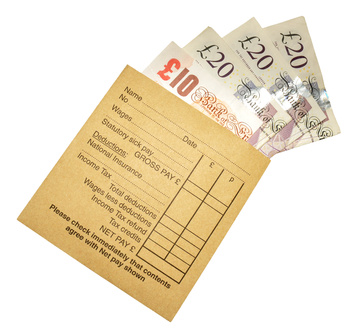
Typically, an employee is appointed to administer the tronc and is usually referred to as the troncmaster. HMRC does not prescribe who the troncmaster should be.
Frank owns a pub and restaurant. Tips paid by cheque, debit and credit card are all passed to Sharon, the troncmaster, who has been appointed by Frank. Sharon operates PAYE on the tips that she distributes. A staff committee decides on the allocation and Frank has nothing to do with this.
Even though Frank has appointed Sharon as troncmaster he has played no part, directly or indirectly, in the allocation of the tips because he is not involved in determining who should receive tips and how much each employee should receive. In these circumstances, no NICs will be due on the tips received by the tronc members. Example from NIM02942
Y0u may also find my blog helpful
How Troncmasters can keep your tips NI and VAT Free
The Income Tax (Pay As You Earn) Regulations 2003 require an employer to
- Notify HMRC of the existence of a tronc created on or after 6 April 2004
And
- Give the troncmaster’s name (if known)
When you are notified of a tronc you should
- Confirm that there is an organised arrangement for sharing tips and determine
- How the tronc receives monies (for example employees paying in cash tips or an employer paying in credit card tips)
- Who holds the tronc monies and how (for example, is there a tronc bank account and if so who operates it?)
- On what basis are distributions made from the tronc and who decides that basis
- Which employees are tronc members
- Whether the person said to be the troncmaster accepts and understands the role (including the obligation to operate PAYE)
If you are satisfied that there is a tronc for PAYE purposes (bear in mind that a business could have more than one tronc, for example a hotel could have separate troncs for restaurant staff and housekeeping staff and each should be dealt with separately)
- Arrange for a PAYE scheme to be set up in the name of the troncmaster. Further information can be found in PAYE20160
steve@bicknells.net
 Business Accountant