
Home » Articles posted by Steve Bicknell (Page 41)
Author Archives: Steve Bicknell
The dangers of illegal dividends

It can be illegal to pay dividends if:
1. There are insufficient retained profits to cover the dividend payments
2. Dividend payments may be illegal if the relevant paperwork has not been completed
- Board Minutes – which must be kept for 10 years http://www.companieshouse.gov.uk/about/gbhtml/gp3.shtml#ch4
- Dividend Vouchers
You can download free templates from
http://www.contractorcalculator.co.uk/declaring_dividends_paperwork.aspx
HMRC are increasingly contending dividends and arguing that they are in reality earnings under the s62 ITEPA 2003 (salary sacrifice) rules and to persuade them otherwise needs proof that a set procedure for the declaration of dividends has been followed.
An example of a board minute is as follows:
Minutes of a meeting of directors of bloggs limited Held at 14 the road, london, ir3 5nl On 31 march 2005
Present: J Bloggs – Director
It was resolved that the company pay a dividend of £9,000 per £1 ordinary share on 31 March 2005 to the shareholders registered on 31 March 2005.
……………………………………
J Bloggs – Director
http://www.ir35calc.co.uk/dividend_documentation.aspx
Companies pay you dividends out of profits on which they have already paid – or are due to pay – tax. The tax credit takes account of this and is available to the shareholder to offset against any Income Tax that may be due on their ‘dividend income’.
When adding up your overall taxable income you need to include the sum of the dividend(s) received and the tax credit(s). This income is called your ‘dividend income’.
The dividend you are paid represents 90 per cent of your ‘dividend income’. The remaining 10 per cent of the dividend income is made up of the tax credit. Put another way, the tax credit represents 10 per cent of the ‘dividend income’.
Dividend tax rates 2013-14
| Dividend income in relation to the basic rate or higher rate tax bands | Tax rate applied after deduction of Personal Allowance and any Blind Person’s Allowance |
|---|---|
| Dividend income at or below the £32,010 basic rate tax limit | 10% |
| Dividend income at or below the £150,000 higher rate tax limit | 32.5% |
| Dividend income above the higher rate tax limit | 37.5% |
So the 10% tax credit offsets the 10% basic rate savings tax
Dividends are not subject to National Insurance.
Can you claim the tax credit if you don’t normally pay tax?
No. You can’t claim the 10 per cent tax credit, even if your taxable income is less than your Personal Allowance and you don’t pay tax. This is because Income Tax hasn’t been deducted from the dividend paid to you – you have simply been given a 10 per cent credit against any Income Tax due.
http://www.hmrc.gov.uk/taxon/uk.htm#5
Declaring dividend income on your Self Assessment tax return
If you normally complete a tax return you’ll need to show the dividend income on it. See income boxes 3 and 4 http://www.hmrc.gov.uk/forms/sa100.pdf
If you don’’t complete a tax return, but you have higher rate of tax to pay on your dividend income, you should contact HMRC.
steve@bicknells.net
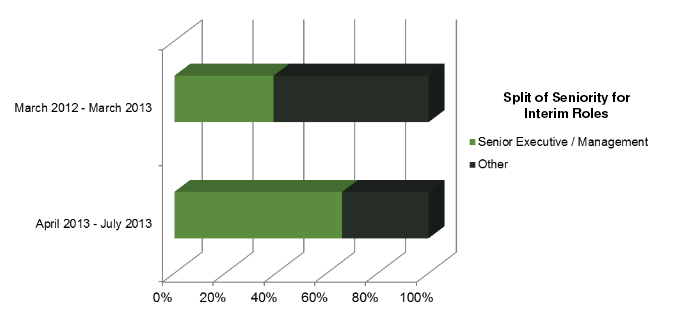
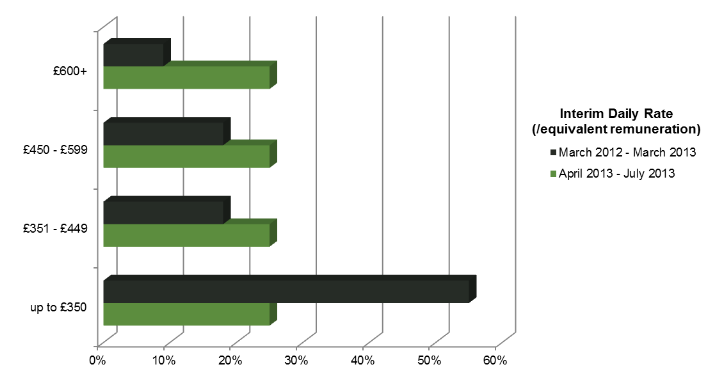
Why has demand for senior interim accountants doubled in April to July 2013?

Many companies that put projects on hold during the recession are now reinvigorating them as the market continues to show signs of recovery. This has created demand for experienced senior interims who can lead projects efficiently, ensuring that they run within budget and timescales. CIMA
The Interim market is estimated to be worth £1.5bn.
Key demand continues to be for experienced professionals who can ensure companies’ systems and processes are running as efficiently as possible. They will be challenged with the task of making any necessary improvements to achieve the project objectives. Their focus continues to be on commercial skills and profitability. Organisations want professionals who are able to make a calculated decision about things that will have an impact on how the business will run in the future.
Partner Financial Trend Survey July 2013 reported
steve@bicknells.net
Top 5 accounting mistakes made by small businesses

Statistics show that businesses that keep good accounting records are less likely to fail.
HMRC have some excellent advice on how records should be kept
So here are my top 5 mistakes that small businesses make:
1. Not doing any accounts – the shoe box approach to business
This is the most common mistake, book keeping is best done as you go along, putting all the paperwork in a shoe box or carrier bag is a really bad idea as you have no idea how your business is performing.
2. Not keeping receipts
Often small business miss out on claiming all their expenses because they fail to keep receipts and lose track of their spending
3. Not reconciling
Reconciling your bank statements to your cash book is vital to make sure that all of your income and expenses have been recorded in your accounts.
4. Using the wrong accounting system
For some businesses a manual cash book and records are fine but for many accounting software will be needed to keep track of debtors, creditors and VAT. Make sure you understand your accounting system and operate it correctly.
5. Mixing business and personal expenses
Some sole traders even mix up business and personal bank accounts and in extreme cases don’t even have a business bank account. This can cause errors and often means that a sole trader will either claim to many expenses or to few.
Improve your chances of business success, avoid the common mistakes listed above.
steve@bicknells.net
What are the tax issues and advantages of a Home Office?

Working from home is a popular option for business owners and employees. Assuming you need to create office space you could either convert an existing room, loft, or garage or build a new structure in the garden.
VAT
- Estimate the amount of Business & Personal Use – you can only reclaim VAT on the Business Use proportion – you might have 100% business use if you were building an office in the garden. HMRC’s published and internal guidance states,
“Where a domestic room or rooms is put to business use, you may agree to an apportionment using an objective test to the extent to which the room is put to business use” http://www.hmrc.gov.uk/manuals/vitmanual/vit10000.htm, and VAT Notice 700, Section 33, - The invoice should be in Business Name
- You can reclaim 100% VAT on Office Equipment used entirely for business purposes (if you reclaim VAT you need to charge VAT if you sell the equipment)
- If you then sell your home to a buyer who wants to use the premises as part of their dwelling you don’t charge any VAT as it will be exempt
Capital Allowances
Capital Allowances are not given on land and building but you could claim for integral features, assets and equipment. Sole Traders and Partners can exclude a proportion for private use.
Benefit In Kind
Directors and Employees who have personal use of the assets will incur tax as it will be a benefit in kind. So it might be better to keep business assets for business use only to avoid this tax. Here is my blog comparing Directors Loans to Use of Assets http://stevejbicknell.com/2012/04/14/directors-loan-vs-private-use-of-company-assets/
Expenses
You can claim a proportion (based on the number of rooms and hours of business use) of your household expenses
- Mortgage interest or rent
- Council tax
- Water rates
- Repairs and maintenance
- Building and contents insurance
- Electricity
- Gas, oil or other heating costs
- Cleaning
- Telephone (based on usage)
- Broadband
You can draw up a home rental agreement to reclaim these costs, or claim expenses, or if the use is minimal you might find it easier to claim £4 per week as suggested by HMRC.
Here are some examples http://www.hmrc.gov.uk/manuals/bimmanual/bim47825.htm
Capital Gains Tax
Your principle private residence is exempt from capital gains but your home office won’t be if its exclusively used for business, but it will only be a small proportion of the property value and as such any gain will probably be covered by your annual allowance £10,600 (2012/13) if you are a sole trader or partner, if not your company could have a small amount of capital gains tax to pay if a gain is made.
If you are a sole trader or partner and there is a private use element to your home office then the office will be exempt.
Other Issues to consider
Planning Use -You might wish to apply for a Certificate of Lawfulness (Proposed)
for a change of use, for example if you wanted to use a single room in a dwelling house as an office. http://www.stalbans.gov.uk/Images/householders_guide_to_lawful_development_certificates_tcm15-2087.pdf
Insurance – you will need to inform your home insurance company that you now have a home office
Business Rates – http://www.businesslink.gov.uk/bdotg/action/detail?itemId=1086066821&r.l1=1073858808&r.l2=1073859221&r.l3=1086066759&r.s=sc&type=RESOURCES
steve@bicknells.net
5 Tips on how to choose an Accountant

A Google search will produce a list of hundreds to choose from, so how will know which one is right for you and your business?
According to SBA.Gov
An accountant can save you time and clear up much of the confusion you experience when it comes to managing your finances and taxes, but a trusted accountant can provide other benefits, too.
-
Act as a Trusted Advisor – More than just a tax preparer, an accountant can become a trusted advisor to your small business, helping you manage cash flow, plan for growth, assess risk, and keep your books in order.
-
Help Balance Business and Personal Needs – Many small businesses, particularly sole proprietors and startups, find that their business and personal finances are closely linked. A good accountant can help you make sound judgments beneficial to both.
Here are my top tips:
- Decide what services you need for example you might only need your accountant to prepare the year end accounts and tax returns and you might do the book keeping and payroll yourself? Or you might want help with Business Plans and raising finance?
- Ask about your accountants qualifications, CIMA Members in Practice are highly qualified, monitored by their Accounting Institute and carry appropriate levels of Professional Indemnity Insurance.
- Ask about their experience and knowledge of your type of business and industry sector, do they have references and testimonials?
- What if your accountant is sick or unable to do your work? do they have a continuity agreement in place with another accountant (all CIMA MiPs have these agreements)
- Ask about the fees and service levels, your accountant should provide you with a letter of engagement setting out what their fees are and the services they will provide.
Business Plans – Do you really need one?

A business plan is a written document that describes your business. It covers objectives, strategies, sales, marketing and financial forecasts.
A business plan helps you to:
- clarify your business idea
- spot potential problems
- set out your goals
- measure your progress
But its no good unless you have business model that works as Doug Richards explains
Research by the national enterprise campaign showed that last year 484,224 businesses were started, compared to 440,600 in 2011.
- There were an estimated 4.8 million businesses in the UK which employed 23.9 million people, and had a combined turnover of £3,100 billion
- SMEs accounted for 99.9 per cent of of all private sector businesses in the UK, 59.1 per cent of private sector employment and 48.8 per cent of private sector turnover
- SMEs employed 14.1 million people and had a combined turnover of £1,500 billion
- Small businesses alone accounted for 47 per cent of private sector employment and 34.4 per cent of turnover
- Of all businesses, 62.7 per cent (three million) were sole proprietorships, 28 per cent (1.3 million) were companies and 9.3 per cent (448,000) partnerships
- There were 907,000 businesses operating in the construction sector – nearly a fifth of all businesses
micro: 0-9 employees, small: 10-49 employees, medium: 50-249 employees (updated October 2012)
The best bit of advice I have heard is this piece from Doug Richards ‘Take the Order’
Once you have a business model that works, then create a business plan, here is a link to some free plans to get you started http://www.bplans.co.uk/sample_business_plans.cfm
steve@bicknells.net
 Business Accountant