
Home » Articles posted by Steve Bicknell (Page 35)
Author Archives: Steve Bicknell
Do you accept Bitcoins? you could be missing out

Bitcoins (BTC) are a digital currency that can be bought and sold for cash.
Watch this Video which explains how Bitcoins work
Here is a link to a UK Bitcoin Exchange
According to Bitcoin the current market price is $109.74 and currently 50,000 transactions are done per day using bitcoins.
These rules are enforced collectively by the Bitcoin network.
- Hard limit of about 21 million bitcoins.
- Bitcoins are divisible to 8 decimal places, yielding a total of approximately 21×1014 currency units.
- Transactions are cheap and mostly free.
Before you dismiss it as another crazy idea, both the BBC and Institute of Directors have commented on Bitcoins, in this months (June 2013) Director Magazine, page 17, 60 Second Expert, the IoD gave an excellent summary of key points including this comment on system safety:
US security expert Dan Kaminsky referred to the system as an ‘alien technology’ written to a standard of quality you don’t see in most software.
Bitcoin transactions are secured by military grade cryptography. Nobody can make a payment on your behalf or charge you money without having a copy of your wallet.
Mobile payments can be made too…
Bitcoin on mobiles allows you to pay with a simple two step scan-and-pay. No need to swipe your card, type a PIN, or sign anything. And all you need to do to receive Bitcoin payments is to display the QR code in your Bitcoin wallet app and let your friend scan your mobile, or touch the two phones together (using NFC radio technology).
International payments are quick…
Bitcoins can be transferred from Africa to Canada in 10 minutes. There is no bank to slow down the process, level outrageous fees, or freeze the transfer. You can pay your neighbors the same way as you can pay a member of your family in another country.
So should you accept payment by bitcoins?
steve@bicknells.net
Tax Planning v’s GAAR and the “Double Reasonableness Test” – Will GAAR stop tax avoidance abuse?

The general anti abuse rule (GAAR) has now been adopted by many advisers in the UK.
The GAAR will apply to Corporation Tax (and amounts treated as Corporation Tax), Income Tax, Capital Gains Tax, Petroleum Revenue Tax, Inheritance Tax, Stamp Duty Land Tax, and the annual tax on enveloped dwellings.
Heather Self, Pinsent Mason commented. “Many of the examples are complex and contrived – we need more examples of ‘normal’ tax planning, to help show where the boundary will lie.”
The key changes to the legislation relate to the “double reasonableness test”. Nearly all the respondents to the consultation expressed concern about this test. The stated purpose of the GAAR is to counteract “tax advantages” arising from “tax arrangements” that are “abusive”. The tests of “tax advantage” and “abusive” both use concepts of reasonableness and this has been referred to as the “double reasonableness test”.
Accountancy Age reported on the 3rd April 2013:
A LACK OF CLEAR DEFINITION within the incoming General Anti-Abuse Rule is likely to cause “considerable uncertainty”, advisers have warned.
The GAAR, designed to catch and prevent contrived tax avoidance schemes, was included in the 2013 Finance Bill and will take effect once it has received Royal assent in July, although many practitioners have been treating it as if it came in on 1 April.
Chair of the House of Lords committee on the Finance Bill Lord MacGregor said : “There is a misconception that GAAR will mean the likes of Starbucks and Amazon will be slapped with massive tax bills.
“This is wrong and the government needs to explain that to the public. GAAR is narrowly defined and will only impact on the most abusive of tax avoidance.”
The Institute of Chartered Accountants in England and Wales (ICAEW) has reiterated its criticisms of draft legislation for a General Anti-Avoidance Rule, claiming that the proposed GAAR is confusing and that it could be in breach of international obligations by overriding double taxation treaties.
The ICAEW draws attention to Article 27 of the Vienna Convention, which the UK signed in 1971 and which states that “a party may not invoke the provisions of its internal law as justification for its failure to perform a treaty.” ICAEW argues that the GAAR may therefore be unlawful, particularly in the case of around 100 agreements with non-OECD countries.
HMRC will be monitoring for GAAR by:
- Reviewing DOTAS (Disclosure of Tax Avoidance Schemes) for abusive schemes, in general DOTAS are reported by the scheme promoter or scheme user – HMRC have a number schemes under the spot light
- Intelligence via other sources or disclosure
- Records of successfully litigated or settled by agreement GAAR cases
- Regular communication with taxpayers and their advisers
DOTAS penalties fall into three categories:
- Disclosure penalties: apply to failure to disclose a scheme. There are variations in cases where a Tribunal has issued a disclosure order.
- Information penalties: apply to other failures to comply with DOTAS.
- User penalties: apply to failure by a scheme user to report a Scheme Reference Number (SRN) to HMRC.
In all cases apart from user penalties (which are up to £1,000) the initial and daily penalty is determined by a Tribunal and could be up to £5,000 per day.
Its important to note:
Tax avoidance is not the same as tax planning. Tax planning involves using tax reliefs for the purpose for which they were intended. For example, claiming tax relief on capital investment, saving in a tax-exempt ISA or saving for retirement by making contributions to a pension scheme are all legitimate forms of tax planning.
So will GAAR work? does it need to be clarified so that we can understand it? I am sure we all agree that everyone should pay their fair share of tax but is GAAR the best way to achieve this?
steve@bicknells.net
VAT Return Box 2 EU Aquisitions? This is what you need to enter
Personally I have always found this box a little odd as its not taken from invoices its calculated by you.
Box 2 Acquisition Tax is calculated as UK VAT due on VAT free purchase of goods from other Member States, i.e. 20% x Box 9 figure, the same amount is then entered in Box 4 (as noted below by HMRC) so the net effect is Zero.
Box 9 Total EU Purchases are the value of goods bought from other EU Member States on a VAT free basis.
The following are HMRC’s instructions:
Box 2: VAT due from you (but not paid) on acquisitions from other EU countries
You need to work out the VAT due – but not yet paid by you – on goods that you buy from other EU countries, and any services directly related to those goods (such as delivery charges). Put the figure in Box 2. You may be able to reclaim this amount, and if so remember to include this figure in your total in Box 4.
Box 4: VAT reclaimable on your purchases
This is the VAT you have been charged on your purchases for use in your business. You should also include:
- VAT due (but not paid) on goods from other EU countries and services directly related to those goods (such as delivery charges) – this is the figure you put in Box 2
http://www.hmrc.gov.uk/vat/managing/returns-accounts/completing-returns.htm#4
If you trade regularly with the EU you may be required to do Intrastat Returns, here is a chart that explains the basics

steve@bicknells.net
Is the UK doing enough to stop late payment?

Late payment kills businesses, it’s a fact.
Latest research shows that British SMEs are having to wait an average of 41 days longer than their original agreed payment terms before invoices are paid. (source: BACS)
Prime minister David Cameron said: “It’s not right that suppliers are not getting paid on time for the work they do and the services they provide. The government has already taken steps to help address this issue, but I am clear that more needs to be done to build a business culture across all sectors of the economy that sees the fair, prompt and reliable payment of suppliers become a core corporate responsibility.”
The government is to launch a consultation that will look at a range of issues including:
- how to encourage greater responsibility for payment policies at board level;
- what can be done to increase transparency around which companies are good payers and which ones are not;
- how the Prompt Payment Code can be strengthened;
- whether more can be done to enforce existing legislation, including the possible prohibition of “grossly unfair” payment terms;
- what can be done to encourage more companies to make use of their existing statutory right to interest for late payments;
- whether government can do more to help SMEs through new technologies and services like electronic invoicing and mobile payments.
| Prompt Payment Code signatories undertake to: | |
| Pay suppliers on time | |
|
|
| Give clear guidance to suppliers | |
|
|
| Encourage good practice | |
|
|
http://www.promptpaymentcode.org.uk/
steve@bicknells.net
Is Greed Good – 12 years on from Enron and Sarbox?

It was December 2001when Enron filed for Chapter 11 bankruptcy.
In just 15 years, Enron grew from nowhere to be America’s seventh largest company, employing 21,000 staff in more than 40 countries.
But the firm’s success turned out to have involved an elaborate scam.
Enron lied about its profits and was accused of a range of shady dealings, including concealing debts so they didn’t show up in the company’s accounts.
Enron was followed by scandals at Global Crossing and WorldCom, John ‘Bernie’ Ebbers co-founded WorldCom and made this statement in his defence
“I know what I don’t know. To this day, I don’t know technology, and I don’t know finance or accounting”
These companies all had the same auditors, Arthur Anderson which was once one of the top 5 accounting firms in the world.
The scandals lead to the creation of The Public Accounting Reform and Investor Protection Act as a result of work done by Senators Sarbanes and Oxley and is general referred to as Sarbox or SOX and applies to US publicly listed companies and their subsidiaries.
Some of the key items in the Act include:
- Auditor Independence (s201,202)
- Audit Partner Rotation (s203)
- Forfeiture of Bonuses (s304)
- Disclosures (s401,409)
- Internal Controls (s404)
- Personal Loans to Executives (s402)
- Whistleblower Protection (s806)
But despite this it failed to prevent the Global Financial Crisis of 2008 .
So is Greed Good?
Common themes in all these scandals were:
- Greed/Personal Ambition
- Attitude of Senior Management
- Failure to report ‘wrong doing’
Tax Avoidance is now in the spot light will that lead to new scandals coming to light?
steve@bicknells.net
How do you split capital and interest on finance agreements? Sum-of-digits

From a business perspective it makes sense to spread the cost of purchasing assets rather than using up working capital and putting pressure on your cash flow. The Matching of Revenue and Expenditure is a fundamental accounting concept.
Assets such as vehicles are often financed over 3 years, generally, the monthly payments are a fixed amount, but when the payments are posted to the Accounts, Capital needs to be posted against the Loan Balance on the Balance Sheet and Interest needs to be posted to the Profit & Loss.
There are basically two methods to calculate the split:
Simple Interest
Interest is calculated on the balance outstanding as follows Balance x Interest Rate/12 months
Here is a link to a Microsoft Template for Simple Interest
http://office.microsoft.com/en-us/templates/loan-calculator-TC006206287.aspx
Investopedia says:
The standard loan is called “simple interest”. You borrow some money and at the end of the period you pay it back plus interest. For longer term loans, you make periodic payments. With some consumer loans, especially with auto loans, you may encounter a different type of loan which mentions the “Rule of 78”. It is a different way of deciding how much of each monthly payment is interest and how much is principal.
Read more: http://www.investopedia.com/terms/r/ruleof78.asp#ixzz2ILaSYgS0
Sum of Digits (Rule of 78’s)
The sum of digits method uses the formula:
(n x (n+1))/2
Sum-of-the-digits method, also know as the Rule of 78s is a term used in lending that refers to a method of yearly interest calculation. The name comes from the total number of months’ interest that is being calculated in a year (the first month is 1 month’s interest, whereas the second month contains 2 months’ interest, etc.). This is an accurate interest model only based on the assumption that the borrower pays only the amount due each month. If the borrower pays off the loan early, this method maximizes the amount paid by applying funds to interest before principal.
A simple fraction (as with 12/78) consists of a numerator (the top number, 12 in the example) and a denominator (the bottom number, 78 in the example). The denominator of a Rule of 78 loan is the sum of the digits, the sum of the number of monthly payments in the loan. For a 12 month loan, the sum of numbers from 1 to 12 is 78 (1 + 2 + 3 + . . . +12 = 78). For a 24 month loan, the denominator is 300. The sum of the numbers from 1 to n is given by the equation n * (n+1) / 2. If n were 24, the sum of the numbers from 1 to 24 is 24 * (24+1) / 2 = 12 x 25 = 300, which is the loan’s denominator, D.
http://en.wikipedia.org/wiki/Rule_of_78s
I have created a template for the Sum-of-digits method and you can download it using this link
https://docs.google.com/spreadsheet/pub?key=0AiOJESd6TK4ddFd1cHkweDZwSVk1b1M2OHJXdDlRNXc&output=xls
Comparison
If you take the following example:
Asset cost £18,000
Deposit £1,800
Loan £16,200
Repayments 36 x £500
Interest Rate 6.9718%
The total interest charged over 3 years is the same £1,800 but the monthly interest is different, simple interest for month 1 = £94.12 but using sum-of-digits its £97.30. This means that with the sum of digits method the balance due for early repayment will be higher.
steve@bicknells.net
Cash Accounting has arrived, but will it reduce your tax bill?

You can use the cash basis for Self Assessment Tax Returns (starting from 6th April 2013) if you:
- are a small self-employed businesses (sole traders and partnerships but not Limited Liability Partnerships)
- have an income of £79,000 or less a year (this is the threshold when you have to register for VAT)
You can choose to record your business income and expenses over the tax year in 1 of the following ways:
- using cash basis – record money when it actually comes in and goes out of your business (all money counts – cash, card payments, cheque, any other method)
- using traditional accounting (accruals basis) – record income and expenses when you invoice your customers or receive a bill
Cash basis might suit smaller businesses because, at the end of the tax year, you won’t have to pay Income Tax on money you haven’t received yet.
You must keep records of:
- business income received
- business expenses paid
Depending on what you use simplified expenses for, you need to record business miles for vehicles, hours you work at home and how many people live on your business premises over the year.
Sounds simpler so far, doesn’t it.
But what about …..
- Suppliers – if you have trade accounts with suppliers then you will have creditors, many small businesses get paid quickly for example a shop or a window cleaner, they don’t have debtors, so the cash basis may not be the best option
- Capital Allowances – many small businesses will claim capital allowances for their car (and claim most of the running costs too), with the cash basis you can only claim a set mileage allowance https://www.gov.uk/simpler-income-tax-simplified-expenses/vehicles-
- Equipment Finance – Under cash accounting money you owe isn’t counted until you pay it (unlike traditional capital allowances) and interest and charges are limited to £500 https://www.gov.uk/simpler-income-tax-cash-basis/income-and-expenses-under-cash-basis
Cash accounting may be simpler but will it reduce your tax bill?
steve@bicknells.net
What if I give my shares away?
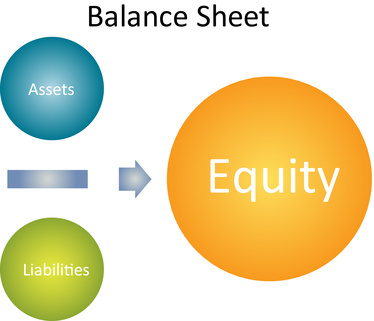
There is a common mis-conception that if you give something away it doesn’t have any tax implications, unfortunately, that isn’t the case.
When you give away shares you usually work out your gain or loss as if you’ve sold the shares at market value. The market value is the price you would expect to receive if you sold them on the open market. This also applies if you sell them for less than their full value.
There are some exceptions:
- if you can claim Gift Hold-Over Relief
- if you give the shares to your husband, wife or civil partner
- if you give shares to a registered charity
To qualify for Gift Hold-Over Relief, the shares must be in a trading company, or the holding company of a trading group, and one of the following must apply:
- the shares aren’t listed on a recognised stock exchange
- you’ve at least 5 per cent of the voting rights in the company
You don’t pay Capital Gains Tax when you give (or otherwise dispose of) shares, to your husband, wife or civil partner, providing both of the following apply:
- you’ve lived together for any part of the tax year in which you made the gift
- the gift isn’t ‘trading stock’ (trading goods bought for resale)
You won’t have to pay Capital Gains Tax on a gift of shares to a registered UK charity.
HMRC have further details and a Help Sheet 295 containing further details.
You can ask HMRC to check your market valuation by submitting Form CG34 it will take at least 2 months.
Settlements Legislation S624/S660
If you think moving shares in your company between yourself and your spouse sounds like a great way to save tax, think again!
Since the 1930’s we have had Settlements Legislation which prevents you from giving income or assets to someone else in your family in order to pay less tax.
Where the anti-avoidance Settlements legislation applies, all income transferred by a settlement is treated as that of the settlor.
steve@bicknells.net
Can I process my payroll once a year?

Yes, HMRC are now able to process requests for annual payrolls.
An annual scheme must meet all of the following requirements:
- all the employees are paid annually
- all the employees are paid at the same time/same date
- the employer is only required to pay HMRC annually
Once a business is registered as an annual scheme, an Employer Payment Summary (EPS) is not required for the 11 months of the tax year where no payments are made to the employees.
We all have busy schedules………
Annual schemes are likely to be adopted mainly by very small businesses and single person companies as you can pay all your salary in one go and save yourself 11 months of RTI reporting.
steve@bicknells.net
Top 5 useful things I have learnt about RTI
Real Time Information (RTI) has now been with us for a few months and once you get used to Full Payment Submissions (FPS) and Employer Payment Summaries (EPS) its not too bad.
HMRC recently reported:
With over 1.4 million PAYE schemes successfully reporting in real time, the launch of PAYE Real Time Information (RTI) continues to go well. The vast majority of employers (83% of small & medium size employers and 77% of more than 1 million micro employers) have started reporting in real time, but we are aware that there are still some employers who have not started yet.
Given time you might even get to Love doing your RTI Payroll as much as Suzie Humphreys…
Here are some things that I have learnt that you might find helpful:
Split FPS Submissions
You can only submit each employee once for each payment period but you can make more than one Full Payment Submission, this is useful if you have Monthly and Weekly payrolls, or a late starter you have process after the FPS has been submitted, or if you split your payroll by seniority and different staff process sections.
Hashtag and Paying by BACS
At the moment if you pay employees by Direct BACS using systems such as Nat West Payaway the Direct BACS submission needs to include a Hashtag to enable HMRC to match the payment with the FPS, however, if you don’t use Direct BACS and you just pay by Online Banking, Bankline, BACS or CHAPS or any other method you don’t need the Hashtag. I am sure that will change!
Starters and Leavers
When you enter a new employee HMRC are notified on the first FPS that they appear on and you must no longer use a P46 to get starter information you need to us the new HMRC Starter Checklist
P45’s are just for the Employee to refer to and are useful to show to their new employer, don’t send them to HMRC. HMRC are notified of leavers on the FPS.
CIS
If you have deductions under the Construction Industry Scheme you need to enter them on the EPS to reduce the amount of tax payable.
NI Holiday
NI Holidays for new companies end in September 2013 but until then need to be entered on the EPS. Form E89 is used to keep track of how much has been claimed.
Here are some more useful tips and facts on RTI:
Relaxation of Rules for Small Companies
HM Revenue & Customs (HMRC) recognise that some small employers who pay employees weekly, or more frequently, but only process their payroll monthly may need longer to adapt to reporting PAYE information in real time. HMRC have therefore agreed a relaxation of reporting arrangements for small businesses.
HMRC is planning to extend the temporary relaxation for employers with fewer than 50 employees to April 2014. This relaxation means that these businesses are still required to report through the new system, but are able to do so once a month (but no later than the end of the tax month (5th)), rather than each time they pay their employees. This gives small businesses that pay weekly (or more frequently), but who only run their payroll at the end of the month, some extra time to adjust to the new requirements.
Annual Schemes
Many micro businesses such as one person companies are switching to annual payrolls.
An annual scheme must meet all of the following requirements:
- all the employees are paid annually
- all the employees are paid at the same time/same date
- the employer is only required to pay HMRC annually
Once a business is registered as an annual scheme, an Employer Payment Summary (EPS) is not required for the 11 months of the tax year where no payments are made to the employees.
But currently HMRC are unable to process requests to become Annual.
HMRC are working to rectify this position and will publish a further ‘What’s New’ message to announce when this is ready.
Late Filing Penalties
If you do not report the final payment made to an employee, for the tax year 2013-2014, by 19 May in the following tax year you will be charged a late filing penalty.
Penalties are calculated on the basis of £100 per 50 employees and accrue for each month (or part month) that a return remains outstanding after 19 May.
If you fail to report this information by 19 May, or tell HMRC no return was due by sending an EPS, they will write to you (and your authorised agent if you have one) advising that a penalty may already have been incurred and that you must report this information as soon as possible to prevent the penalty building up any further.
steve@bicknells.net
 Business Accountant