
Home » Articles posted by Steve Bicknell (Page 20)
Author Archives: Steve Bicknell
Is it a Van or a Car?
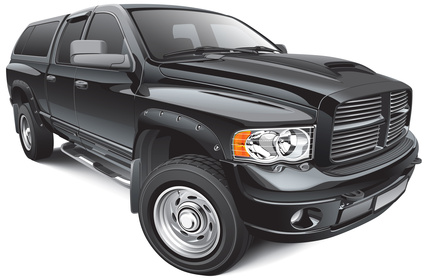
It makes a big difference whether a double cab pick up is treated as Car or a Van for tax purposes, in summary:
- Benefit in Kind on Cars is linked to CO2 where as on a Van its Flat Rate (and could be zero if your private use is insignificant)
- Vans qualify for the Annual Investment Allowance, Cars have restricted Capital Allowances
- You can reclaim VAT on Vans but its much harder to reclaim VAT on cars
HMRC have some guidance in EIM23150….
Under this measure, a double cab pick-up that has a payload of 1 tonne (1,000kg) or more is accepted as a van for benefits purposes. Payload means gross vehicle weight (or design weight) less unoccupied kerb weight (care is needed when looking at manufacturers’ brochures as they sometimes define payload differently).
Under a separate agreement between Customs and the Society of Motor Manufacturers and Traders (SMMT), a hard top consisting of metal, fibre glass or similar material, with or without windows, is accorded a generic weight of 45kg. Therefore the addition of a hard top to a double cab pick-up with an ex-works payload of 1,010 kg will convert the vehicle into a car (net payload reduced to 965 kg). Under this agreement, the weight of all other optional accessories is disregarded. HMRC has also adopted this treatment.
http://www.hmrc.gov.uk/manuals/eimanual/eim23150.htm
A double cab with a payload in excess of 1000kg can still be classified as a car if the taxman dealing with the case decides it is a car. You may have to justify a genuine business need for the vehicle.
steve@bicknells.net
Are you ready for the OTS to check your employment status?

Contractor Weekly reported on th 29th July 2014…
As part of the ongoing mission to create a simpler and fairer tax system the Office of Tax Simplification (OTS) has been tasked with carrying out reviews of employment status and also tax penalties, with a view to producing a report in time for next year’s Budget.
According to the OTS, the boundary between employment and self-employment no longer reflects modern working patterns, particularly in recent years. Many people have multiple jobs and can be classed as employed in one whilst self-employed in another. The rise of the freelancing business model has also caused some to suggest this is a ‘third way’ between employment and self-employment.
A worker’s employment status, that is whether they are employed or self-employed, is not a matter of choice. Whether someone is employed or self-employed depends upon the terms and conditions of the relevant engagement.
Many workers want to be self-employed because they will pay less tax, this calculator gives you a quick comparison between being employed, self employed or taking dividends in a limited company.
HMRC have a an employment status tool to help you determine whether a worker can be self-employed or should be an employee http://www.hmrc.gov.uk/calcs/esi.htm
It will be interesting to see the report that the Office of Tax Simplification (OTS) produce, especially if they find a ‘third way’
steve@bicknells.net
Would you borrow from PayPal?

The PayPal Working Capital fund will be trialled in the UK this autumn, with a more extensive rollout scheduled for 2015. Merchants (including eBay sellers) will be able to repay their advance with a share of their PayPal sales via card payments.
PayPal Working Capital is a loan of a fixed amount, with a single fixed fee. There are no due dates, minimum monthly payments, periodic interest charges, late fees, pre-payment fees, penalty fees, or any other fees. When you apply, simply select the amount you want — up to the maximum you qualify for. You choose the percentage of your sales that will be deducted from your PayPal account. (Deductions are made the day following each day of sales.) You’ll pay this percentage of your sales until your balance is repaid in full. You only make payments when you get paid.
PayPal Working Capital state that Working Capital offers major advantages compared with traditional ways of funding a business:
• Funding in minutes – PayPal’s strong relationship with its business customers means we can approve an advance based on their PayPal sales history. This means the customer completes a quick online application – there’s no need to spend hours gathering information about their business. And PayPal can make a decision and provide the funds in minutes.
• Pay when you get paid – Unlike traditional bank loans, PayPal Working Capital allows a business to repay the advance with a share of their PayPal sales. If they have a day without any PayPal sales that’s fine – they don’t repay anything that day.
• No credit check – PayPal Working Capital is a merchant cash advance against future sales – it’s not a loan – so no credit checks are needed and the advance does not impact on the customer’s business or personal credit record. There is a single, fixed fee that is displayed to the customer before they sign up. There are no interest charges or late payment fees.
Is this something your business will be able to use? or want to use?
steve@bicknells.net
How do you prove ‘No Private Use’ of a company car?

I spotted this case on the HMRC website the other day…
Elm Milk Ltd 2006 STC 792
A business bought a car for its managing director. It recorded a resolution that the car was for business use only. The managing director had another car that was used for private journeys.
The Court held that there was no reason why a car could not be made unavailable for private use by suitable contractual restraints, and that a company could enter into a binding employment contract with its sole director. Therefore, on the facts of the case, the car was available for business use only and input tax could be reclaimed.
The court held that HMRC had given too much weight to the physical constraints and insurance and should have focused on contractual constraints, the employment contract and board minutes.
The following case is also very interesting…
The ‘Shaw’ case
In the Shaw case the taxpayer bought two BMW X5 vehicles together, one for use in his farm business, the other for use privately. Mr Shaw also owned two other cars privately as well. HMRC [again] argued the case based on the social and domestic cover on the insurance policy, but Mr Shaw rebutted this by showing how the insurance policy for his combine harvester had ‘social, domestic and pleasure’ cover too! He added that the premiums for both the X5s and the harvester were lower as a result.
If there is No Private Use then there is no benefit in kind and no fuel scale charges.
So what should you do to prove there is no private use:
- Keep the car on the company’s business premises
- Keep the keys at the company’s business premises
- Prepare a Board Minute
- Makesure your contract of employment bans private use
- Keep a mileage log
- Insure the car principally for business use
Unlike Pool Cars you don’t have to prove it was available to other employees
steve@bicknells.net
Doctor, Doctor, I think you should be an Employee

A report in the Telegraph on the 14th July 2014…
Dozens of NHS executives face possible investigation by HM Revenue and Customs after they refused to answer questions about their tax arrangements, it can be revealed.
An investigation has identified 86 senior health service officials paid off-payroll who have refused to give assurances to their employers that they are paying the correct level of income tax and national insurance.
They are paid through service companies – arrangements that allow public sector employees to be paid as contractors through private companies, potentially cutting their tax bills.
Monitor found 30 foundation trusts had issues to resolve in their report of the 10th July 2014:
- 20 foundation trusts have 1 or more senior employees paid through an off-payroll arrangement, and they are waiting for responses after asking those employees for assurance about their tax arrangements
- 23 foundation trusts (including some of the 20 above) still have at least 1 board member or senior member of staff with significant financial responsibility employed through an off-payroll arrangement
- of these 23 trusts, 9 are facing wider issues relating to their performance which they have explained is affecting their ability to recruit and retain permanent skilled staff; this resulted in the need to use interim off-payroll contracts to attract high-performing staff to help improve the foundation trust’s situation
- as a result of their performance issues, these 9 trusts are facing current enforcement action by Monitor, which is unrelated to their use of off-payroll employment
- out of those 23 trusts, the other 14 which are not facing enforcement action have plans to end off-payroll arrangements by the end of the year
Will this end the use of PSC’s in the NHS?
steve@bicknells.net
What are Directors Emoluments?

The reporting requirements are set out in The Large and Medium Sized Companies and Groups (Accounts and Reports) Regulations 2008, obviously emoluments include:
- Salary
- Bonuses
- Compensation for Loss of Office
- Benefits
- Share Options
- Long Term incentives
- Pensions
But it can also include payments made via other companies for ‘Qualifying Services’, these are payments paid in relation to the Directors services as a Director of the reporting company (Section 8, Part4, Paragraph 17).
In many cases this could be obvious for example if the Director used a Personal Service Company (PSC) or if the director invoices the company for management services or for management charges. But often invoices relate to the supply of products and services which don’t fall within qualifying services.
Its worth noting that unquoted companies with less than £200k for Directors Emoluments are not required to report details of the highest paid director.
Its also worth remembering that any related party transactions should be fully disclosed in the related party note, so is further clarification of what should be emoluments needed?
steve@bicknells.net
You could employ your spouse to help you do your job

Many micro business owners employ their spouse and as long as they perform a role in the business that’s fine and it can be very tax efficient.
But there are circumstances in larger businesses with several owners/directors where it isn’t practical to directly employ your spouse.
However, it could be possible to claim an expense for using your spouse as an assistant, take a look at EIM32415
A deduction can be given in the following circumstances:
- where the employee is paid solely by results so that, in taking on assistance, the employee can maximise his or her earnings from the employment.
- where it is actually part of the duties of the employment to engage and remunerate assistants to do some of the work.
So it may be possible to amend your employment contract to identify parts of your job that could be done by someone else and you could add a clause which says that you must ensure the work specified is done and that its your duty to employ an assistant to do it.
The duties could be anything – Admin, Secretarial, Market Research, Telesales…..
Depending on how much you pay your assistant you may need to account for PAYE and NI.
steve@bicknells.net
Automatic enrolment: large employers are all in

The Pension Regulator’s latest post…..
Our report on the impact of automatic enrolment reveals that 99% of all the UK’s largest employers met their legal duties without the need for us to use our statutory powers.
This is encouraging news as thousands of medium employers are currently reaching their staging dates. We will continue to work over the months ahead to ensure that medium and small employers understand their obligations, comply with their legal duties and continue to view non-compliance by other employers as unacceptable
Are you ready for Auto Enrolment?
steve@bicknells.net
Is there any point in DOTAS if the tax will be paid upfront?

The Finance (No2) Bill 2014, which is due to receive Royal Assent in July, contains legislation which will enable HMRC to demand payment upfront of disputed tax in certain cases, principally involving tax avoidance or deferral. It is estimated that up to 43,000 taxpayers could receive such a demand. Those demands will be issued over an extended period but the first are likely to be issued as early as September 2014.
Taxpayers who have sought tax advantages through tax avoidance schemes that fall within the Disclosure of Tax Avoidance Schemes (DOTAS) are likely to be most affected.
Here is a link to the SRNs (Scheme Reference Numbers) affected – click here
Over the next 2 years HMRC estimates that it will rake in £7 billion through the use of these notices. Of this £7 billion, individuals will weigh in with £5.1 billion. This would equate to each person having a gross income of £262,000.
Last week the Financial Times reported that Ingenious Media, an investment company, warned 1,300 of its investors, including business leaders, entertainers and sporting celebrities, such as David Beckham, to expect substantial tax bills with interest, as reward for using its tax avoidance scheme. (Contractor Weekly)
This is a radical change and many might say its been a long time coming.
It has always struck me as slightly bizarre the DOTAS were registered and allowed to exist.
steve@bicknells.net
Is your business ignoring Mobile?

A OnePoll survey commissioned by AppsBuilder reveals that £52.6 billion of potential revenue to be gained via mobile is being ignored by over 3.2 million UK SMEs. It found that 65.8% of the nation’s 4.9 million SMEs don’t currently have a mobile presence, equating to potential lost revenues of £52.6 billion in the next 12 months alone. The number of consumers in the UK using mobile phones to access the internet has doubled over the past three years and about 5% of all UK retail sales come via mobile phones. (Law Donut)
Its not just about Apps, websites too need to be optimised…
With only 10% of the UK’s small and medium-sized enterprises (SMEs) having a mobile optimized website, businesses could be missing out on £77 billion in annual revenue a study has found. And only 13% of those without a mobile optimized site plan to have one by the end of 2014.
The survey, conducted by Impact Research for hibu, asked 900 UK SME owners and IT leaders about their companies’ websites, revenues and future plans for the mobile web. It showed that 45% of UK SMEs do not have a website, yet believe their annual revenue could rise by 5.4% if they had a website that was optimised for mobile transactions, equating to an average of £11,155 extra turnover annually.
I find it incredible that 45% of SME’s do not have a website? how will customers find them?
The days of looking yellow pages and printed directories are long gone, most people search google to find the goods and services they need.
steve@bicknells.net
 Business Accountant