Business Accountant

Home » Articles posted by Steve Bicknell (Page 19)

Author Archives: Steve Bicknell

How do you tell HMRC a company is dormant or active?

relax

Dormant is a term that HMRC and Companies House use for a company or organisation that is not active, trading or carrying on business activity. But HMRC and Companies House use the term dormant in slightly different ways.

For Corporation Tax purposes, HMRC views a dormant company as a company that’s not active, not liable for Corporation Tax or not within the charge to Corporation Tax.

A dormant company can be, for example:

  • a new company that’s not yet trading
  • an ‘off-the-shelf’ or ‘shell’ company held by a company formation agent intending to sell it on
  • a company that will never be trading because it has been formed to own an asset such as land or intellectual property
  • an existing company that has been – but is not currently – trading
  • a company that’s no longer trading and destined to be removed from the Companies Register

Generally your company or organisation is considered to be active for Corporation Tax purposes when it is, for example:

  • carrying on a business activity such as a trade or professional activity
  • buying and selling goods with a view to making a profit or surplus
  • providing services
  • earning interest
  • managing investments
  • receiving any other income

This definition of being active for Corporation Tax purposes is not necessarily the same as that used by HMRC in relation to other tax areas such as VAT, or by other government agencies such as Companies House.

If your limited company has been dormant but is now active, you must tell HMRC within three months of starting your tax accounting period. The best way to do this is to use HMRC’s online registration service.

HMRC have further details on this link

To contact HMRC you will need your Company UTR number and the 3 digit tax office number, then you can use this link to find out contact details for you Corporation Tax Office

When you call, Option 3 is for Dormant Companies and Option 4 is for Active Companies.

Then you will need to write to HMRC to advise them of the change in activity status.

Companies House still require Annual Returns and Annual Accounts even if the company is dormant, but these are obviously easy as there are no changes from the previous year.

steve@bicknells.net

Can you claim a tax allowance for clothing?

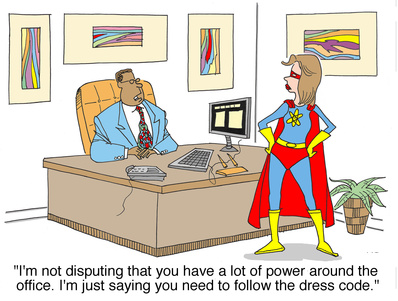
You need to follow the code

Employees may be able to get tax relief if they – and not their employer – spend money on any tools or specialist clothing they need to be able to do your job. Employees can go back several years to get the relief – the time you’ve got depends on whether you’ve previously sent in a Self Assessment tax return.

As a general rule an employee can’t get tax relief for the cost of clothing they wear to work – but there are some exceptions. For example, if you work in a sector like the building trade or the metal working industry you’ll have to wear protective clothing like:

  • overalls
  • gloves
  • boots
  • helmets

If you must pay for the cost of repairing, cleaning or replacing this type of specialist clothing yourself and your employer doesn’t reimburse you, then you are entitled to tax relief. However, you cannot claim for the initial cost of buying this clothing.

EIM32712 sets out some flat rate expenses that can be claimed and EIM32485 allows £60 per year for laundry.

If you are an employee who wants to claim the laundry allowance you should send HMRC a letter as follows:

Re: Uniform Tax Rebate

I have been employed at……… since….. My job title is ……. and I wear a company uniform.

I am obliged to launder the uniform, which is supplied to me by the company. I therefor wish to claim any payment to cover the laundry costs.

The uniform provided is not suitable to be worn outside of the work environment due to having the company logo on it.

I would like to receive the rebate in the form of a cheque….

Self Employed workers have tried to claim for clothes but whilst HMRC have allowed claims for ‘Uniforms’ and ‘Costumes’ they have rejected claims for everyday clothes.

BIM37910 explains to HMRC Inspectors…

You should disallow expenditure on ordinary clothing worn by a trader during the course of their trade. This remains so even where particular standards of dress are required by, for example, the rules of a professional body.

The case of Mallalieu v Drummond [1983] 57 TC 330 (which is discussed in detail below) established that no deduction is available from trading profits for the costs of clothing which forms part of an ‘everyday’ wardrobe. This remains so even where the taxpayer can show that they only wear such clothing in the course of their profession. It is irrelevant that the person chooses not to wear the clothing in question on non-business occasions, the only question is whether the clothing might suitably be worn as part of a hypothetical person’s ‘everyday’ wardrobe.

Most professionals have to keep up appearances but their clothing costs are not allowable (even where they amount to a quasi uniform as in Mallalieu v Drummond).

The cost of clothing that is not part of an ‘everyday’ wardrobe (for example a nurse’s uniform or evening dress (‘tails’) worn by a professional waiter) faces no such bar to deduction.

You should therefore allow a deduction for protective clothing and uniforms.

This was recently tested by Sian Williams who claimed, unsuccessfully…

In her 2004/05 tax return, a newsreader claimed certain deductions from employment income with the BBC for “travel and subsistence costs”, and “other expenses and capital allowances”.

Of these, the following were in dispute:

  • Professional hairdo and colouring £975
  • Professional clothing for studio    £3,231
  • Laundry of professional clothes   £325

She also claimed that as a taxpayer she had the right to be treated fairly, HMRC should offer up details of the amounts which had been agreed as allowable expenses for other news readers and entertainers.

See article in the Guardian


steve@bicknells.net

What are the differences between employees and contractors?

According to figures released by the Office for National Statistics last week, self-employment is at its highest level since records began almost 40 years ago.

There are currently 4.6 million people self-employed, with the proportion of the total workforce that are making a living for themselves sitting at 15%, compared to 13% in 2008 and less than 10% in 1975.

As highlighted by Everreach and the Daily Mail.

A worker’s employment status, that is whether they are employed or self-employed, is not a matter of choice. Whether someone is employed or self-employed depends upon the terms and conditions of the relevant engagement.

Many workers want to be self-employed because they will pay less tax, this calculator gives you a quick comparison between being employed, self employed or taking dividends in a limited company.

HMRC have a an employment status tool to help you determine whether a worker can be self-employed or should be an employee http://www.hmrc.gov.uk/calcs/esi.htm

Workers

steve@bicknells.net

Are you accounting for VAT on Google AdWords and Linked In?

Pay per Click

AdWords are invoiced from the Republic of Ireland and subject to ‘Reverse Charge‘ VAT.

When you buy services from suppliers in other countries, you may have to account for the VAT yourself – depending on the circumstances. This is called the ‘reverse charge’, and is also known as ‘tax shift’. Where it applies, you act as if you are both the supplier and the customer – you charge yourself the VAT and then, assuming that the service relates to VAT taxable supplies that you make, you also claim it back. So there’s no net cost to you – the two taxes cancel each other out. [HMRC]

If you can’t give Google a UK VAT registration number they will charge Irish VAT at 21%.

If you can supply a VAT registration number you won’t be charged Irish VAT and will be subject to ‘Reverse Charge’, this means you calculate the amount of VAT – Output Tax – on the full value of the services supplied to you, and then fill in the relevant boxes on your VAT Return as follows:

  • put the amount of VAT you calculated in Box 1, and if you’re entitled to reclaim the VAT on your purchase of these supplies, also put the same figure in Box 4 (this in effect cancels out the figure in Box 1)
  • put the full value of the supply in both Box 6 and Box 7

So all the figures net off to Zero!

If you make reverse charge sales – sales to which a reverse charge is applied – you must notify HMRC and send in regular Reverse Charge Sales Lists.

Linked In invoices are also subject to ‘Reverse Charge’ this is how you can give Linked In your VAT Registration:

If you purchase LinkedIn products for business purposes, you can provide your Value Added Tax # (for European Union or EU VAT customers) for proper tax handling. This information can be added for future orders (not past receipts) on the Payment section of your Privacy & Settings page.

To add your VAT number:

  1. Move your cursor over your profile photo in the top right of your homepage and click Privacy & Settings. For verification purposes, you may need to sign in again.
  2. Click Manage Billing Info.
  3. Click Edit next to the VAT # field.
  4. Enter the 2-character country code followed by your VAT#. For example, LinkedIn’s Irish VAT# is IE9740425P.
  5. Click Update.

steve@bicknells.net

Tax Efficiency Is Part Of A Board’s Duty To Shareholders.

MCS Corp Logo

by Greville Warwick

It is the case that we see a lot of Large and Small companies whose directors and advisers seem unaware of the availability and value of research and development tax credits and patent box. These two schemes to assist companies are actively encouraged by agencies of Government to stimulate innovation, research and development at all times.

Companies qualify, but remain unaware of qualifying criteria, which are quite simple: you must be a UK registered entity (Ltd or Plc) and a going concern for the periods claimed. If you can tick these two boxes, contact us.

mcs-corporate.com

5 Key Tests the employer must pass to borrow from a Pension Scheme

Pension concept

There are five key tests that a loan from a Pension Scheme must satisfy to qualify as an authorised employer loan. If a loan fails to meet one or more of these tests an unauthorised payment charge will apply.

The five key tests are

  • security
  • interest rates
  • term of loan
  • maximum amount of loan and
  • repayment terms.

Security [S179, Sch 30]

If a registered pension scheme makes a loan to an employer the amount of the loan must be secured throughout the full term as a first charge on any asset either owned by the sponsoring employer, or some other person, which is of at least equal value to the face value of the loan including interest.

If the asset used as security is taxable property then there may be additional tax charges under the taxable property provisions if the registered pension scheme is an investment regulated pension scheme.

Taxable property consists of residential property and most tangible moveable assets. Residential property can be in the UK or elsewhere and is a building or structure, including associated land, that is used or suitable for use as a dwelling. Tangible moveable property are things that you can touch and move. It includes assets such as art, antiques, jewellery, fine wine, classic cars and yachts.

Interest Rates [S179, Sch 30]

All loans made by registered pension schemes to employers must charge interest at least equivalent to the rate specified in The Registered Pension Schemes (Prescribed Interest Rates for Authorised Employer Loans) Regulations 2005 (SI 2005/3449). This is to ensure that a commercial rate of interest is applied to the loan.

The minimum interest rate a scheme may charge is calculated by reference to 1% above the average of the base lending rates of the following 6 leading high street banks:

  • The Bank of Scotland
  • Barclays Bank plc
  • HSBC plc
  • Lloyds TSB plc
  • National Westminster plc and
  • The Royal Bank of Scotland plc.

The average rate calculated should be rounded up as necessary to the nearest multiple of ¼%.

Term of Loan [S179, Sch 30]

The repayment period of the loan must not be longer than 5 years from the date the loan was advanced. The total amount owing (including interest) must be repaid by the loan repayment date.

Maximum Amount of Loan [S179, Sch 30]

Section 179 (1)(a) of Finance Act 2004 restricts the amount of a loan which can be made to a sponsoring employer to 50% of the aggregate of the amount of the cash sums held and the net market value of the assets of the registered pension scheme valued immediately before the loan is made. These restrictions are necessary because although such loans provide a useful source of business funding, there may be liquidity problems for the scheme if there is a sudden requirement to provide scheme benefits. It may also not be prudent to lend scheme funds to one company.

Repayment Terms [S179, Sch 30]

All loans to employers must be repaid in equal instalments of capital and interest for each complete year of the loan, beginning on the date that the loan is made and ending on the last day of the following 12 month period – known as a loan year.

Often Land and Commercial Property are used as the security for Pension Scheme loans but the problem is having first charge over the asset!

steve@bicknells.net

How do you handle Input VAT on Insurance Claims?

insurance design

This often causes confusion, firstly because many people wrongly assume that IPT (Insurance Premium Tax) is VAT, it isn’t! and then when they make a claim they may get a VAT only invoice.

HMRC VIT13500 has the answer…

Insurers cannot recover any VAT incurred in obtaining replacement goods or having repairs carried out for a policy holder. The supply of goods (or services in the case of repairs) is considered to be made to the policy holder. This is so even when payment is made directly to the supplier by the insurer.

Subject to the normal rules a VAT registered policy holder may treat any VAT incurred on the supply as input tax. The insurer will normally pay the policy holder compensation exclusive of VAT. The policy holder will pay the supplier the tax and recover it as input tax.

If an insurance claim is for loss or damage at a domestic property you should make sure that any VAT claimed as input tax relates only to goods used for a business purpose.

Insurance and reinsurance is exempt from VAT under article 135 of the Sixth VAT Directive.

This also explains why an insurer may ask a contractor engaged in repair work not to invoice them VAT, its simply that they want the VAT only element to be invoiced to the insured.

steve@bicknells.net

Simple Tax – a great way to file your return

https://stevejbicknell.files.wordpress.com/2014/08/laptop_ipad_simpletax_right1.png

I read about Simple Tax in an article in the Express

Backed by venture capital investors including EC1 Capital, Seedcamp and Charlotte Street Capital, SimpleTax was set up to help customers find ways to save money on their tax bills and file returns online with HMRC in minutes.

SimpleTax’s users have so far cut a total of £2.5 million from their tax bills

So I tried it out, it’s great and it’s free.

You will need your HMRC Online filing details if you want to file your return alternatively you can just print out the return.

For taxpayers who have very straightforward returns Simple Tax should make it quicker and easier to complete and file online.

As you prepare the return Simple Tax gives you tips on things you can claim and ways to save tax.

Take a look and see what you think https://www.gosimpletax.com/

For those with more complicated tax returns get advice from a CIMA Accountant.

steve@bicknells.net

Will the EBA be able to stop the growing use of Bitcoins?

Three Bitcoin digital currency coins

Back in December the European Banking Authority (EBA) issued a warning to consumers on virtual currency.

Then in July the EBA issued an opinion on virtual currencies.

The best known Virtual Currency (although not named by the EBA) is Bitcoin.

The European Banking Authority, the EBA, has called on national supervisory authorities to discourage banks and credit institutions from buying, holding or selling virtual currencies.  It calls for regulation of market participants at the interface between conventional and virtual currencies. Over the longer-term, the EBA is calling for a ‘substantial body’ of regulation to be applied to virtual currency market participants, including the creation of ‘scheme governing authorities’ accountable for the integrity of a virtual currency scheme and the imposition of capital requirements.  In the short term, the EBA is calling for national authorities to ‘shield regulated financial services from virtual currencies’.

So do you think Virtual Currencies are useful and worthwhile?


steve@bicknells.net

We love Self Employment in UK…..

Business people group.

The UK has seen the fastest growth in self-employment in Western Europe over the past year, according to the Institute for Public Policy Research (IPPR).

The number of self-employed workers rose by 8%, faster than any other Western European economy, and outpaced by only a handful of countries in Southern and Eastern Europe.

The IPPR’s analysis shows that the UK – which had low levels of self-employment for many years – has caught up with the EU average. If current growth continues, it says, the UK will look more like Southern and Eastern European countries which tend to have much larger shares of self-employed workers.

According to Tax Research UK

Something like 80% of all the new jobs created since 2010 are, in fact, self-employments, and there are a number of things that very significantly differentiate self-employments  from jobs.

The first is security:  there is none.

The  second is durability:  vast numbers of new small businesses fail, which is one reason why I doubt the official statistics.  I am sure they record the supposed start-ups  correctly but seriously doubt if they have properly counted the  failures.

Then there is  the issue of pay. The evidence is  overwhelming  that in recent years earnings from self-employment have, on average, declined significantly.

A worker’s employment status, that is whether they are employed or self-employed, is not a matter of choice. Whether someone is employed or self-employed depends upon the terms and conditions of the relevant engagement.

Many workers want to be self-employed because they will pay less tax, this calculator gives you a quick comparison between being employed, self employed or taking dividends in a limited company.

HMRC have a an employment status tool to help you determine whether a worker can be self-employed or should be an employee http://www.hmrc.gov.uk/calcs/esi.htm

In summary, why is it attractive to use Self Employed Freelancers?

  1. Skill is more important than location in many business sectors – we live in world where internet can allow you to work with anyone at anytime, you can now track down the best person to work with even if they live thousands of miles away
  2. Lower fixed costs – Using Freelancers will lower your fixed costs (in similar way to Zero Hours Contracts), you employ them for a specific project and only pay for what you need so there isn’t any surplus capacity
  3. Tax advantages – Freelancers run their own business and that means they pay less tax than employees. Employers save tax too, such as Employers NI.
  4. Competitive Advantage – You can put together a team for a contract rather than finding contracts that fit your workforce, this means you can hire the best.
  5. 110% Commitment – A Freelancers success and future work depends on them performing to the highest level on every contract, failure is not an option for a successful contractor.

So do you think self employment is good for the UK?

steve@bicknells.net